


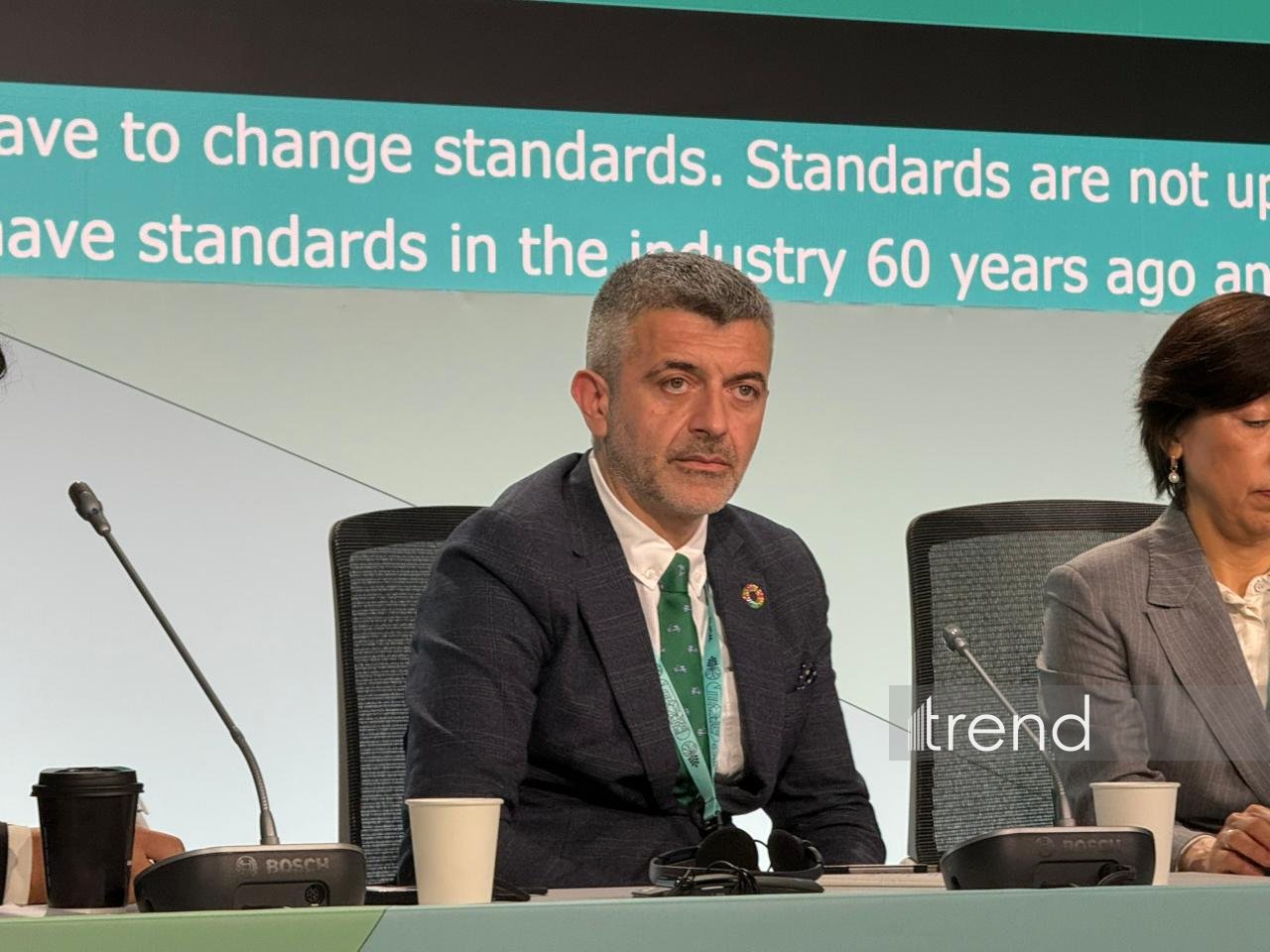

BAKU, Azerbaijan, May 17. While preparing global regulations and new rules, an infrastructure should not be built in such a way that it later becomes neither affordable nor useful for the lower-income segments of society, the Country Manager of the UN Global Compact for Azerbaijan, Samir Mammadov, said at the Business Assembly session, held within the framework of WUF13 in Baku, Trend reports.
Mammadov stated that the main lagging issue in this part of the world is the formation of demand. Regulatory bodies already understand the situation, and the business sector is preparing. Whether this is happening out of emotional responsibility or commercial interest is a separate topic, but business is adapting fast enough.
"However, I think that the user and consumer side has not reached this stage yet. This is precisely the main missing link. We sometimes assume that everyone understands these issues and that people are expecting affordable, 'green', and sustainable housing. The reality is different. Even the terminology itself is not accessible to people," Mammadov said.
"For this reason, one of the primary areas to focus on is community awareness. It should be explained to people what challenges exist, what changes are taking place, and what awaits them. Demand management needs to be shaped. When talking to business representatives, they often say 'there is no demand,' and frankly speaking, they are not entirely wrong. Therefore, one of the directions requiring attention is preparing the mindset of communities, ordinary citizens, and end users."
Mammadov emphasized that the installment purchase system for real estate is becoming widespread, particularly in the Eurasian region.
"The reduction of initial costs, the importance of long-term maintenance, and utility expenses have not yet been fully explained and presented to people," he noted. "I think the main breakthrough will happen exactly at this stage. Afterwards, policymakers will, in turn, approach the private sector for consultations."
"Only then will the natural process kick off. Otherwise, it will not be enough if only activists or regulatory bodies attempt to enforce this approach," Mammadov concluded.



