


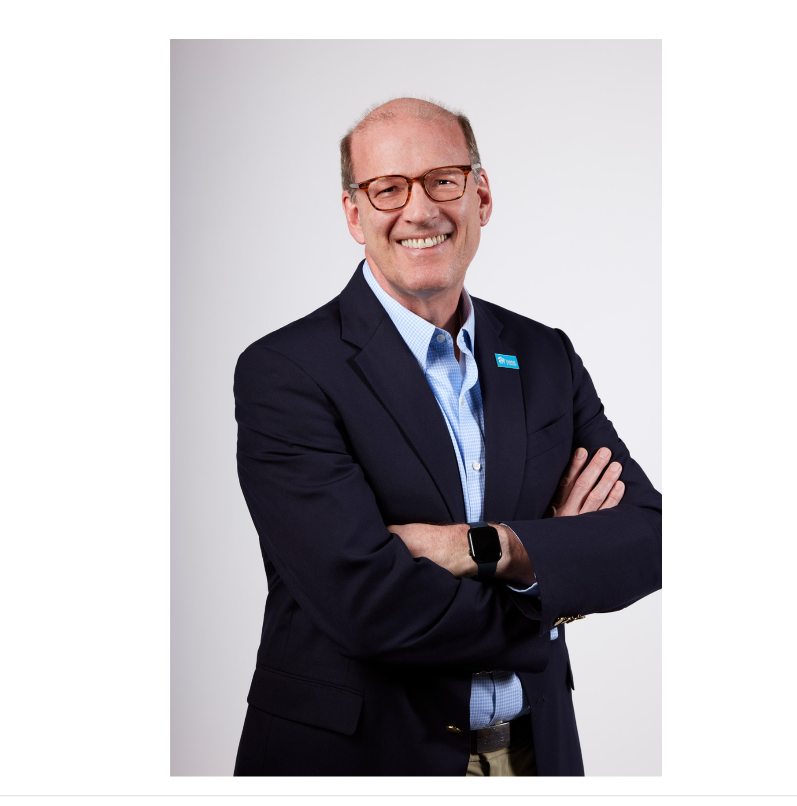

BAKU, Azerbaijan, May 19. Habitat for Humanity International, non-profit organization, headquartered in the U.S., urges governments at the 13th session of the World Urban Forum (WUF13) in Baku to place housing at the heart of its development agenda, Jonathan Reckford, CEO of Habitat said in an exclusive interview with Trend on the sidelines of the forum.
“Despite its foundational role in economic mobility, climate resilience, and human wellbeing, housing remains strikingly underrepresented in global strategies. Analysis finds that housing receives less than 1% of Official Development Assistance, and only 2% of national climate plans show real ambition in this area.
Habitat urges Governments to place housing at the heart of its development agenda by:
- Championing housing as a crosscutting catalyst for development, recognizing its central role in driving economic growth, improving health and education outcomes, and expanding opportunities for women and marginalized communities.
- Committing to improving how housing is measured within Official Development Assistance, ensuring that investments are visible, comparable, and aligned with the scale of global need. Current measurement systems obscure the true level of support and limit effective planning.
- Working with counterpart countries to expand and replicate and adapt proven housing solutions, drawing on successful approaches already present within development portfolios and scaling interventions that deliver measurable economic and social returns.
- Ensuring housing strategies are explicitly inclusive of the most vulnerable, while creating enabling environments for partnerships with civil society organizations that can bridge the gap between need and delivery. This includes prioritizing underserved populations within national housing plans and recognizing the role of NGOs in reaching last-mile communities,” he said.
Reckford also spoke about how the organization views the global challenge of affordable housing in rapidly urbanizing cities.
“We're still trying to solve the urban housing crisis with too narrow a lens, focusing on new units and homeownership, while overlooking the reality that most people rely on existing housing stock, informal settlements and a wider range of tenure options. In addition, a persistent barrier to scaling housing solutions globally is not a lack of evidence or interventions, but a lack of shared understanding. Across donors, governments, and practitioners, housing is defined and measured inconsistently and narrowly, leading to fragmented policy, misaligned investments, and under-recognition of the full spectrum of housing needs and pathways,” he explained.
The CEO noted that Habitat is introducing a Global Continuum of Housing Adequacy to address this gap—offering a unified, globally relevant framework that reflects the full range of housing conditions, from homelessness to market-based solutions, and explicitly includes incremental housing as a central pathway. Habitat urges Governments and development partners to:
- Adopt a shared conceptual framework for housing, using tools such as the Global Continuum of Housing Adequacy to establish a common language that improves alignment across policy, programming, and investment decisions.
- Recognize and integrate incremental housing into national and global housing strategies, acknowledging it as a primary and legitimate pathway through which millions of households access and improve their homes, and ensuring it is supported through appropriate policy, finance, and technical assistance.
- Apply structured housing diagnostics to inform decision-making, using the continuum to identify system gaps, map transitions between housing conditions, and prioritize interventions that strengthen housing systems over time.
He went on to add that sustainable housing solutions cannot be delivered to communities – they must be designed and led with and by communities.
“The closer solutions are to local leadership, knowledge and ownership, the more scalable and durable they become. We’ve learned that scaling happens when you combine community leadership, local government partnership, and enabling market systems. If one of those pieces is missing, solutions often remain pilot projects rather than systemic change. An example of this happened in Nepal. An inclusive housing solution was built by strengthening the whole housing ecosystem, not just delivering homes. The initiative brought together government subsidies, philanthropic finance, local markets and community involvement to support climate-resilient bamboo housing for landless and marginalized families, while also building supply chains, skills and policy recognition,” said the Habitat CEO.
Reckford pointed out that Habitat has helped more than 65 million people build or improve a place to call home.
“And we’d be the first one to say that we cannot do this alone. The scale of the housing crisis requires cooperation across sectors to meaningfully address the housing gap. To strengthen partnerships, we go back to our ask of governments when forming housing strategy. The most vulnerable populations must be centered in any strategy that aims to improve access to housing. Those same groups must also the focus when creating partnerships with civil society organizations. We stand ready to partner with any organization or government that shares our vision of a world where everyone has a decent place to live.
As a global housing organization, we are political but not partisan. We’re political in that there is no example in the world of improving access to housing without government partnership. But we’re nonpartisan in that housing is a foundational issue in every nation. As countries look for ways to improve access to housing, we’re eager to partner and bring our expertise where we can help inform government policy,” he concluded.



