


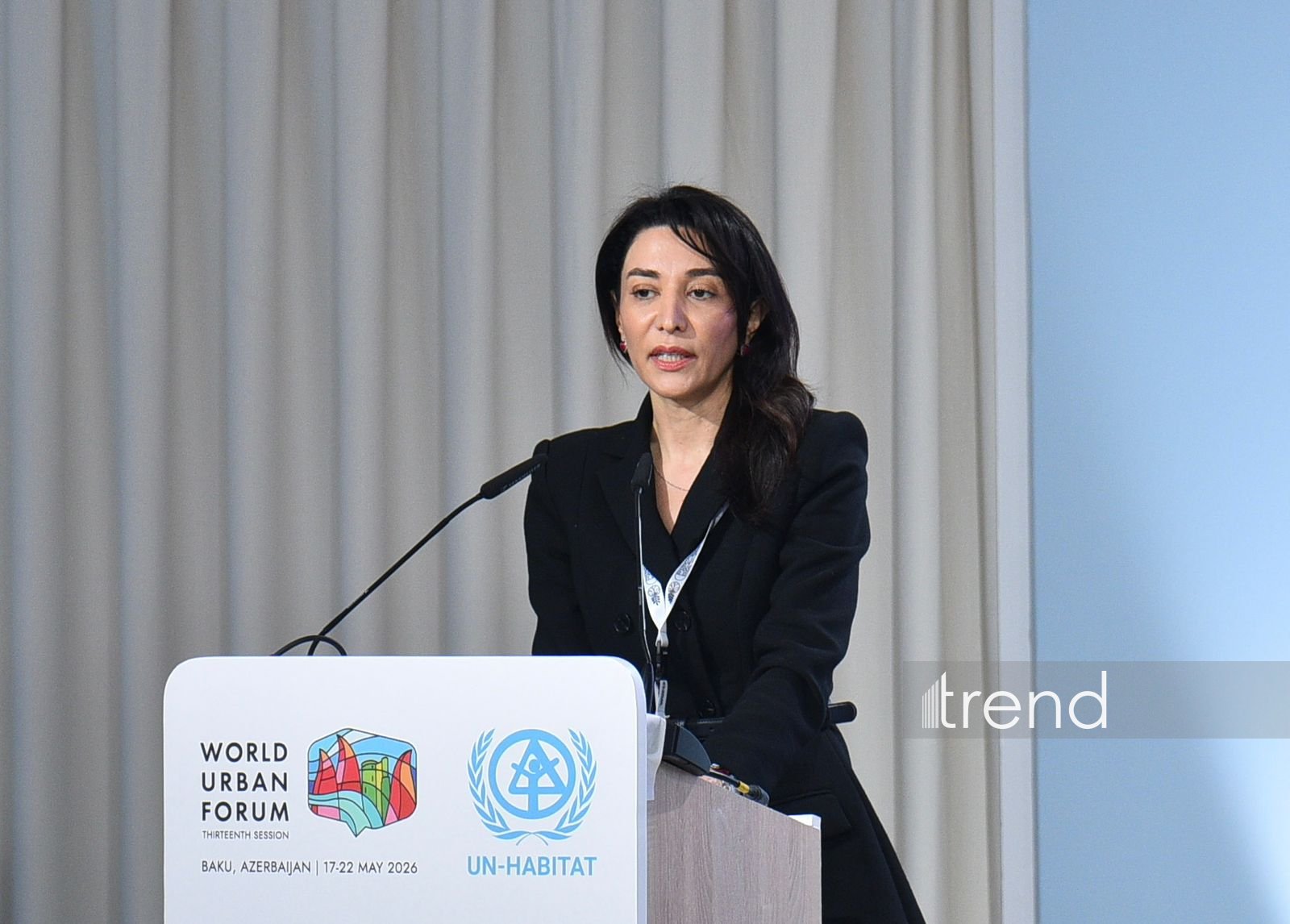
BAKU, Azerbaijan, May 19. Creating inclusive cities is essential for ensuring equal opportunities, social justice, and respect for the human dignity of people with disabilities, Azerbaijani Ombudsperson Sabina Aliyeva said at the event "Inclusive Cities and Independent Living for People with Disabilities," held as part of the 13th session of the World Urban Forum (WUF13) in Baku today, Trend reports.
According to her, hosting such an international platform in Azerbaijan is of great importance for discussing issues of urban development, sustainable development, social inclusion, and human rights.
"Today, urban development is measured not only by architectural solutions, infrastructure, and transportation, but above all by the creation of real living conditions for people.
The true indicator of a city's development is how accessible, safe, comfortable, and respectful of human dignity it is," she said.
Aliyeva noted that the rights of people with disabilities are a key focus of urban development policy.
According to her, accessibility includes not only the availability of ramps, elevators, and special equipment, but also the development of a comprehensive approach that enables people to independently organize their daily lives and participate equally in education, employment, healthcare, transportation, culture, and public life.
She emphasized that most of the difficulties faced by people with disabilities are related to the inadequate design of the urban environment.
"Non-standard ramps, inaccessible public transportation, inadequate sanitary facilities, a lack of audio and visual information, and barriers to digital services limit people's independent living and equal participation in society," she announced.
According to Aliyeva, ensuring an accessible environment is one of the legal and institutional priorities of the Azerbaijani Ombudsman's Office. She noted that the Ombudsman's Office serves as an independent mechanism for monitoring the implementation of the UN Convention on the Rights of Persons with Disabilities, as well as issues of equality and non-discrimination.
She informed that an assessment of the accessibility of public spaces, pedestrian underpasses, public transportation, and information infrastructure was conducted in central Baku.
"A representative of the 'Independent living center for people with disabilities' public association also participated in the monitoring.
Based on the monitoring results, a report was prepared with recommendations and proposals for more effectively ensuring the rights of people with disabilities," she added.
Aliyeva also emphasized the importance of involving people with disabilities themselves and their representative organizations in decision-making, design, monitoring, and evaluation processes.
"The most appropriate and sustainable solutions can only be found when the knowledge and experience of people who face these barriers daily are taken into account," she said.
In conclusion, Aliyeva highlighted the importance of the training, photo exhibition, and discussion session held as part of the event.
According to her, the photo exhibition "Accessibility Myths: Invisible Barriers of Modern Urban Development" clearly demonstrates the impact of accessibility issues on people's lives, and the call to "Leave No One Behind" reflects the responsibility of every city, community, and decision-maker.
The third day of the 13th session of the World Urban Forum (WUF13) is underway in Baku.
On the first day, a ministerial meeting dedicated to the New Urban Agenda, a roundtable of ministers, assemblies of women and civil society, business sessions, and discussions on urban well-being were held. A ceremony for raising the flags of the United Nations and Azerbaijan also took place within the framework of the forum.
The second day of the forum drew attention with the first-ever Leaders Summit. High-level discussions on the global housing crisis, urbanization policy, and urban resilience were held that day. At the same time, the Mexico City pavilion was inaugurated within the framework of WUF13. The pavilion was presented as an important platform for expanding cooperation with the Latin American region and preparing for WUF14.
WUF13, which has attracted more than 40,000 registered participants from 182 countries, will continue until May 22. Held under the theme “Housing the world: Safe and resilient cities and communities,” the forum brings together governments, international organizations, experts, and representatives of civil society to strengthen global cooperation in the field of sustainable urban development.



