


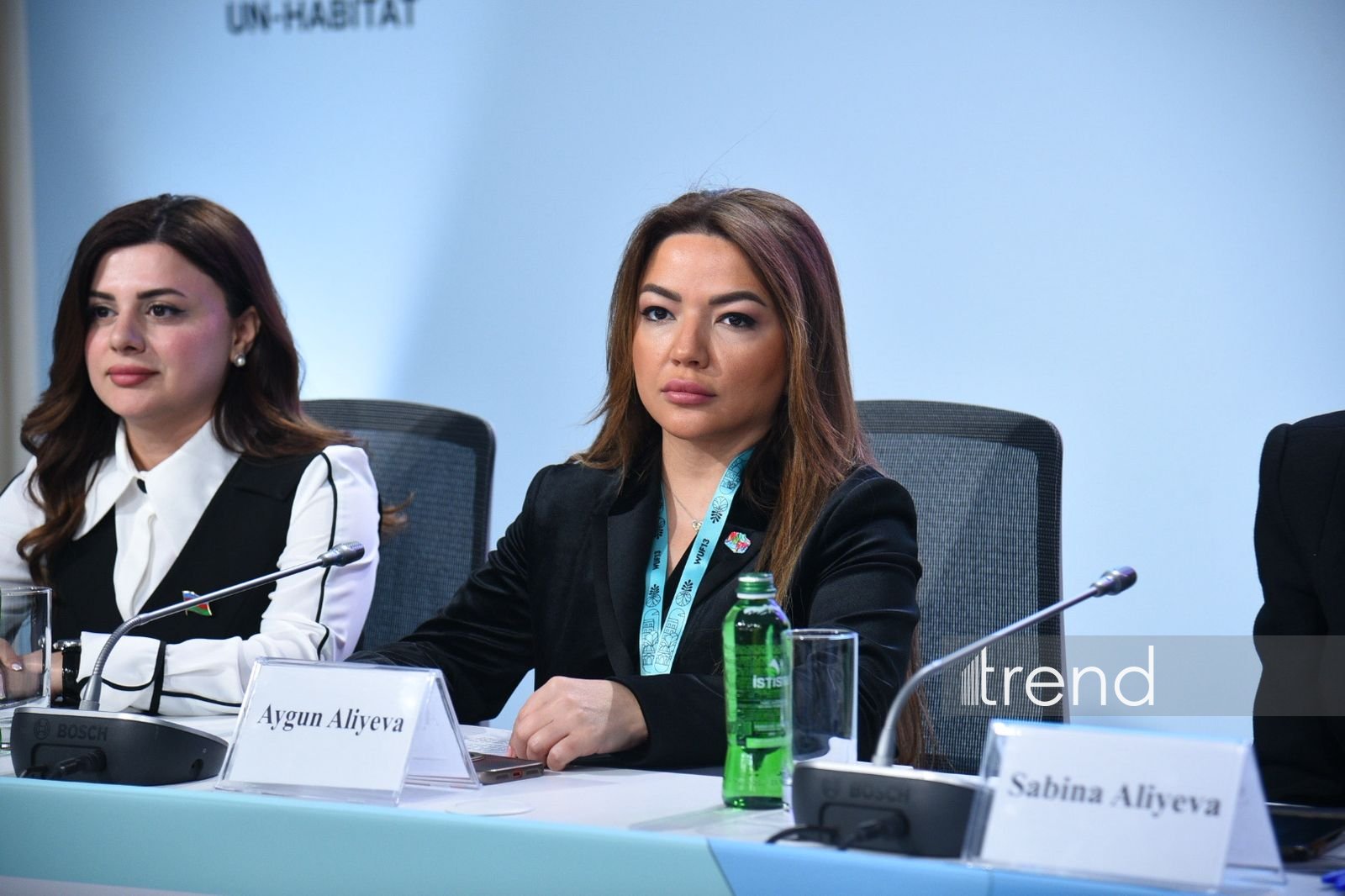
BAKU, Azerbaijan, May 19. Non-governmental organizations (NGOs) play a vital role in addressing the needs of people with disabilities, promoting their rights, and improving their quality of life, Chairperson of the Board of the Agency for State Support to NGOs of Azerbaijan, Aygun Aliyeva, said at the event "Inclusive Cities and Independent Living for People with Disabilities," held as part of the 13th session of the World Urban Forum (WUF13) in Baku, Trend reports.
According to her, the Agency for State Support to NGOs pays close attention to projects related to people with disabilities.
"Over the past few years, the agency has funded dozens of projects implemented by NGOs in this area. These projects cover various areas, including social rehabilitation, psychological support, inclusive education, employment opportunities, as well as sports and art for people with disabilities," she said.
Aliyeva noted that NGOs are closest to the community, better understand the needs of people with disabilities, and are able to offer flexible and innovative solutions.
"Therefore, we are always open to collaboration with NGOs and other stakeholders in this area," she emphasized.
According to the agency's board chair, today's event is an example of such collaboration, bringing together representatives of government agencies, international organizations, civil society, and people with disabilities themselves to discuss the concept of inclusive cities.
She noted that an inclusive city is more than just ramps and elevators.
"It's a city where every citizen, regardless of their physical abilities, feels valued, respected, and included. It's a city that provides equal access to public services, transportation, education, culture, and employment," the official explained.
According to her, to achieve this goal, it is necessary to jointly implement the principles of accessibility and inclusiveness in urban planning, legislation, and social policy.
Aliyeva expressed confidence that the discussions, presentations, and photo exhibition organized as part of the event will help identify existing problems, share successful experiences, and identify practical paths for further action.
The third day of the 13th session of the World Urban Forum (WUF13) is underway in Baku.
On the first day, a ministerial meeting dedicated to the New Urban Agenda, a roundtable of ministers, assemblies of women and civil society, business sessions, and discussions on urban well-being were held. A ceremony for raising the flags of the United Nations and Azerbaijan also took place within the framework of the forum.
The second day of the forum drew attention with the first-ever Leaders Summit. High-level discussions on the global housing crisis, urbanization policy, and urban resilience were held that day. At the same time, the Mexico City pavilion was inaugurated within the framework of WUF13. The pavilion was presented as an important platform for expanding cooperation with the Latin American region and preparing for WUF14.
WUF13, which has attracted more than 40,000 registered participants from 182 countries, will continue until May 22. Held under the theme “Housing the world: Safe and resilient cities and communities,” the forum brings together governments, international organizations, experts, and representatives of civil society to strengthen global cooperation in the field of sustainable urban development.



