


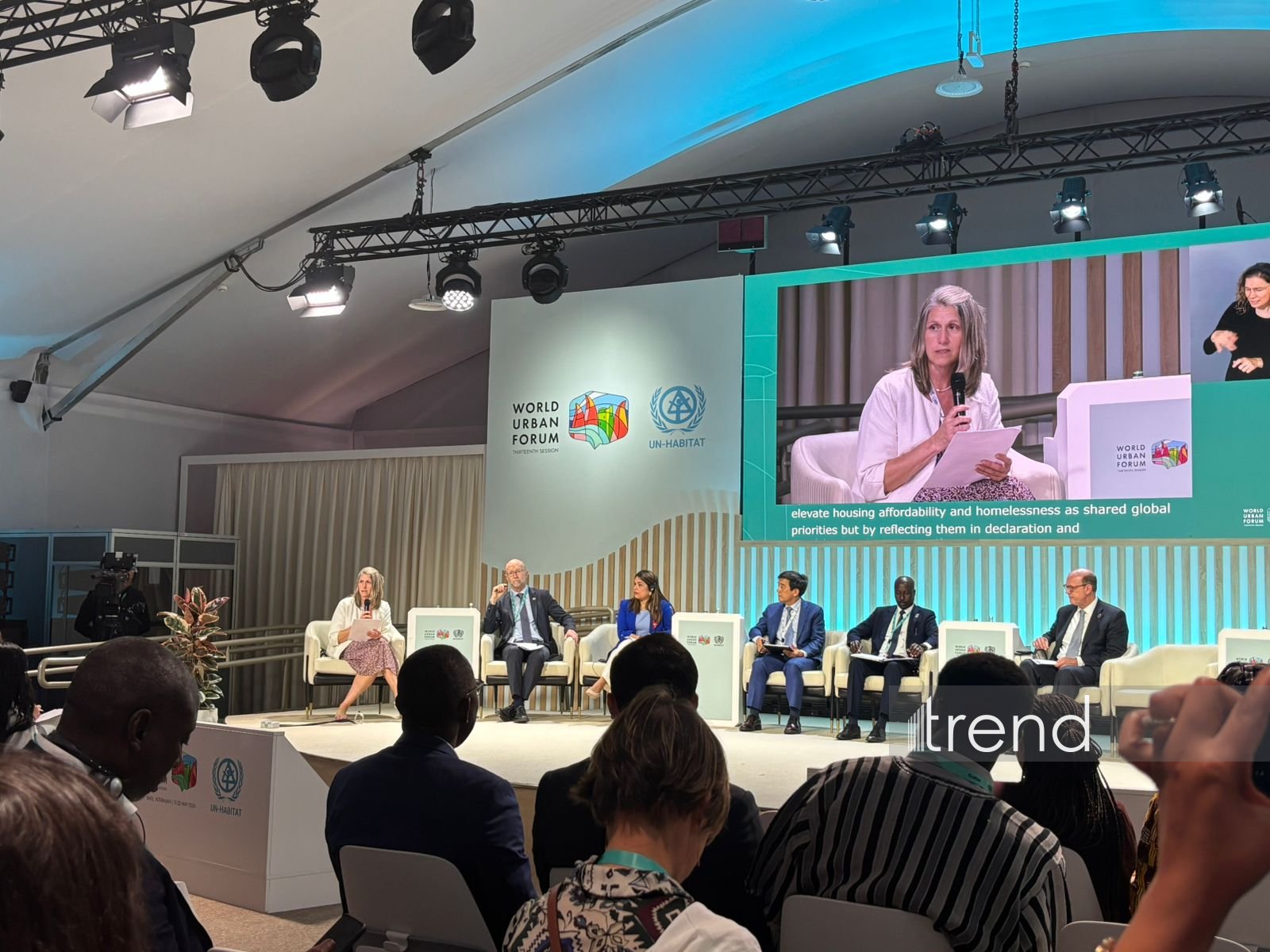

BAKU, Azerbaijan, May 19. Addressing homelessness must be viewed as a global priority and reflected in declarations by national leaders, as well as in the work of relevant ministries, using a unified approach to assessing needs and monitoring progress in the housing sector, Janet Golding, Assistant Deputy Minister of Housing, Infrastructure and Communities of Canada, said, Trend reports.
She made the remark during the session “Housing at the Heart of Global Coalitions,” held as part of the World Urban Forum (WUF13) in Baku.
According to her, including housing issues on the agendas of infrastructure, financial, and sustainability forums will ensure more coordinated and long-term action.
Janet Golding also emphasized the importance of developing common indicators and reporting systems, including UN-Habitat initiatives to define and measure homelessness, which will strengthen global accountability.
The representative from Canada noted that her country’s experience demonstrates the effectiveness of clear definitions of housing need, which make it possible to identify households facing problems of unaffordable, overcrowded, or substandard housing and to develop more precise policies in line with SDG 11.
"Canada’s approach to addressing homelessness can be applied in other countries as well. The federal Reaching Home program implements data-driven, community-focused, and ‘Housing First’ approaches, and ensures coordinated access to services for people experiencing homelessness, allowing assistance to be provided regardless of the ‘point of entry.’ “The lack of safe, affordable, and quality housing remains the key cause of homelessness,” she said.
Among the solutions, she cited the use of public land for affordable housing construction, blended finance models to mitigate investment risks and attract private capital, and the adoption of modern construction methods to accelerate housing development and achieve climate goals.
She also emphasized the need to expand cooperation with international organizations, institutional investors, charitable organizations, and the private sector to mobilize the resources necessary for large-scale housing construction.
According to her, governments must act as catalysts for innovation and support people-centered approaches to creating inclusive cities where people can live, work, and thrive.
In particular, she noted that the G7 and G20 provide opportunities to share experiences, develop joint commitments, and monitor each other’s progress.
The third day of the 13th session of the World Urban Forum (WUF13) is underway in Baku.
On the first day, a ministerial meeting dedicated to the New Urban Agenda, a roundtable of ministers, assemblies of women and civil society, business sessions, and discussions on urban well-being were held. A ceremony for raising the flags of the United Nations and Azerbaijan also took place within the framework of the forum.
The second day of the forum drew attention with the first-ever Leaders Summit. High-level discussions on the global housing crisis, urbanization policy, and urban resilience were held that day. At the same time, the Mexico City pavilion was inaugurated within the framework of WUF13. The pavilion was presented as an important platform for expanding cooperation with the Latin American region and preparing for WUF14.
WUF13, which has attracted more than 40,000 registered participants from 182 countries, will continue until May 22. Held under the theme “Housing the world: Safe and resilient cities and communities,” the forum brings together governments, international organizations, experts, and representatives of civil society to strengthen global cooperation in the field of sustainable urban development.



