


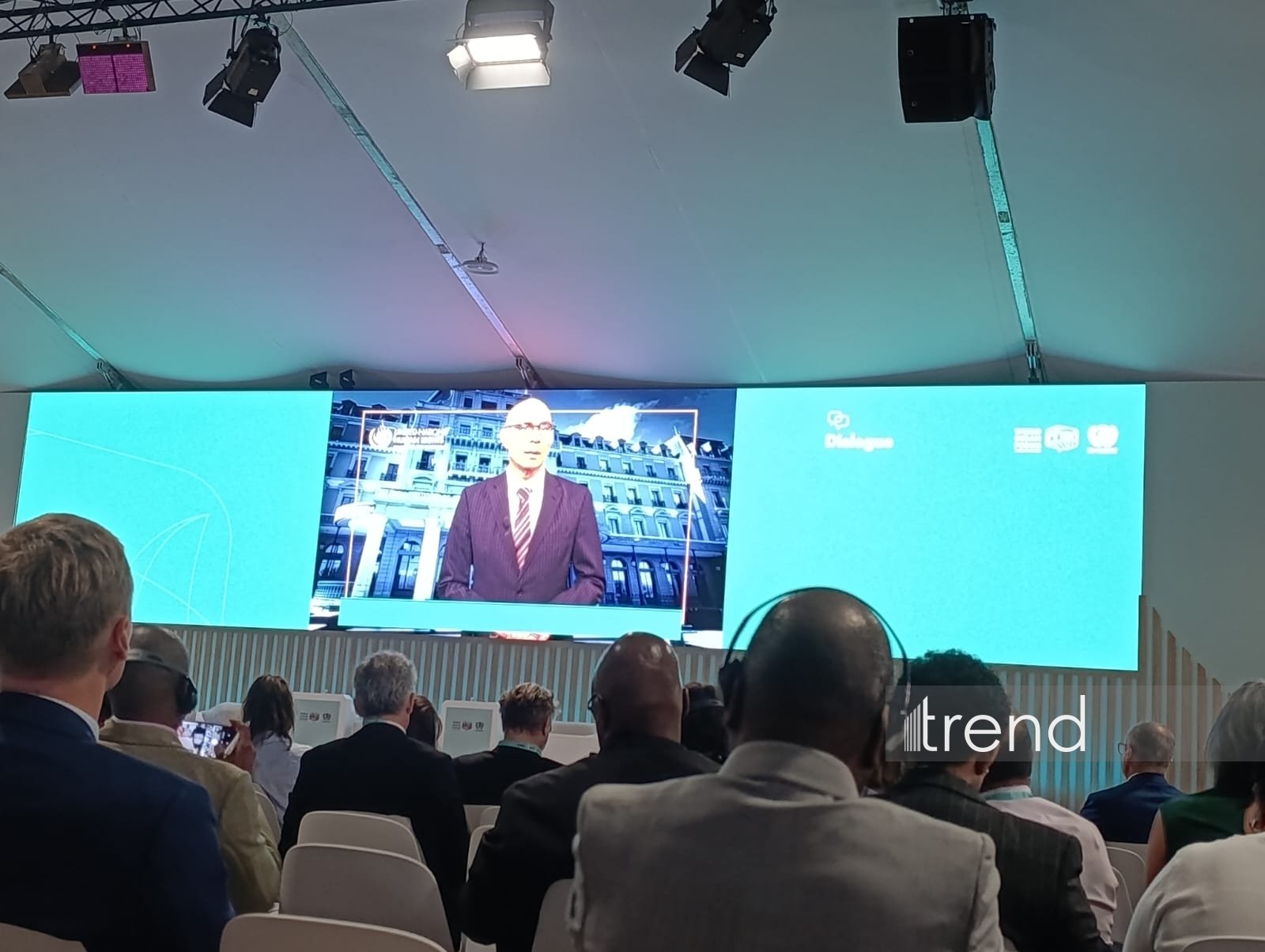
BAKU, Azerbaijan, May 19. Political will and collaboration can help to create sustainable housing solutions for people around the world, UN High Commissioner for Human Rights Volker Türk said in a video message during the dialogue on the topic "The Global Housing Crisis: What's the Plan?", held as part of the 13th session of the World Urban Forum (WUF13), Trend reports.
"Tonight, billions of people will sleep in homes that are unsafe, unhealthy, or at risk of foreclosure. In cities across every continent, people are facing forced evictions, soaring costs of living, and a severe shortage of affordable housing. Homelessness is on the rise. Large-scale development projects are displacing millions. The climate crisis is forcing families to flee their homes and destroying their livelihoods. And in conflict zones, people are forced to flee and live in extremely precarious conditions for years," he explained.
According to Türk, those hardest hit by the housing crisis are those living in poverty and the most marginalized groups, including women and girls.
"Inequality is deepening both between and within countries. Many of you are seeing this reality firsthand in your cities and communities," he noted.
At the same time, the high commissioner emphasized that despite the scale of the challenges, the global community has a growing capacity to respond through solidarity, creative solutions, and a commitment to human rights.
"Some cities are making significant progress thanks to policies that put people first," Türk announced.
According to him, national, regional, and local authorities must be guided by human rights principles when developing housing policy.
Türk underscored that housing policy must be based on the principles of equality, justice, and human rights, and that housing should be viewed as a right, not a commodity.
He also emphasized the need to develop sustainable urban infrastructure amid the worsening climate crisis.
"We need homes and urban infrastructure that are carbon neutral and able to withstand extreme weather events," Türk pointed out.
He stressed that national and local budgets play a key role in financing housing and sustainable infrastructure.
"We now have a window of opportunity. With political will and collaboration, we can create sustainable housing solutions for people around the world," he added.
The third day of the 13th session of the World Urban Forum (WUF13) is underway in Baku.
On the first day, a ministerial meeting dedicated to the New Urban Agenda, a roundtable of ministers, assemblies of women and civil society, business sessions, and discussions on urban well-being were held. A ceremony for raising the flags of the United Nations and Azerbaijan also took place within the framework of the forum.
The second day of the forum drew attention with the first-ever Leaders Summit. High-level discussions on the global housing crisis, urbanization policy, and urban resilience were held that day. At the same time, the Mexico City pavilion was inaugurated within the framework of WUF13. The pavilion was presented as an important platform for expanding cooperation with the Latin American region and preparing for WUF14.
WUF13, which has attracted more than 40,000 registered participants from 182 countries, will continue until May 22. Held under the theme “Housing the world: Safe and resilient cities and communities,” the forum brings together governments, international organizations, experts, and representatives of civil society to strengthen global cooperation in the field of sustainable urban development.



