


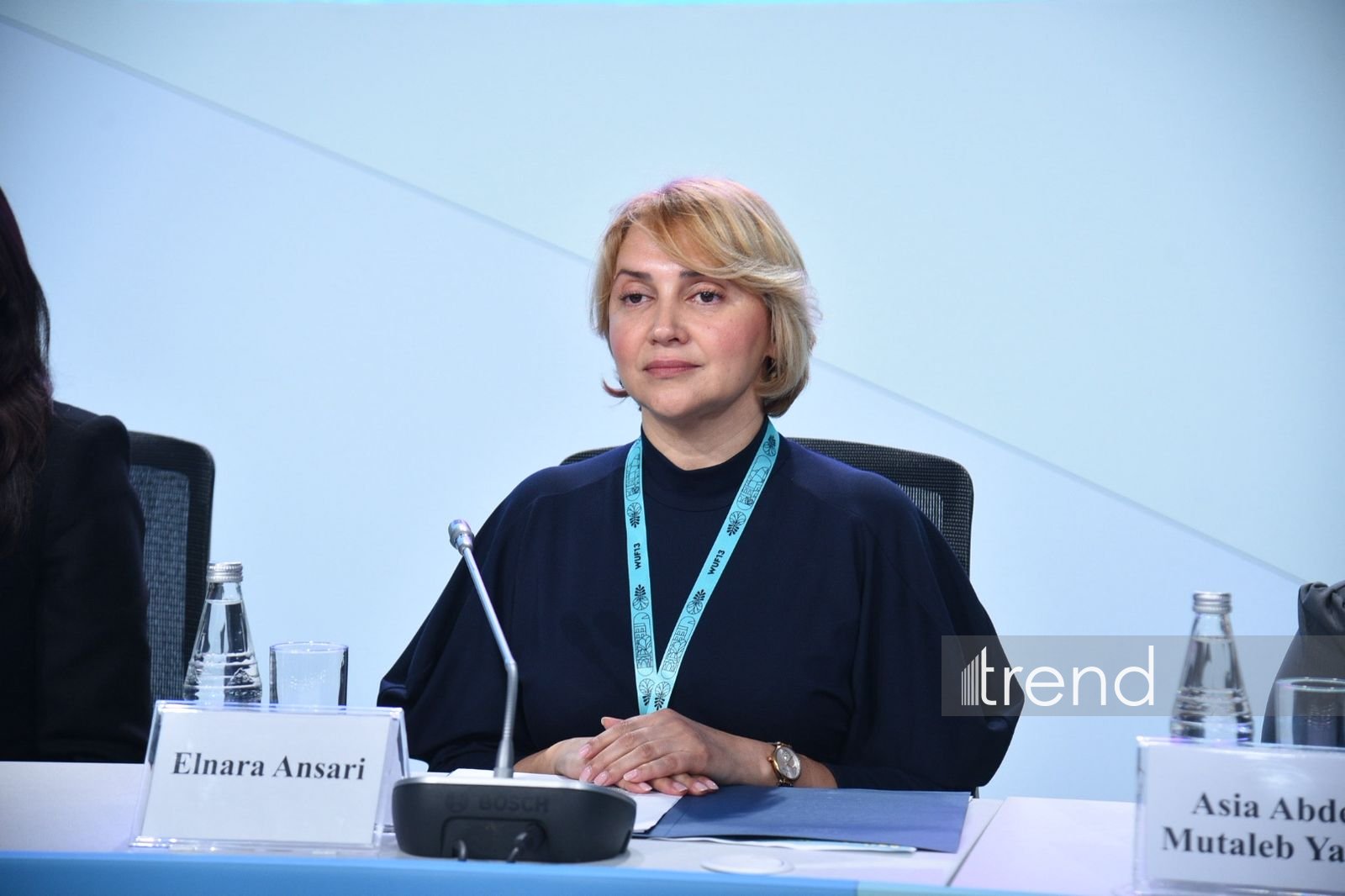
BAKU, Azerbaijan, May 19. The independent living of people with disabilities is directly linked to the physical and informational accessibility of the urban environment, Director of the Azerbaijan Center for Inclusive Development and Creativity under the Agency for Sustainable and Operative Social Provision Elnara Ansari, said at the event "Inclusive Cities and Independent Living for People with Disabilities," held as part of the 13th session of the World Urban Forum (WUF13) in Baku, Trend reports.
She noted that the initiative, implemented by the "Independent living center for people with disabilities" public association with the support of the Agency for State Support to NGOs and the Ombudsman's Office of Azerbaijan, deserves high praise.
According to Ansari, independent living for people with disabilities begins with the ability to leave the house independently, cross the street safely, use public transportation, and visit a public building or store.
"Lack of accessibility is one of the main factors in the social exclusion of people with disabilities," she said.
She emphasized that the lack of ramps, accessible restrooms, and other necessary infrastructure limits the participation of people with disabilities in public life and deprives society of their potential and opportunities.
According to her, inclusive urban planning is not a luxury or an afterthought, but a fundamental necessity that must be considered from the very beginning of any development project.
"It's much easier and more cost-effective to design an accessible building from the start than to adapt it later," Ansari said.
She also noted that accessibility benefits not only people with disabilities, but also parents with strollers, the elderly, tourists with luggage, and people with temporary injuries.
According to the center's director, the exhibition "Accessibility Myths: Invisible Barriers of Modern Urban Development" presented at the event highlights barriers that often remain invisible to most people.
"Sometimes even a small threshold of ten centimeters can become an insurmountable obstacle for someone using a wheelchair. An incorrectly installed sign or the absence of tactile paving can make a space completely inaccessible to someone with visual impairments," she said.
Ansari expressed hope that the event will inspire action in creating an inclusive urban environment.
"We need to make our cities truly inclusive and accessible," she emphasized.
The third day of the 13th session of the World Urban Forum (WUF13) is underway in Baku.
On the first day, a ministerial meeting dedicated to the New Urban Agenda, a roundtable of ministers, assemblies of women and civil society, business sessions, and discussions on urban well-being were held. A ceremony for raising the flags of the United Nations and Azerbaijan also took place within the framework of the forum.
The second day of the forum drew attention with the first-ever Leaders Summit. High-level discussions on the global housing crisis, urbanization policy, and urban resilience were held that day. At the same time, the Mexico City pavilion was inaugurated within the framework of WUF13. The pavilion was presented as an important platform for expanding cooperation with the Latin American region and preparing for WUF14.
WUF13, which has attracted more than 40,000 registered participants from 182 countries, will continue until May 22. Held under the theme “Housing the world: Safe and resilient cities and communities,” the forum brings together governments, international organizations, experts, and representatives of civil society to strengthen global cooperation in the field of sustainable urban development.



