


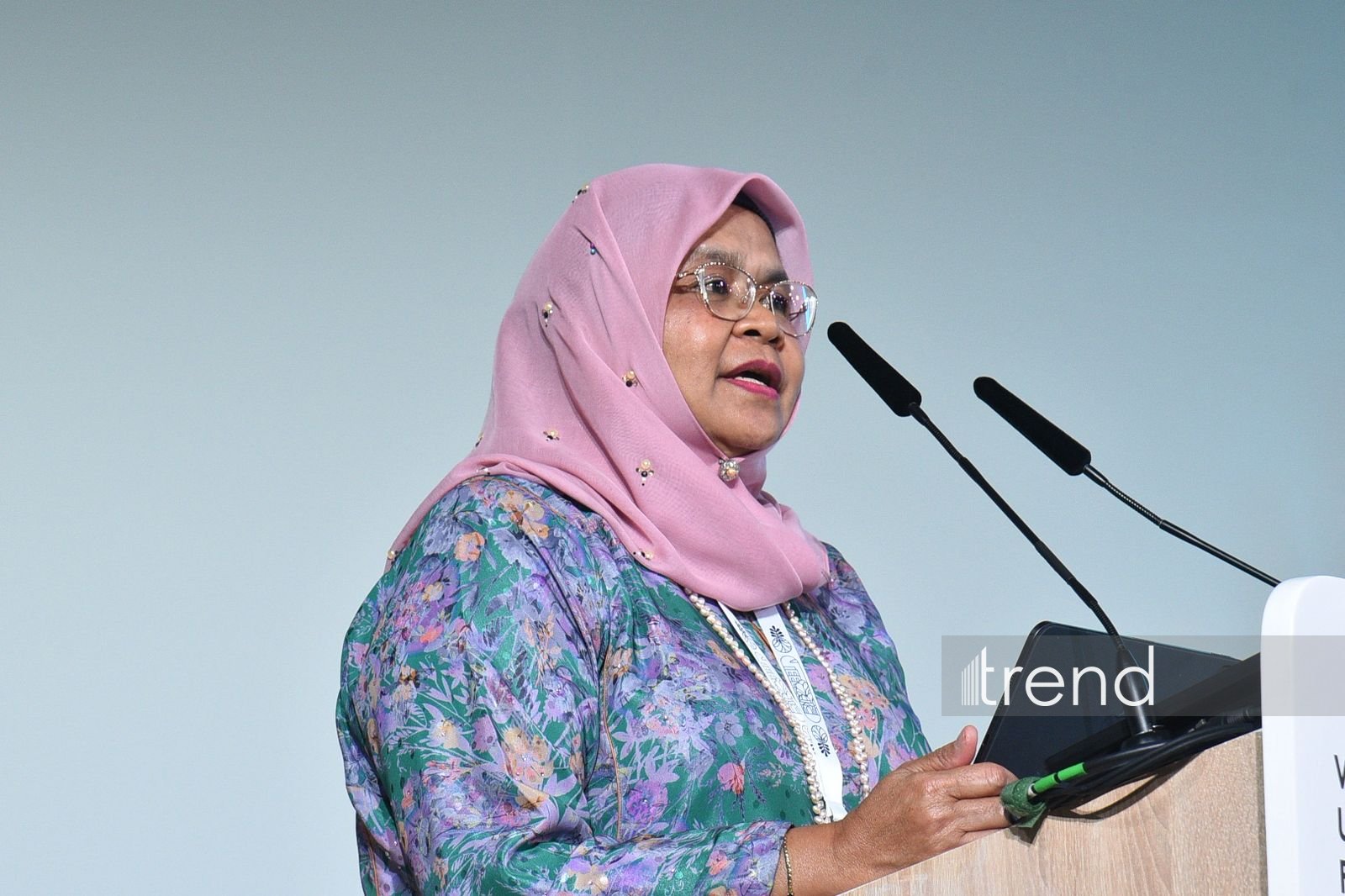

BAKU, Azerbaijan, May 19. Non-governmental organizations bridge the gap between people, policy, and practice, Maimunah Mohd Sharif, former Mayor of Kuala Lumpur, former Executive Director of UN-Habitat, and current adviser to the Malaysian government on sustainable urbanization, said during the NGO Forum titled "Global Partnership and Decision-Making" held within the framework of the 13th session of the World Urban Forum (WUF13) in Baku, Trend reports.
According to her, the theme of global partnership and decision-making holds particular relevance today, as the format of cooperation increasingly determines the quality of decisions made and their direct impact on people's lives.
She noted that while cities around the world grow rapidly, the divide between policy frameworks and the daily realities of citizens continues to widen.
"Housing inequality and climate resilience lack abstract definitions; people confront these issues daily. This exactly highlights why the role of NGOs and civil society organizations carries such vital importance," Maimunah Mohd Sharif emphasized.
In her view, civil society organizations deserve recognition beyond their presence at international forums.
"You do not function merely as participants. You represent the essential link connecting people, policy, and practice," she stated.
Maimunah Mohd Sharif also stressed the importance of community engagement over simple public participation in decision-making processes.
"I believe not just in public participation, but in true community engagement, because engagement represents a distinct two-way process," she said.
According to her, urban transformation requires the consolidation of different perspectives, actors, and levels of interaction.
"NGOs bring proximity to people, trust, and a live understanding of local scenarios to this process. They give voice to communities and help render decisions not only well-conceived, but effectively implementable," Maimunah Mohd Sharif concluded.
The third day of the 13th session of the World Urban Forum (WUF13) is underway in Baku.
On the first day, a ministerial meeting dedicated to the New Urban Agenda, a roundtable of ministers, assemblies of women and civil society, business sessions, and discussions on urban well-being were held. A ceremony for raising the flags of the United Nations and Azerbaijan also took place within the framework of the forum.
The second day of the forum drew attention with the first-ever Leaders Summit. High-level discussions on the global housing crisis, urbanization policy, and urban resilience were held that day. At the same time, the Mexico City pavilion was inaugurated within the framework of WUF13. The pavilion was presented as an important platform for expanding cooperation with the Latin American region and preparing for WUF14.
WUF13, which has attracted more than 40,000 registered participants from 182 countries, will continue until May 22. Held under the theme “Housing the world: Safe and resilient cities and communities,” the forum brings together governments, international organizations, experts, and representatives of civil society to strengthen global cooperation in the field of sustainable urban development.



