


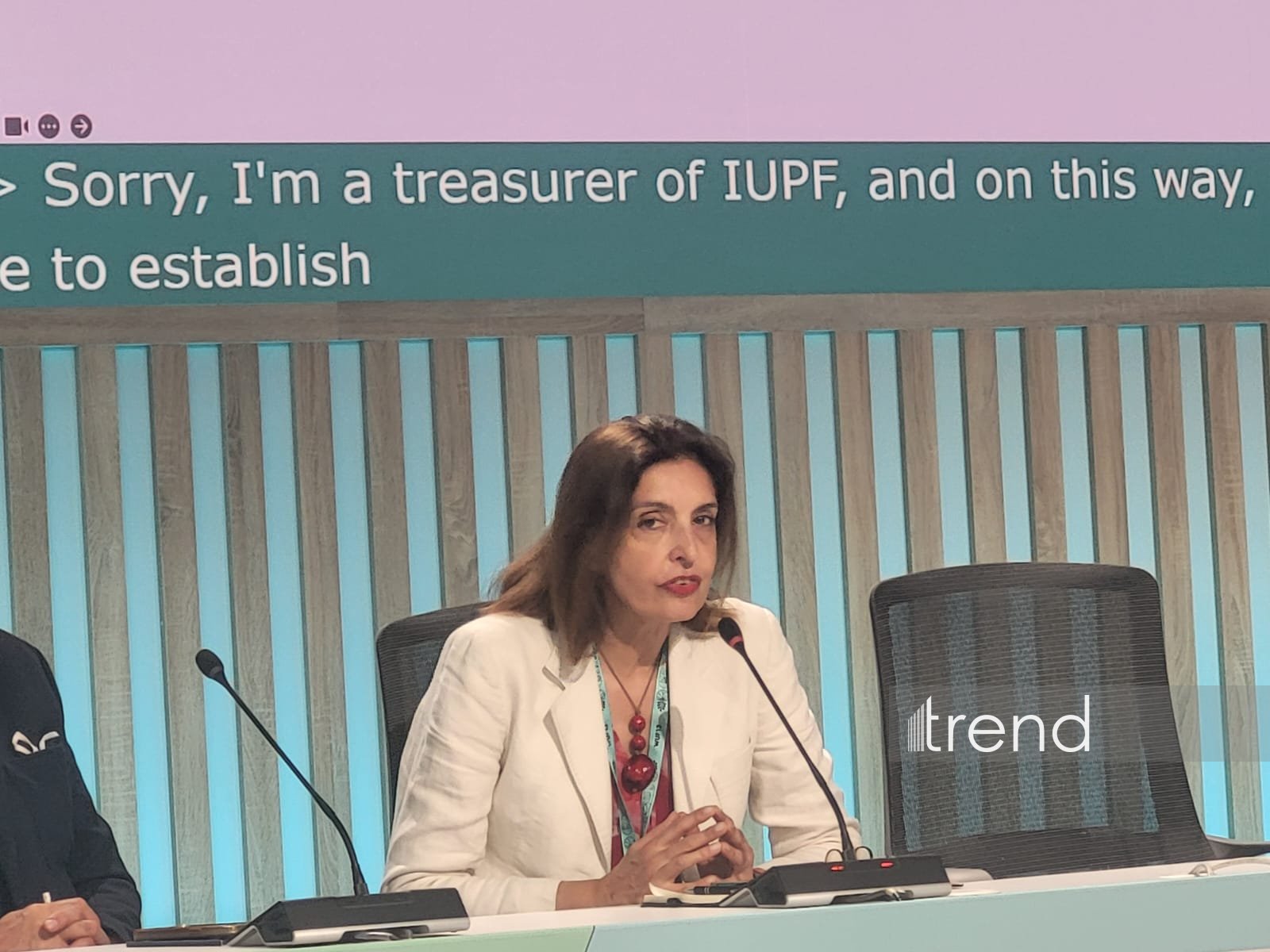

BAKU, Azerbaijan, May 19. The sustainability of cities depends not only on the quality of infrastructure, but also on social ties, culture, and community engagement, the professor at Union Nikola Tesla University in Belgrade, Darinka Golubović Matić, said, Trend reports.
She made the statement during the panel discussion “Bridging Grassroots Communities and Global Urban Expertise” as part of the 13th World Urban Forum (WUF13).
“Engineering provides the necessary foundation—safe buildings, reliable systems, mobility, water supply, energy, and risk protection. But this infrastructure cannot be successful without taking the human factor into account,” she said.
According to Golubović Matić, urban development must take into account people’s habits, culture, social ties, local knowledge, and the daily needs of the population.
“By 2050, engineers must collaborate much more closely with communities, architects, urban planners, and local institutions,” the professor noted.
She emphasized that the infrastructure of the future must be more adaptive, people-centered, and built with the participation of the population.
“The goal is not only to build durable structures, but also to create spaces where communities can live, interact, and thrive in the long term,” Golubović Matić said.
According to her, urban sustainability is not only a technical issue but also a social one.
Meanwhile, the third day of the 13th session of the World Urban Forum (WUF13) is underway in Baku.
On the first day, a ministerial meeting dedicated to the New Urban Agenda, a roundtable of ministers, assemblies of women and civil society, business sessions, and discussions on urban well-being were held. A ceremony for raising the flags of the United Nations and Azerbaijan also took place within the framework of the forum.
The second day of the forum drew attention with the first-ever Leaders Summit. High-level discussions on the global housing crisis, urbanization policy, and urban resilience were held that day. At the same time, the Mexico City pavilion was inaugurated within the framework of WUF13. The pavilion was presented as an important platform for expanding cooperation with the Latin American region and preparing for WUF14.
WUF13, which has attracted more than 40,000 registered participants from 182 countries, will continue until May 22. Held under the theme “Housing the world: Safe and resilient cities and communities,” the forum brings together governments, international organizations, experts, and representatives of civil society to strengthen global cooperation in the field of sustainable urban development.



