


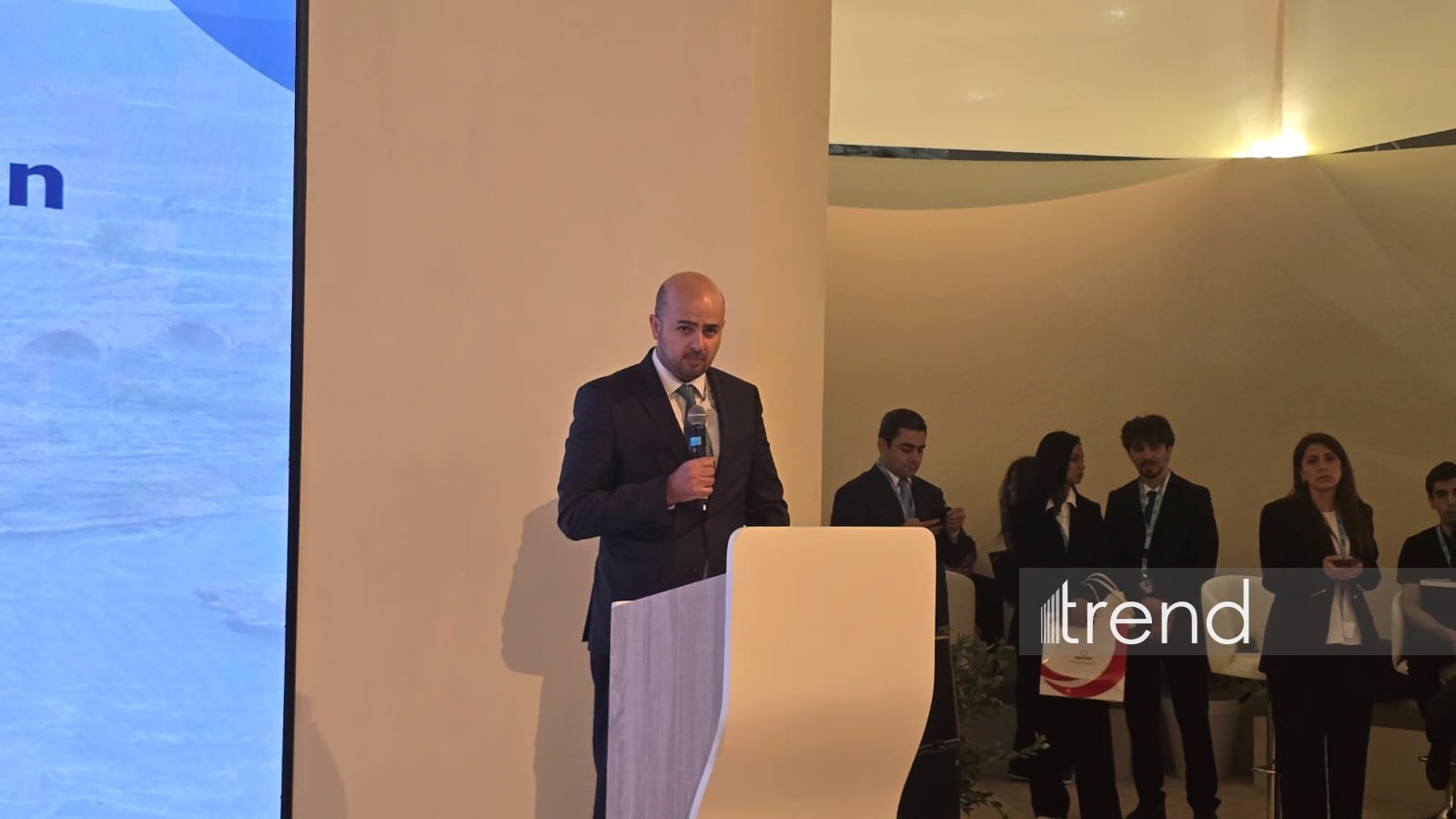

BAKU, Azerbaijan, May 20. Green energy generated in Azerbaijan’s liberated territories will be sufficient not only to meet domestic demand but also for export in the future, said Vahid Hajiyev, the President's Special Representative for Jabrayil, Gubadli and Zangilan regions, Trend reports.
Speaking at the World Urban Forum (WUF13) in Baku, Vahid Hajiyev said reconstruction efforts in the liberated areas are focused not only on rebuilding infrastructure but also on ensuring long-term sustainable economic development and permanent settlement.
Hajiyev made the remarks during a session titled “Urban Value Chain in Practice: Implementation of Smart and Sustainable City Projects in Azerbaijan.”
He said the government is applying targeted incentives to attract investors and support business activity in the region, including tax and customs exemptions, as well as preferential financing mechanisms.
To facilitate investment, simplified regulatory conditions have also been introduced for both local and foreign investors, he added.
Hajiyev highlighted the Araz Valley Economic Zone as one of the key investment hubs in the region, noting that 19 resident companies and three non-resident business entities are currently operating there.
He said that the Karabakh and East Zangezur economic regions have been officially designated as a “Green Energy Zone,” where renewable energy solutions are being widely implemented.
According to him, hydropower resources are actively used, with four hydroelectric power stations operating in Zangilan alone, each with a capacity of 50 megawatts.
He added that the region’s solar energy potential is significantly higher than in other parts of Azerbaijan, with solar panels being installed on residential and public buildings.
The official also noted that international energy companies are increasingly investing in the region’s renewable energy sector. BP is investing in a 240-megawatt solar power plant in Jabrayil, while two additional foreign companies are developing projects with a combined capacity of 150 megawatts.
Hajiyev said all renewable energy sources will be integrated into the national grid, contributing not only to local consumption but also to future export capacity.
“This energy will be fully sufficient not only for local industrial needs in Karabakh but also for export in the future,” he said.
He stressed that Azerbaijan’s post-conflict reconstruction model goes beyond physical rebuilding, aiming instead to create fully self-sustaining communities.
The strategy, he said, is built on four key pillars: smart planning, green energy, digital solutions, and economic development, aligned with global Sustainable Development Goals.
Hajiyev added that Azerbaijan’s experience could serve as a practical contribution to global discussions on post-conflict recovery and climate-resilient regional development.
In the mean time, today marks the fourth day of WUF13 in Baku.
The first day included a ministerial meeting dedicated to the New Urban Agenda, a ministerial roundtable, assemblies for women and civil society, business sessions, and discussions on urban prosperity. An official ceremony marking the raising of the UN and Azerbaijani flags also took place.
The second day stood out for the inaugural Leaders' Summit, featuring high-level discussions on the global housing crisis, urbanization policy, and urban resilience. Concurrently, the opening of the Mexico City pavilion took place, serving as a significant platform for expanding cooperation with the Latin American region and preparing for WUF14.
The third day of WUF13 featured a comprehensive program of events covering the global housing crisis, the formation of safe and inclusive cities, climate resilience, artificial intelligence and urban governance, green urbanization, social equity, and sustainable transport.
WUF13, which has attracted more than 40,000 registered participants from 182 countries, will continue until May 22. Held under the theme “Housing the world: Safe and resilient cities and communities,” the forum brings together governments, international organizations, experts, and representatives of civil society to strengthen global cooperation in the field of sustainable urban development.



