


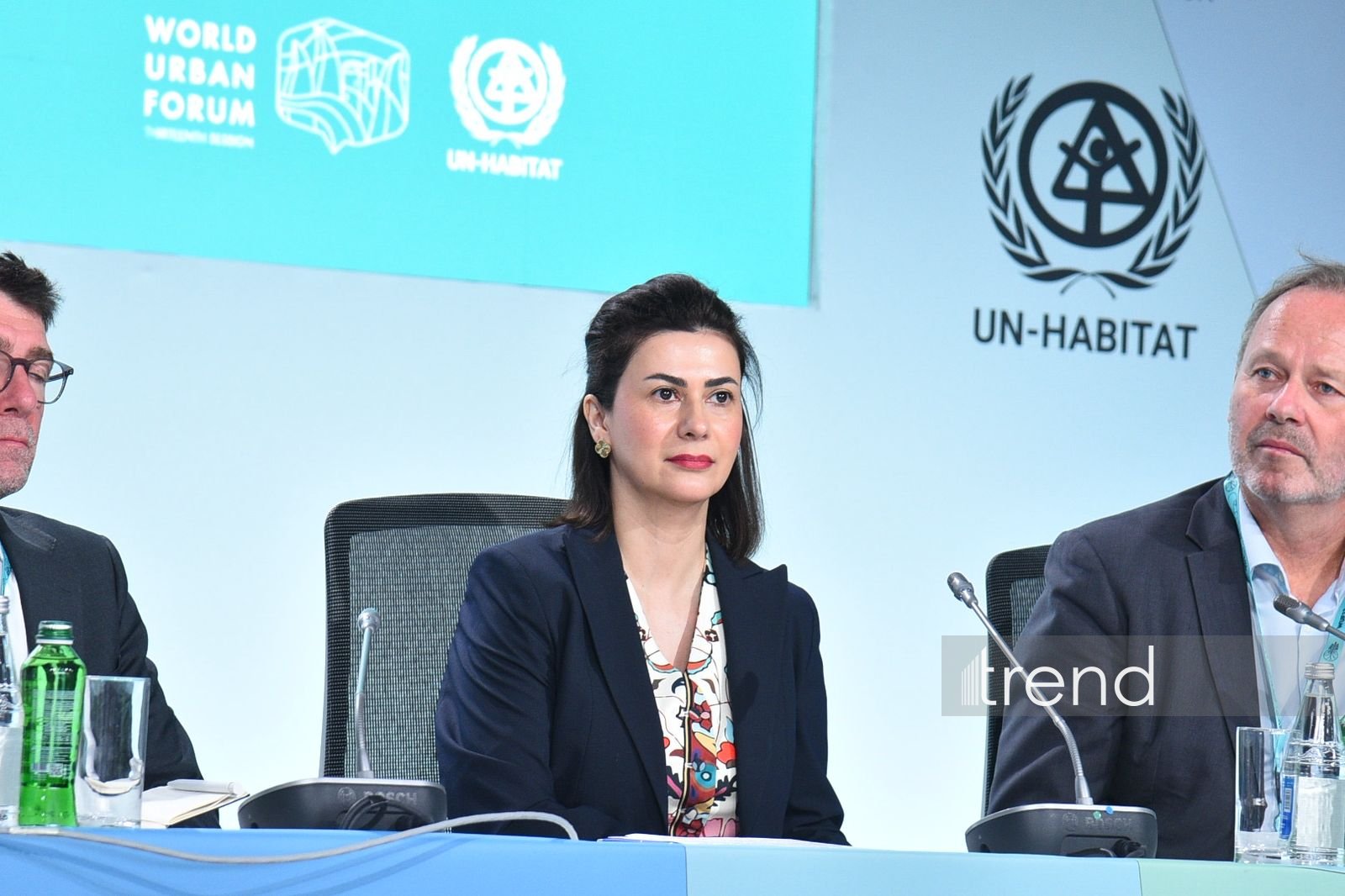
BAKU, Azerbaijan, May 20. Standards for “green” construction are being actively promoted and implemented in Azerbaijan, Aysel Yagubova, Executive Director of the Clean Energy Center of the Economic Cooperation Organization (ECO), said, Trend reports.
She made the statement during a session on “Decarbonizing housing and buildings at the City-Industry-Climate Nexus” as part of WUF13.
"Very recently, the government adopted a ‘green’ taxonomy, which also contributes to the promotion of energy efficiency projects. In Turkey, building energy efficiency standards are in place. In Kazakhstan, large-scale retrofitting projects are being implemented to modernize Soviet-style buildings. “In the Kyrgyz Republic, with the support of the UN and UNDP, building codes have been revised to include enhanced wall insulation and mandatory temperature control,” she said.
According to her, passive building design measures hold great potential for reducing emissions.
“This includes building design, shading, thermal insulation, and optimization of natural lighting. These solutions lay the foundation for decarbonization as early as the design phase,” she noted.
She also emphasized the importance of modernizing the existing housing stock through retrofitting measures.
“These include building insulation, energy-efficient windows, roof upgrades, and reducing heat loss. These measures are particularly relevant for the region,” Yagubova said.
According to her, special attention is being paid to integrating clean energy systems into buildings.
“This includes solar panels on rooftops, decentralized energy solutions, district heating and cooling systems, as well as smart energy management,” she added.
She emphasized that efforts should be directed not only toward new buildings but also toward the existing housing stock.
“Old buildings will remain with us for decades to come, and they cannot be excluded from modernization processes,” she noted.
Today, the fourth day of the WUF13 conference is taking place in Baku.
The first day included a ministerial meeting dedicated to the New Urban Agenda, a ministerial roundtable, assemblies for women and civil society, business sessions, and discussions on urban prosperity. An official ceremony marking the raising of the UN and Azerbaijani flags also took place.
The second day stood out for the inaugural Leaders' Summit, featuring high-level discussions on the global housing crisis, urbanization policy, and urban resilience. Concurrently, the opening of the Mexico City pavilion took place, serving as a significant platform for expanding cooperation with the Latin American region and preparing for WUF14.
The third day of WUF13 featured a comprehensive program of events covering the global housing crisis, the formation of safe and inclusive cities, climate resilience, artificial intelligence and urban governance, green urbanization, social equity, and sustainable transport.
WUF13, which has attracted more than 40,000 registered participants from 182 countries, will continue until May 22. Held under the theme “Housing the world: Safe and resilient cities and communities,” the forum brings together governments, international organizations, experts, and representatives of civil society to strengthen global cooperation in the field of sustainable urban development.



