


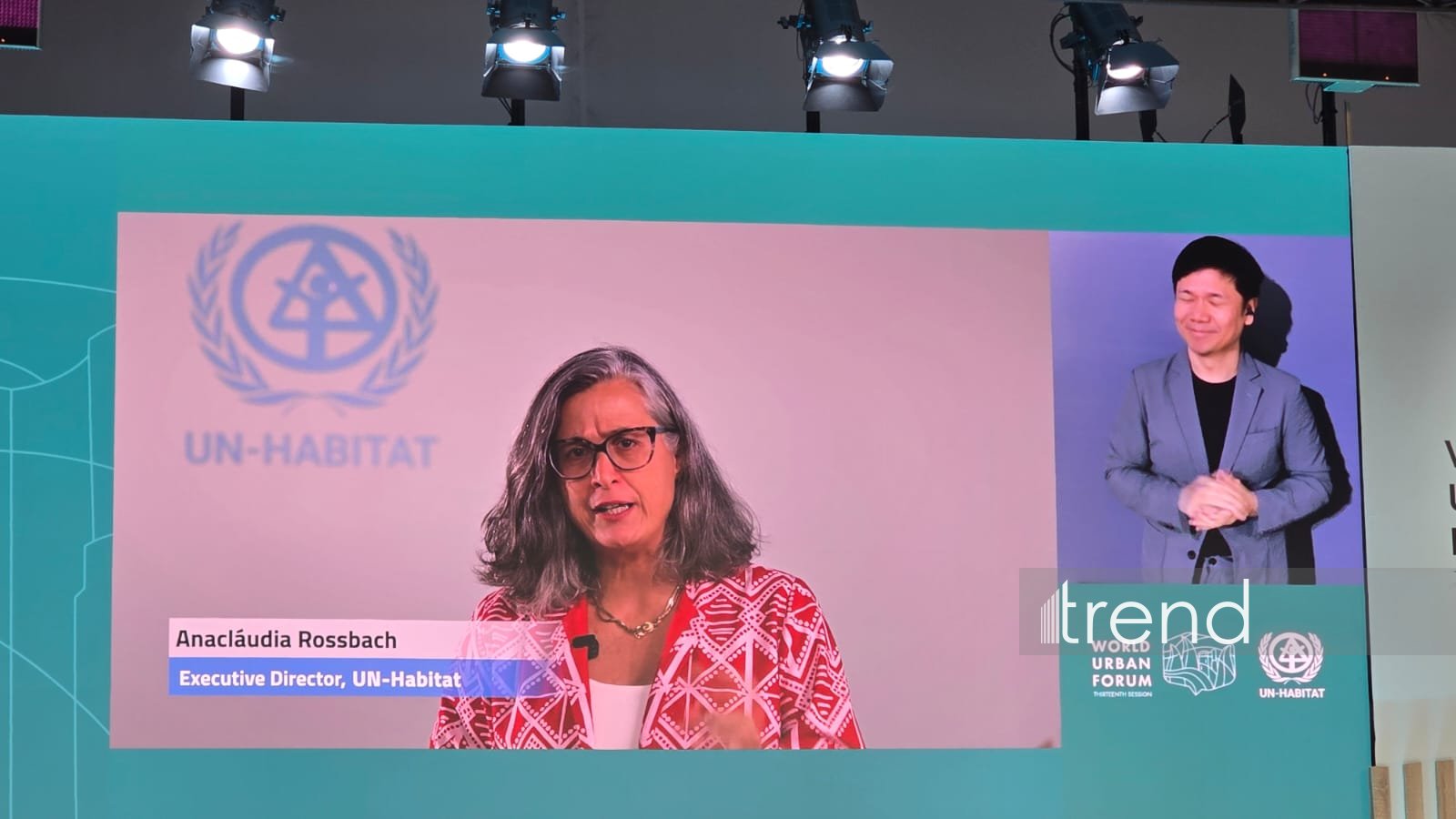
BAKU, Azerbaijan, May 20. Sports must become an integral part of urban planning and development, Anacláudia Rossbach, the Executive Director of UN-Habitat, said, Trend reports.
She made the remark at the event “Cities as playing fields,” held as part of the 13th session of the World Urban Forum (WUF13) in Baku, Trend reports.
Rossbach noted that sport has the power to transform cities, and that how cities are planned, financed, and managed directly affects not only where people live, but also how they move around, socialize, relax, and feel a sense of belonging to the community.
“Housing, mobility, and public spaces are just as important for a comfortable life in cities as are accessible opportunities for movement, social interaction, and personal development through sports, recreation, and play. UN-Habitat increasingly views sport as part of urban infrastructure, linking this sector to inclusivity, health, safety, and community well-being,” she emphasized.
Anacláudia Rossbach noted that the growing collaboration between the UN-Habitat and the International Olympic Committee is also based on this approach. At the same time, she emphasized that this process cannot be implemented solely by institutions.
According to her, various sectors — professionals, the sports sector, urban planning experts, governments, and financial institutions — must work together. She added that during this session, participants should develop specific commitments and ideas for integrating sports into cities in the future.
In conclusion, the Executive Director noted that UN-Habitat stands ready to continue cooperating in this area as a reliable partner.
Today, the fourth day of the WUF13 conference is taking place in Baku.
The first day included a ministerial meeting dedicated to the New Urban Agenda, a ministerial roundtable, assemblies for women and civil society, business sessions, and discussions on urban prosperity. An official ceremony marking the raising of the UN and Azerbaijani flags also took place.
The second day stood out for the inaugural Leaders' Summit, featuring high-level discussions on the global housing crisis, urbanization policy, and urban resilience. Concurrently, the opening of the Mexico City pavilion took place, serving as a significant platform for expanding cooperation with the Latin American region and preparing for WUF14.
The third day of WUF13 featured a comprehensive program of events covering the global housing crisis, the formation of safe and inclusive cities, climate resilience, artificial intelligence and urban governance, green urbanization, social equity, and sustainable transport.
WUF13, which has attracted more than 40,000 registered participants from 182 countries, will continue until May 22. Held under the theme “Housing the world: Safe and resilient cities and communities,” the forum brings together governments, international organizations, experts, and representatives of civil society to strengthen global cooperation in the field of sustainable urban development.



