


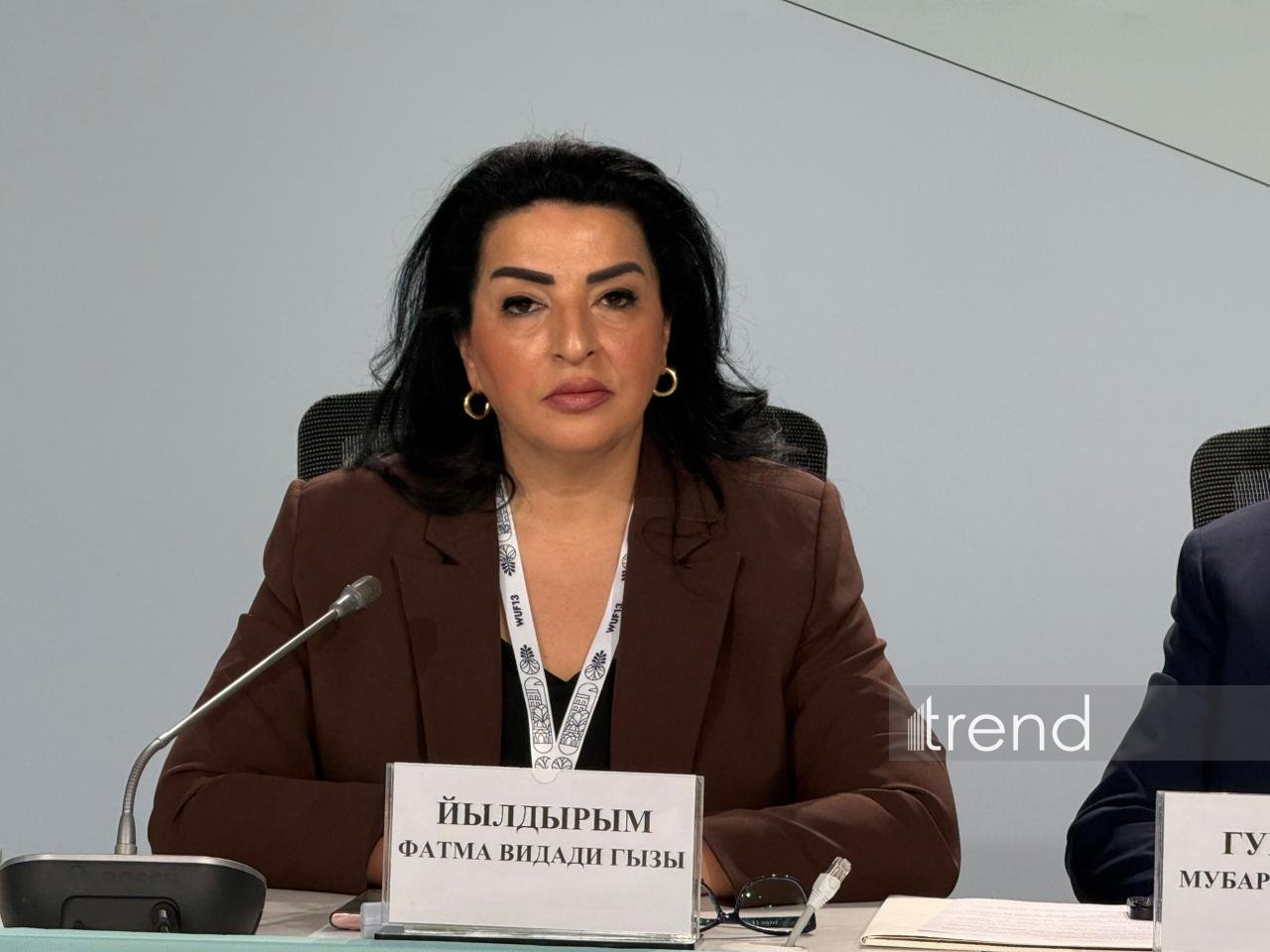
BAKU, Azerbaijan, May 20. Azerbaijan actively implements a large-scale state policy aimed at creating modern, safe, and ecologically sustainable cities, Fatma Yildirim, Member of Parliament and Deputy Chair of the Milli Majlis Committee on Natural Resources, Energy, and Ecology, said, Trend reports.
She made the remark during an event titled "Sustainable development of mountain settlement" held within the framework of the 13th session of the World Urban Forum (WUF13) in Baku.
The MP emphasized that the restoration of the liberated territories holds a special place within this strategy.
"Under the leadership of President Ilham Aliyev, a completely new development model—the 'smart city' and 'smart village' concept—is being formed in the Karabakh and Eastern Zangezur regions, based on innovations, green energy, digital technologies, and sustainable infrastructure principles," she noted. "This is not just a large-scale construction process, but also the restoration of the human environment, returning life, culture, social justice, and historical memory to the liberated lands. Azerbaijan is demonstrating to the world today that it is possible to create modern residential spaces meeting the highest international standards following destruction."
According to the deputy, special attention must be paid to the development of mountain settlements and remote regions.
"In many countries around the world, it is precisely mountainous areas that face serious limitations regarding access to infrastructure, transport, education, and healthcare services. Azerbaijan has rich experience in the field of developing mountainous regions and implements programs aimed at improving social infrastructure, creating new jobs, developing ecotourism, and protecting natural and cultural heritage in this direction," she said.
"Following long years of destruction, the revival of mountain settlements carries not only economic but also important humanitarian significance for us. A modern approach to the development of such territories should first of all be based on the principles of ecological sustainability, digital accessibility, and improving the population's quality of life," she added.
Yildirim noted that modern cities are, above all, an indicator of society's quality of life.
"Today we must speak not only about the construction of buildings and roads, but also about creating an inclusive environment, accessible education, cultural development, ecological safety, and social sustainability. In particular, the participation of youth, women, civil society, and international organizations in shaping sustainable urban solutions carries great weight. Only through joint efforts is it possible to create cities where comfort, safety, and opportunities are accessible to every person," she concluded.
Today marks the fourth day of WUF13 in Baku.
The first day included a ministerial meeting dedicated to the New Urban Agenda, a ministerial roundtable, assemblies for women and civil society, business sessions, and discussions on urban prosperity. An official ceremony marking the raising of the UN and Azerbaijani flags also took place.
The second day stood out for the inaugural Leaders' Summit, featuring high-level discussions on the global housing crisis, urbanization policy, and urban resilience. Concurrently, the opening of the Mexico City pavilion took place, serving as a significant platform for expanding cooperation with the Latin American region and preparing for WUF14.
The third day of WUF13 featured a comprehensive program of events covering the global housing crisis, the formation of safe and inclusive cities, climate resilience, artificial intelligence and urban governance, green urbanization, social equity, and sustainable transport.
WUF13, which has attracted more than 40,000 registered participants from 182 countries, will continue until May 22. Held under the theme “Housing the world: Safe and resilient cities and communities,” the forum brings together governments, international organizations, experts, and representatives of civil society to strengthen global cooperation in the field of sustainable urban development.



