


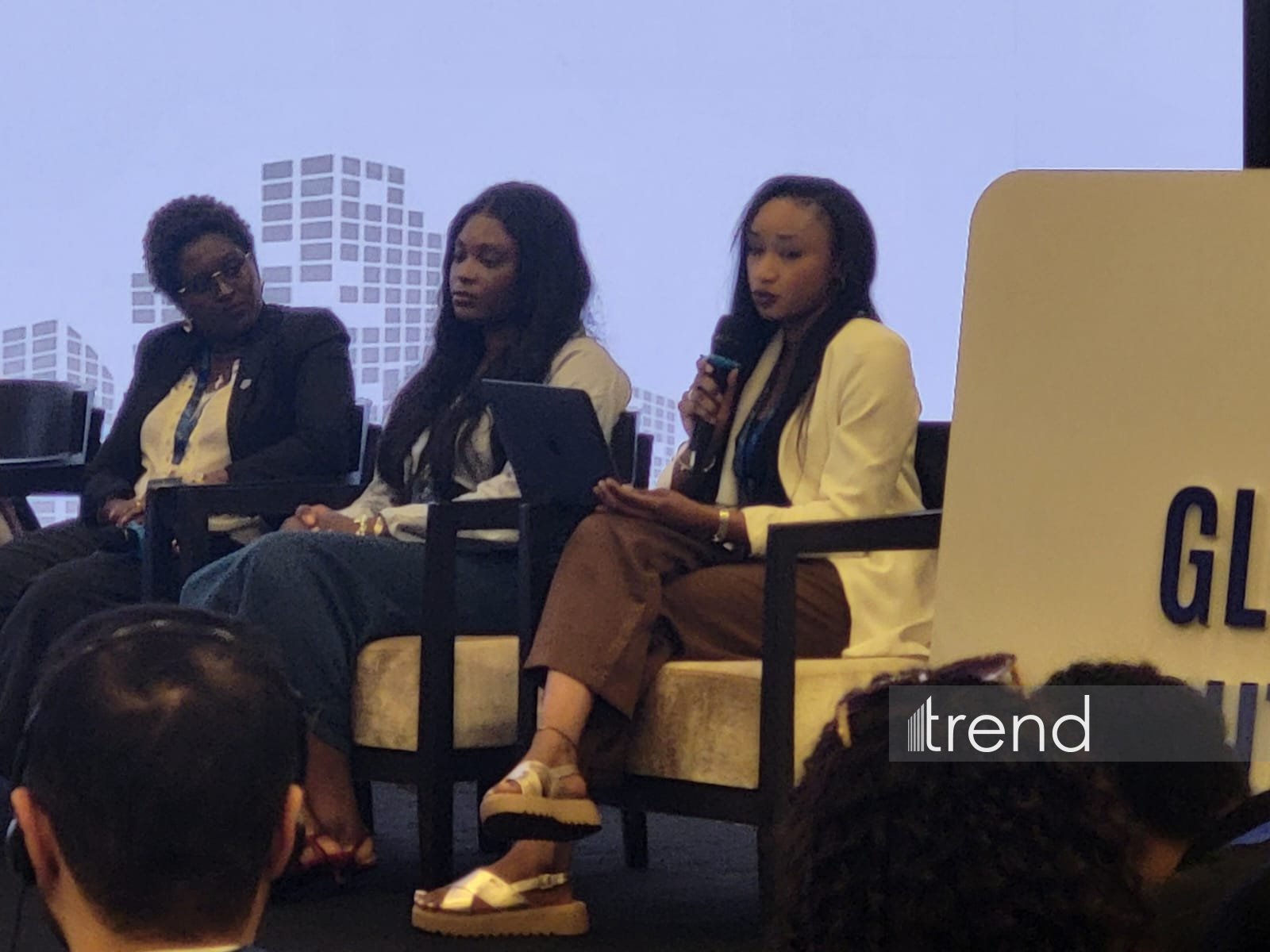

BAKU, Azerbaijan, May 20. Youth in the Global South should focus on innovation, technology, and economic independence instead of constantly looking to the past, said Makadji Aissata Dite Ya, Chief Institutional Partnerships Advisor at TripinAfrica, during the international conference “The Role of Youth in Urban Development in the Process of Decolonization”, held as part of the 13th session of the World Urban Forum (WUF13) in Baku, Trend reports.
“This platform should not be a place where we endlessly repeat old stories and theories. We are not a generation of complaints, we are a generation of solutions,” she said. According to the representative from Côte d’Ivoire, youth in the Global South expect concrete strategies for building the future from such platforms. She emphasized the importance of developing innovation, digital technologies, and artificial intelligence as tools for autonomy and economic growth.
She placed particular emphasis on the issue of economic independence in the countries of the Global South. According to her, countries must process their own natural resources and raw materials domestically to create sustainable jobs. “We must transform our resources at home, with our own efforts, and for our own development,” she stated.
The representative from Côte d’Ivoire also called on young people to shape their own models of development, education, and environmental transition. “Our sovereignty will not be measured by the strength of protest speeches, but by the power of our economies, the creativity of startups, and the strength of our unity,” she emphasized.
According to her, youth in the Global South must abandon old, restrictive approaches and focus on creating a modern and independent future. “The future is being built today, and we must write it together,” Dite Ya added.
Today marks the fourth day of WUF13 in Baku.
The first day included a ministerial meeting dedicated to the New Urban Agenda, a ministerial roundtable, assemblies for women and civil society, business sessions, and discussions on urban prosperity. An official ceremony marking the raising of the UN and Azerbaijani flags also took place.
The second day stood out for the inaugural Leaders' Summit, featuring high-level discussions on the global housing crisis, urbanization policy, and urban resilience. Concurrently, the opening of the Mexico City pavilion took place, serving as a significant platform for expanding cooperation with the Latin American region and preparing for WUF14.
The third day of WUF13 featured a comprehensive program of events covering the global housing crisis, the formation of safe and inclusive cities, climate resilience, artificial intelligence and urban governance, green urbanization, social equity, and sustainable transport.
WUF13, which has attracted more than 40,000 registered participants from 182 countries, will continue until May 22. Held under the theme “Housing the world: Safe and resilient cities and communities,” the forum brings together governments, international organizations, experts, and representatives of civil society to strengthen global cooperation in the field of sustainable urban development.



