


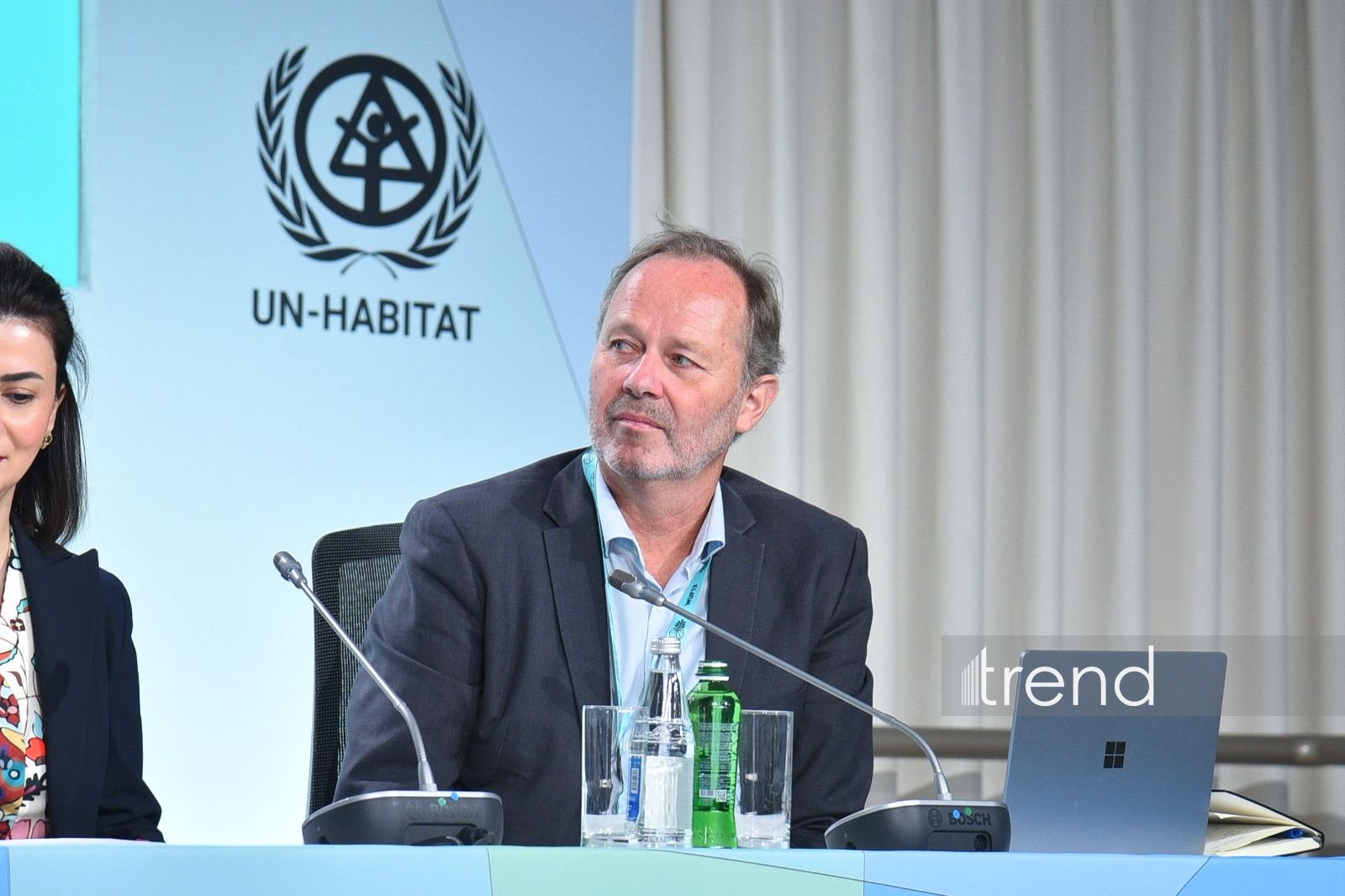

BAKU, Azerbaijan, May 20. For many investors, environmental and social considerations are becoming increasingly important, Senior Advisor on Urban Development and Infrastructure at the African Development Bank, Ole Stubdrup, said, Trend reports.
He made the remark during a session on “Decarbonizing housing and buildings at the City-Industry-Climate Nexus” as part of WUF13.
“For us, as a development bank, this is critical: we want to see a real impact, especially for the most vulnerable groups. If this can be demonstrated, it significantly increases the chances of funding approval,” he said.
Stubdrub also noted that the issue of scaling up is constantly being discussed.
“We have many pilot projects and proven solutions, but to scale up and attract the private sector, we need a sufficient volume of projects that will be of interest to institutional investors, such as pension funds. To achieve this, we must either bundle projects or consider the development of entire urban districts, rather than just individual housing units,” he said
The bank representative noted that in such models, infrastructure can be financed by government or multilateral institutions, while housing is financed by the private sector. This creates a larger investment package.
Today, the fourth day of the WUF13 conference is taking place in Baku.
The first day included a ministerial meeting dedicated to the New Urban Agenda, a ministerial roundtable, assemblies for women and civil society, business sessions, and discussions on urban prosperity. An official ceremony marking the raising of the UN and Azerbaijani flags also took place.
The second day stood out for the inaugural Leaders' Summit, featuring high-level discussions on the global housing crisis, urbanization policy, and urban resilience. Concurrently, the opening of the Mexico City pavilion took place, serving as a significant platform for expanding cooperation with the Latin American region and preparing for WUF14.
The third day of WUF13 featured a comprehensive program of events covering the global housing crisis, the formation of safe and inclusive cities, climate resilience, artificial intelligence and urban governance, green urbanization, social equity, and sustainable transport.
WUF13, which has attracted more than 40,000 registered participants from 182 countries, will continue until May 22. Held under the theme “Housing the world: Safe and resilient cities and communities,” the forum brings together governments, international organizations, experts, and representatives of civil society to strengthen global cooperation in the field of sustainable urban development.



