


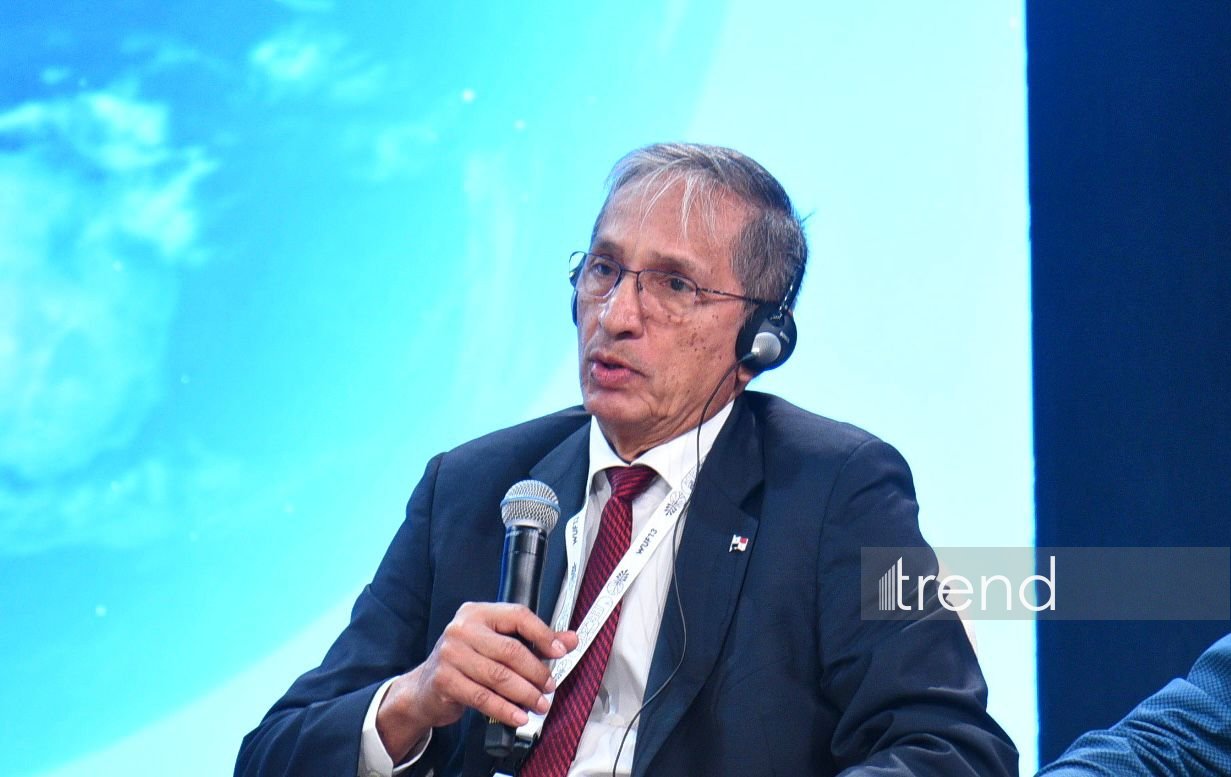

BAKU, Azerbaijan, May 20. Minister of Housing and Territorial Planning of Panama Jaime Giovanelli, said that Panama is currently developing a cable car transport system aimed at reducing traffic congestion in urban areas, Trend reports.
Speaking at a panel discussion titled “Two Regions, One Agenda: Lessons for Inclusive Urban Renewal” during the World Urban Forum (WUF13), Giovanelli outlined the country’s urban development challenges and infrastructure priorities.
He said Panama faces a significant housing shortage, noting that demand affects both the quantity and quality of available housing.
“In quantitative terms, it covers about 5 percent of our population. But in qualitative terms, housing needs already reach 10 percent,” he said.
The minister also pointed out that many newly developed residential complexes lack essential social infrastructure, including access to drinking water, transportation, roads, energy, healthcare, and education.
“There are housing projects, but they do not have basic services. Therefore, the state must ensure that institutions responsible for public services act before housing development begins,” he said.
Giovanelli added that better coordination is needed so that infrastructure planning precedes construction, ensuring improved living conditions for families.
He confirmed that Panama is building a cable car system as part of efforts to ease traffic pressure in densely populated areas.
Another major initiative, he said, is the restoration of the city of Colón on Panama’s Atlantic coast. A large-scale redevelopment plan has been prepared, with a focus on infrastructure-first implementation.
“Unlike previous experiences, this time the work is starting with infrastructure. Although state resources are limited, we are working to ensure investments are made ahead of demand,” he said.
In the mean time, today marks the fourth day of WUF13 in Baku.
The first day included a ministerial meeting dedicated to the New Urban Agenda, a ministerial roundtable, assemblies for women and civil society, business sessions, and discussions on urban prosperity. An official ceremony marking the raising of the UN and Azerbaijani flags also took place.
The second day stood out for the inaugural Leaders' Summit, featuring high-level discussions on the global housing crisis, urbanization policy, and urban resilience. Concurrently, the opening of the Mexico City pavilion took place, serving as a significant platform for expanding cooperation with the Latin American region and preparing for WUF14.
The third day of WUF13 featured a comprehensive program of events covering the global housing crisis, the formation of safe and inclusive cities, climate resilience, artificial intelligence and urban governance, green urbanization, social equity, and sustainable transport.
WUF13, which has attracted more than 40,000 registered participants from 182 countries, will continue until May 22. Held under the theme “Housing the world: Safe and resilient cities and communities,” the forum brings together governments, international organizations, experts, and representatives of civil society to strengthen global cooperation in the field of sustainable urban development.



