


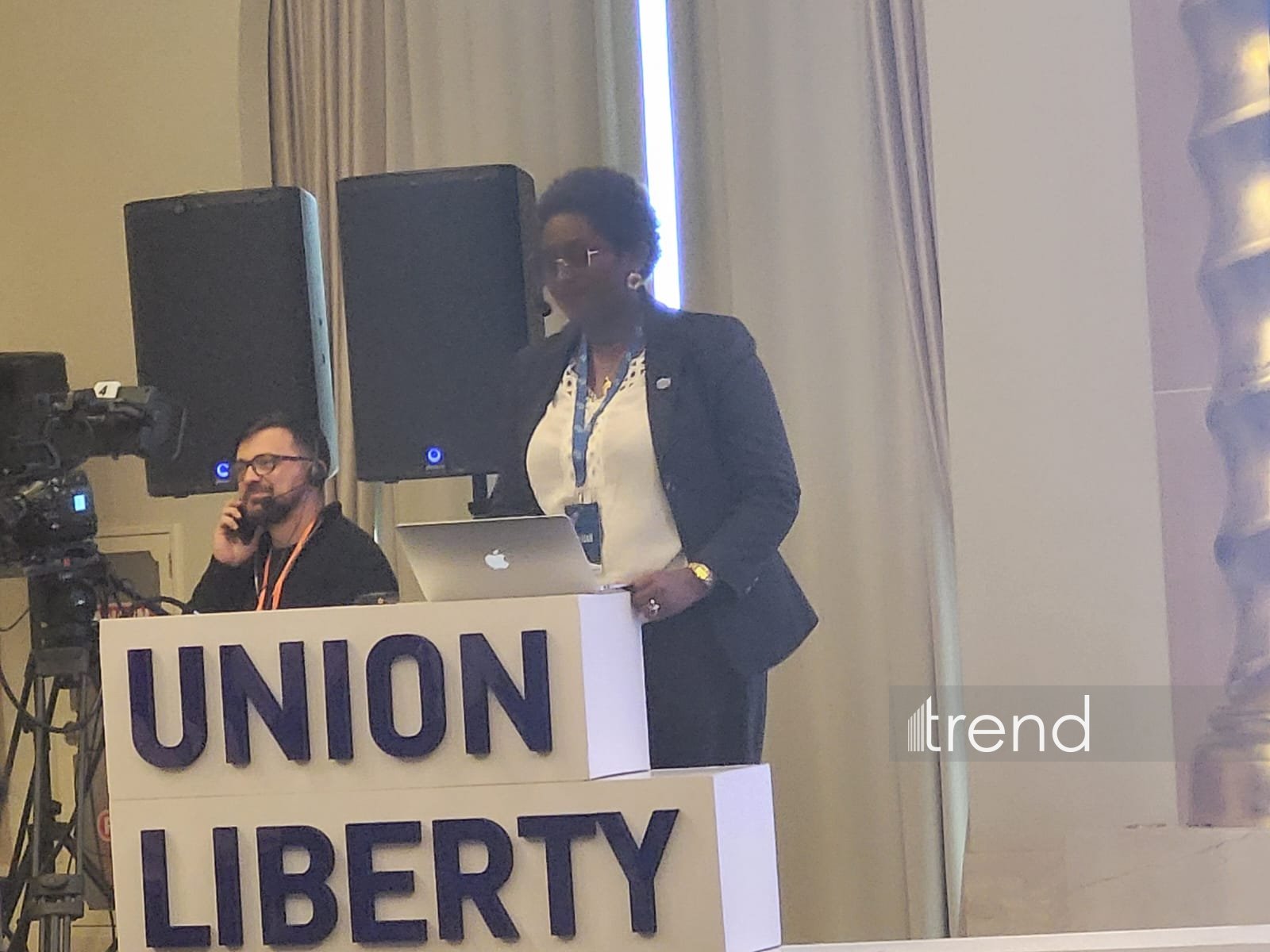

BAKU, Azerbaijan, May 20. The youth must play a key role in shaping cities that reflect the cultural identity and real needs of local communities, African Youth Leadership Forum representative from Rwanda, Umuhoza Natete Verite said at an international conference entitled "The Role of Youth in Decolonizing Urbanization" within the framework of the 13th session of the World Forum of Cities (WUF13) in Baku, Trend reports.
"Many of our cities were built based on models established by colonial powers, and these models do not reflect our culture, values, and way of life," she said.
According to Verite, decolonizing urbanization means reclaiming our own identity in urban space.
"We must build cities that reflect who we are and how we want to live," she noted.
She emphasized that youth must be the driving force behind these changes, as they make up the majority of the population in countries in the Global South.
Speaking about approaches to urban development, the Rwandan representative emphasized the need to shift to a bottom-up model based on local community participation.
"Very often, decisions are made from above without consultation with the population. A bottom-up approach gives people and young people the opportunity to participate in creating the cities they want to live in," Verite said.
As an example, she cited the Rwandan Umuganda initiative, which brings together residents to improve their neighborhoods, build housing for vulnerable groups, and discuss local community issues.
"This is an example of how solutions emerge from within the community, rather than being imposed from outside," she stressed.
According to Verite, young people must actively utilize innovation, creativity, and professional skills to create sustainable and inclusive cities.
"We must promote an approach that allows young people's voices to be heard and truly makes our cities our own," she added.
Today marks the fourth day of WUF13 in Baku.
The first day included a ministerial meeting dedicated to the New Urban Agenda, a ministerial roundtable, assemblies for women and civil society, business sessions, and discussions on urban prosperity. An official ceremony marking the raising of the UN and Azerbaijani flags also took place.
The second day stood out for the inaugural Leaders' Summit, featuring high-level discussions on the global housing crisis, urbanization policy, and urban resilience. Concurrently, the opening of the Mexico City pavilion took place, serving as a significant platform for expanding cooperation with the Latin American region and preparing for WUF14.
The third day of WUF13 featured a comprehensive program of events covering the global housing crisis, the formation of safe and inclusive cities, climate resilience, artificial intelligence and urban governance, green urbanization, social equity, and sustainable transport.
WUF13, which has attracted more than 40,000 registered participants from 182 countries, will continue until May 22. Held under the theme “Housing the world: Safe and resilient cities and communities,” the forum brings together governments, international organizations, experts, and representatives of civil society to strengthen global cooperation in the field of sustainable urban development.



