


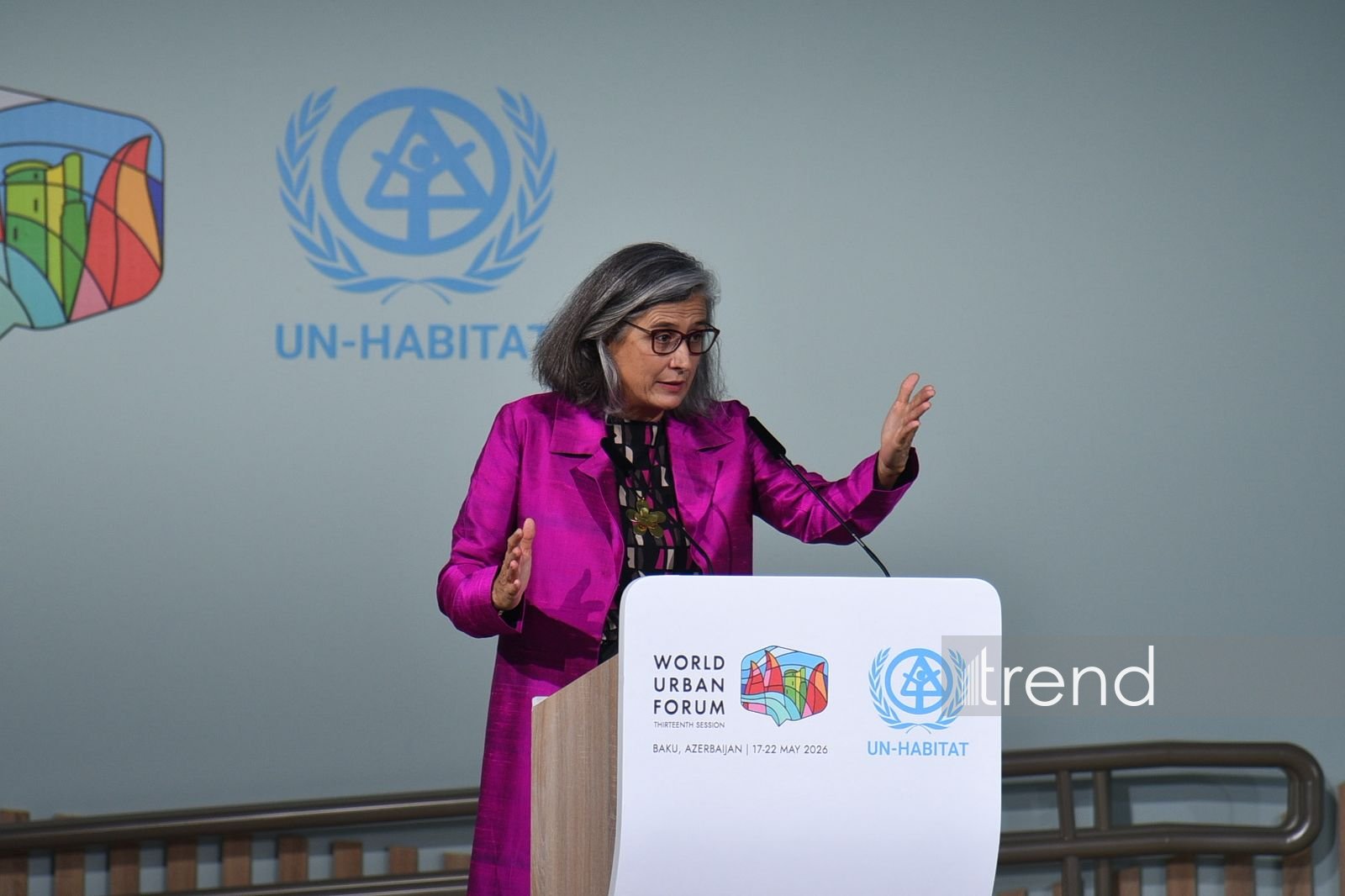

BAKU, Azerbaijan, May 20. Urbanization in a number of regions effectively consumes nature and agricultural lands while intensifying risks to food security, demanding an urgent overhaul of approaches to urban development, said Anaclaudia Rossbach, Executive Director of the United Nations Human Settlements Programme (UN-Habitat), Trend reports.
The UN official made the remarks during a panel discussion titled "The Climate-Housing Nexus" held within the framework of the 13th session of the World Urban Forum (WUF13) in Baku.
According to her, a significant portion of climate impacts today results directly from unmanaged and unplanned urbanization. She emphasized that more than 1 billion people worldwide lack access to water and electricity, while millions live in conditions completely devoid of basic security.
She also noted that children face barriers to regular school attendance due to the absence of safe housing, and many families live in constant fear for their personal safety. The situation concerning informal settlements continues to deteriorate, and the international community has not yet successfully managed the task of reducing them.
Rossbach underscored the necessity of integrating the housing agenda into global climate negotiations and called for a thorough revision of urban growth models, including a shift toward more compact and sustainable urban development.
Today marks the fourth day of WUF13 in Baku.
The first day included a ministerial meeting dedicated to the New Urban Agenda, a ministerial roundtable, assemblies for women and civil society, business sessions, and discussions on urban prosperity. An official ceremony marking the raising of the UN and Azerbaijani flags also took place.
The second day stood out for the inaugural Leaders' Summit, featuring high-level discussions on the global housing crisis, urbanization policy, and urban resilience. Concurrently, the opening of the Mexico City pavilion took place, serving as a significant platform for expanding cooperation with the Latin American region and preparing for WUF14.
The third day of WUF13 featured a comprehensive program of events covering the global housing crisis, the formation of safe and inclusive cities, climate resilience, artificial intelligence and urban governance, green urbanization, social equity, and sustainable transport.
WUF13, which has attracted more than 40,000 registered participants from 182 countries, will continue until May 22. Held under the theme “Housing the world: Safe and resilient cities and communities,” the forum brings together governments, international organizations, experts, and representatives of civil society to strengthen global cooperation in the field of sustainable urban development.



