


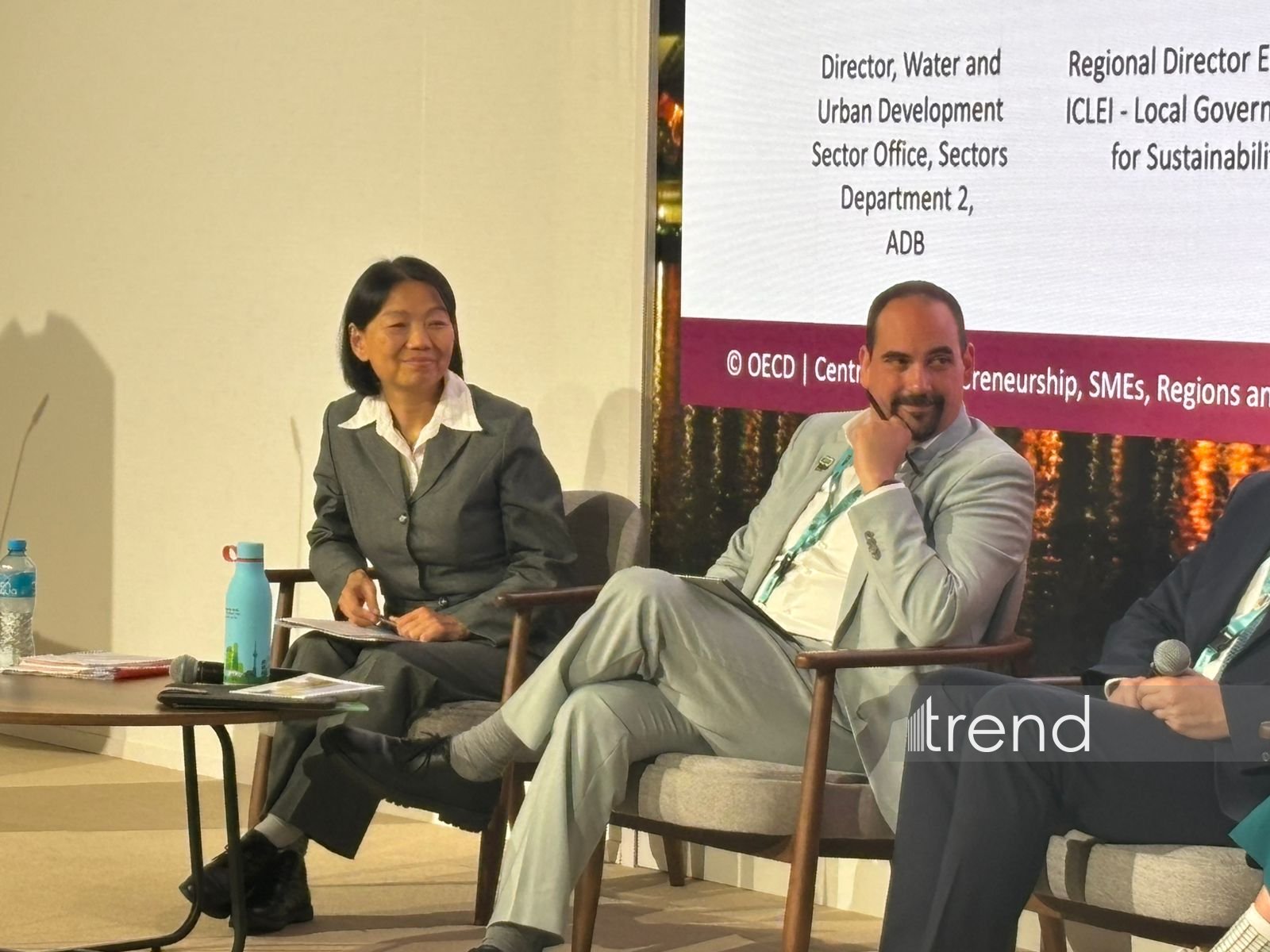

BAKU, Azerbaijan, May 20. Nature is no longer seen as an additional element of the urban environment, but as a basic urban infrastructure in Europe, Regional Director for Europe at Local Governments for Sustainability (ICLEI) Matthew Bach said at a session entitled "Building Nature-Positive Cities Housing, Resilience, and Sustainable Urban Futures" within the framework of the 13th session of the World Forum of Cities (WUF13) in Baku, Trend reports.
According to Bach, a comprehensive regulatory framework for nature restoration and biodiversity has been established in Europe.
He noted that following the adoption of the 2030 Biodiversity Strategy and the entry into force of the Nature Restoration Regulation, EU countries have begun developing national ecosystem restoration plans.
"Nature is not a 'nice-to-have' or an afterthought. It is key urban infrastructure," he emphasized.
Bach also noted that European cities are integrating nature-based solutions into climate and spatial planning.
He cited examples of Mannheim, Germany, where the Green Deal intersectoral team operates, and Burgas, Bulgaria, which uses urban nature plans to improve air quality and sustainable mobility.
The ICLEI representative emphasized that financing nature projects remains a key challenge.
According to him, blended financial mechanisms are needed to implement such initiatives, including government co-financing and international bank lending.
He added that financing is only possible with well-designed projects and integrated urban planning.
Today marks the fourth day of WUF13 in Baku.
The first day included a ministerial meeting dedicated to the New Urban Agenda, a ministerial roundtable, assemblies for women and civil society, business sessions, and discussions on urban prosperity. An official ceremony marking the raising of the UN and Azerbaijani flags also took place.
The second day stood out for the inaugural Leaders' Summit, featuring high-level discussions on the global housing crisis, urbanization policy, and urban resilience. Concurrently, the opening of the Mexico City pavilion took place, serving as a significant platform for expanding cooperation with the Latin American region and preparing for WUF14.
The third day of WUF13 featured a comprehensive program of events covering the global housing crisis, the formation of safe and inclusive cities, climate resilience, artificial intelligence and urban governance, green urbanization, social equity, and sustainable transport.
WUF13, which has attracted more than 40,000 registered participants from 182 countries, will continue until May 22. Held under the theme “Housing the world: Safe and resilient cities and communities,” the forum brings together governments, international organizations, experts, and representatives of civil society to strengthen global cooperation in the field of sustainable urban development.



