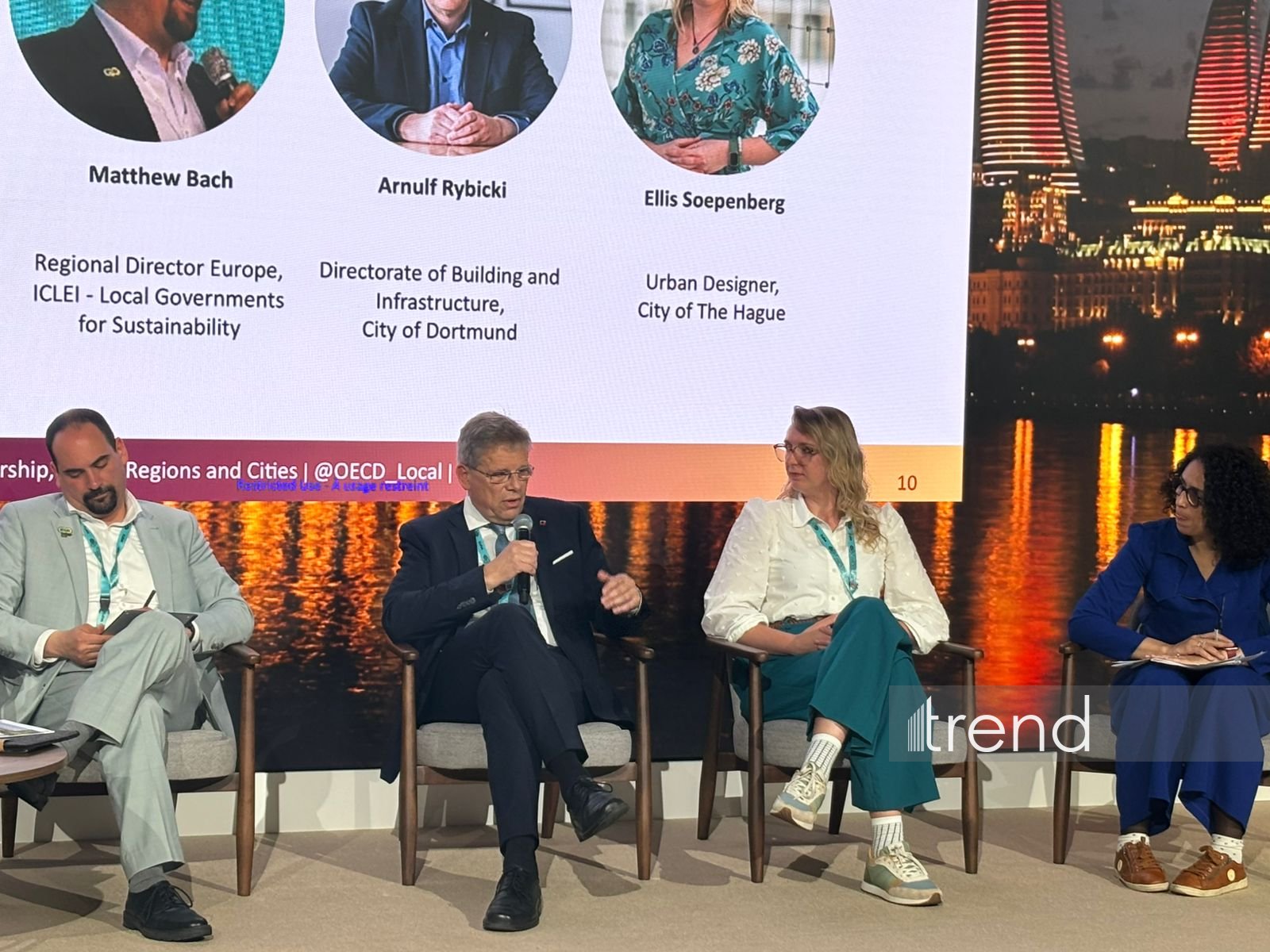

BAKU, Azerbaijan, May 20. A session titled "Building Nature-Positive Cities Housing, Resilience, and Sustainable Urban Futures" concluded within the framework of the World Urban Forum (WUF13) in Baku, Trend reports.
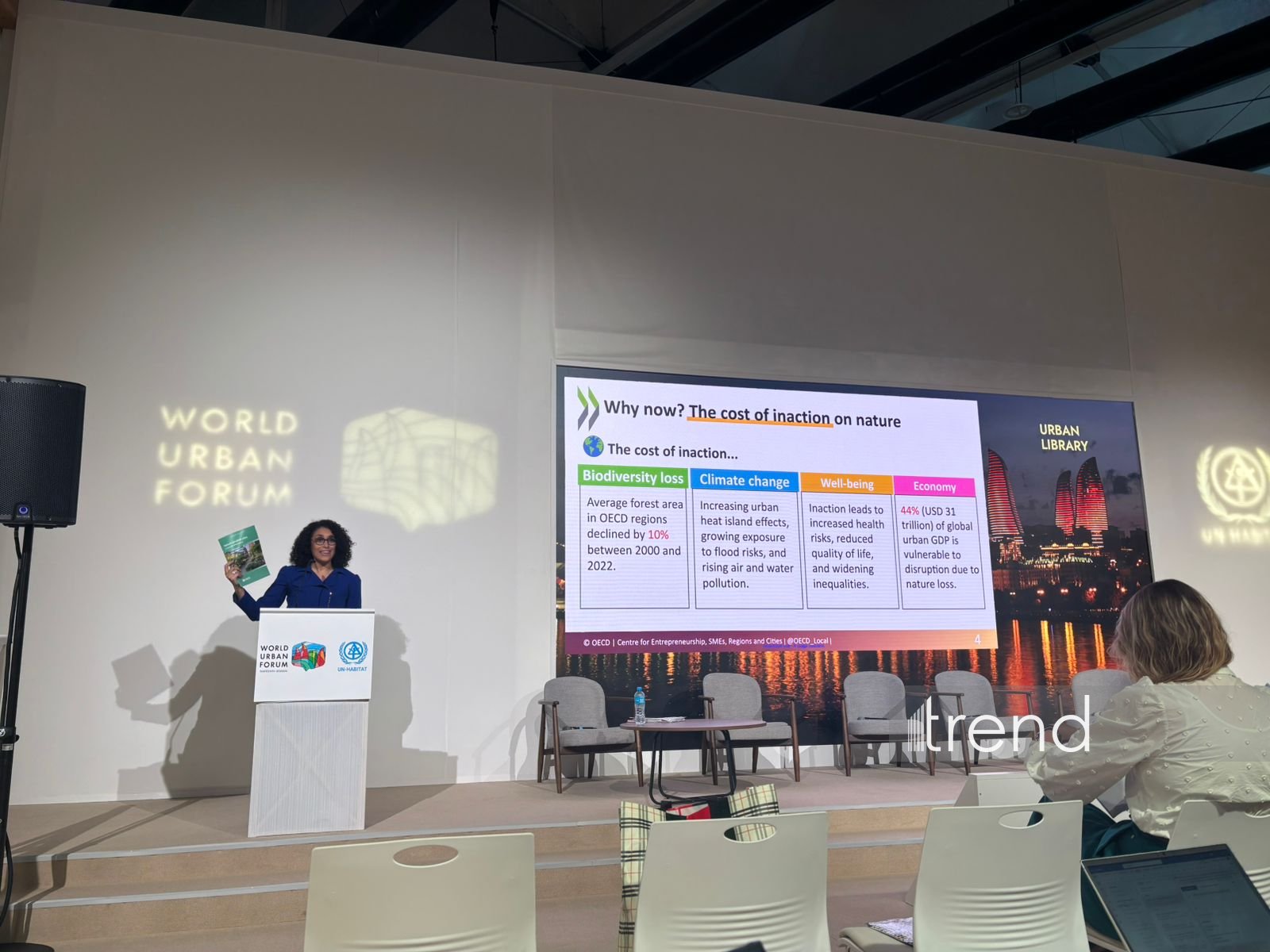
The event featured the presentation of the Organization for Economic Co-operation and Development (OECD) analytical report titled "Advancing Nature-Positive Cities (NPCs): Overcoming implementation challenges and unlocking solutions."
Nature-positive approaches and the development of urban green infrastructure emerge as core municipal policy strategies, ensuring synergy across various urban development tracks. As urbanization accelerates, built-up areas in 80 percent of functional urban areas across OECD countries grew faster than their populations between 2000 and 2020. This trend led to a reduction in urban green spaces, elevated risks of extreme heat and flooding, biodiversity loss, and diminished resource availability.
In particular, tree cover in major OECD cities declined by 72 percent from 1992 to 2018, while 44 percent of global GDP (USD 31 trillion) faces risks due to biodiversity loss and environmental degradation. The OECD study on nature-positive cities, initiated last year, identified key deployment challenges and potential policy mechanisms to overcome them.
The session presented the main findings of the report alongside examples of innovative international practices. These cases demonstrate how nature-based solutions integrate into urban planning, infrastructure, housing policy, and climate resilience strategies under varying conditions.
The discussions focused on practical implementation issues, including managing trade-offs related to land use and social equity, developing technical standards and guidelines, mobilizing sustainable financing, and strengthening assessment and monitoring frameworks. For instance, if poorly designed, nature-based measures such as green roofs can increase initial construction expenses; in Italy, their cost stands at 140–250 euros per square meter compared to 80–100 euros for traditional roofs, potentially exacerbating housing affordability issues despite long-term advantages.
In line with the overarching theme of the 13th session of the World Urban Forum, "Housing the world: Safe and resilient cities and communities," the session emphasizes that housing construction, when properly planned and managed, can serve as a vital instrument for promoting nature-positive and sustainable cities.
The event brings together representatives of international organizations, national governments, municipal and metropolitan authorities, as well as experts and practitioners, providing a timely platform to deepen the understanding of nature-positive approaches and discuss innovative solutions.
Today marks the fourth day of WUF13 in Baku.
The first day included a ministerial meeting dedicated to the New Urban Agenda, a ministerial roundtable, assemblies for women and civil society, business sessions, and discussions on urban prosperity. An official ceremony marking the raising of the UN and Azerbaijani flags also took place.
The second day stood out for the inaugural Leaders' Summit, featuring high-level discussions on the global housing crisis, urbanization policy, and urban resilience. Concurrently, the opening of the Mexico City pavilion took place, serving as a significant platform for expanding cooperation with the Latin American region and preparing for WUF14.
The third day of WUF13 featured a comprehensive program of events covering the global housing crisis, the formation of safe and inclusive cities, climate resilience, artificial intelligence and urban governance, green urbanization, social equity, and sustainable transport.
WUF13, which has attracted more than 40,000 registered participants from 182 countries, will continue until May 22. Held under the theme “Housing the world: Safe and resilient cities and communities,” the forum brings together governments, international organizations, experts, and representatives of civil society to strengthen global cooperation in the field of sustainable urban development.