


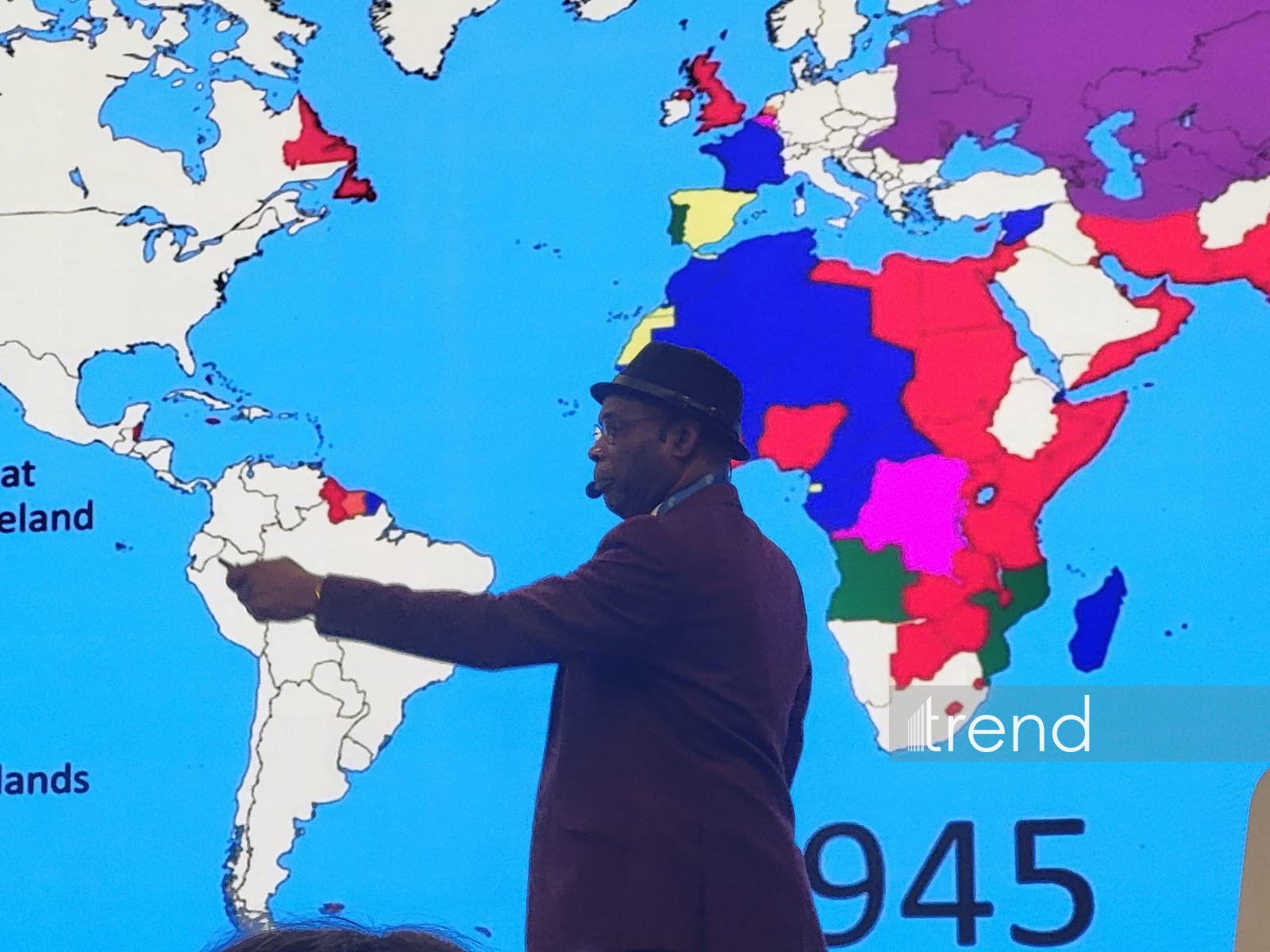

BAKU, Azerbaijan, May 20. Colonialism continues to exert a profound impact on the political, social, and economic standing of peoples even under contemporary conditions, said Richard Byron-Cox, an international law expert and former UN system official, Trend reports.
The expert made the remarks during the international conference titled "The Role of Youth in Decolonizing Urbanization," held within the framework of the 13th session of the World Urban Forum (WUF13) in Baku.
"Colonialism has never served the interests of colonized peoples. There is nothing good about it," he noted.
During his speech, Byron-Cox presented the case of Bonaire, an island in the Caribbean region that remains part of the Kingdom of the Netherlands. According to him, issues concerning poverty, housing, education, and political rights on the island link directly to its colonial legacy.
"The problems of housing, poverty, and education are merely consequences of a broader challenge—colonialism itself," he emphasized.
Byron-Cox pointed out that the right of peoples to self-determination stands firmly enshrined in international law and the UN Charter.
"International law speaks to the right of peoples to self-determination, not only states," he stated.
He also shared that the residents of Bonaire have held two referendums expressing dissatisfaction with the existing political status of the island.
"Bonaire belongs to the people of Bonaire, not to the Netherlands," the expert stressed.
According to Byron-Cox, youth must participate more actively in international discussions regarding decolonization and human rights.
"If someone is ready to listen to you for even three minutes, it means your voice matters," he noted, addressing the young participants of the forum.
He also urged young leaders to carefully study matters of international law, social justice, and the historical legacy of colonialism.
Today marks the fourth day of WUF13 in Baku.
The first day included a ministerial meeting dedicated to the New Urban Agenda, a ministerial roundtable, assemblies for women and civil society, business sessions, and discussions on urban prosperity. An official ceremony marking the raising of the UN and Azerbaijani flags also took place.
The second day stood out for the inaugural Leaders' Summit, featuring high-level discussions on the global housing crisis, urbanization policy, and urban resilience. Concurrently, the opening of the Mexico City pavilion took place, serving as a significant platform for expanding cooperation with the Latin American region and preparing for WUF14.
The third day of WUF13 featured a comprehensive program of events covering the global housing crisis, the formation of safe and inclusive cities, climate resilience, artificial intelligence and urban governance, green urbanization, social equity, and sustainable transport.
WUF13, which has attracted more than 40,000 registered participants from 182 countries, will continue until May 22. Held under the theme “Housing the world: Safe and resilient cities and communities,” the forum brings together governments, international organizations, experts, and representatives of civil society to strengthen global cooperation in the field of sustainable urban development.



