


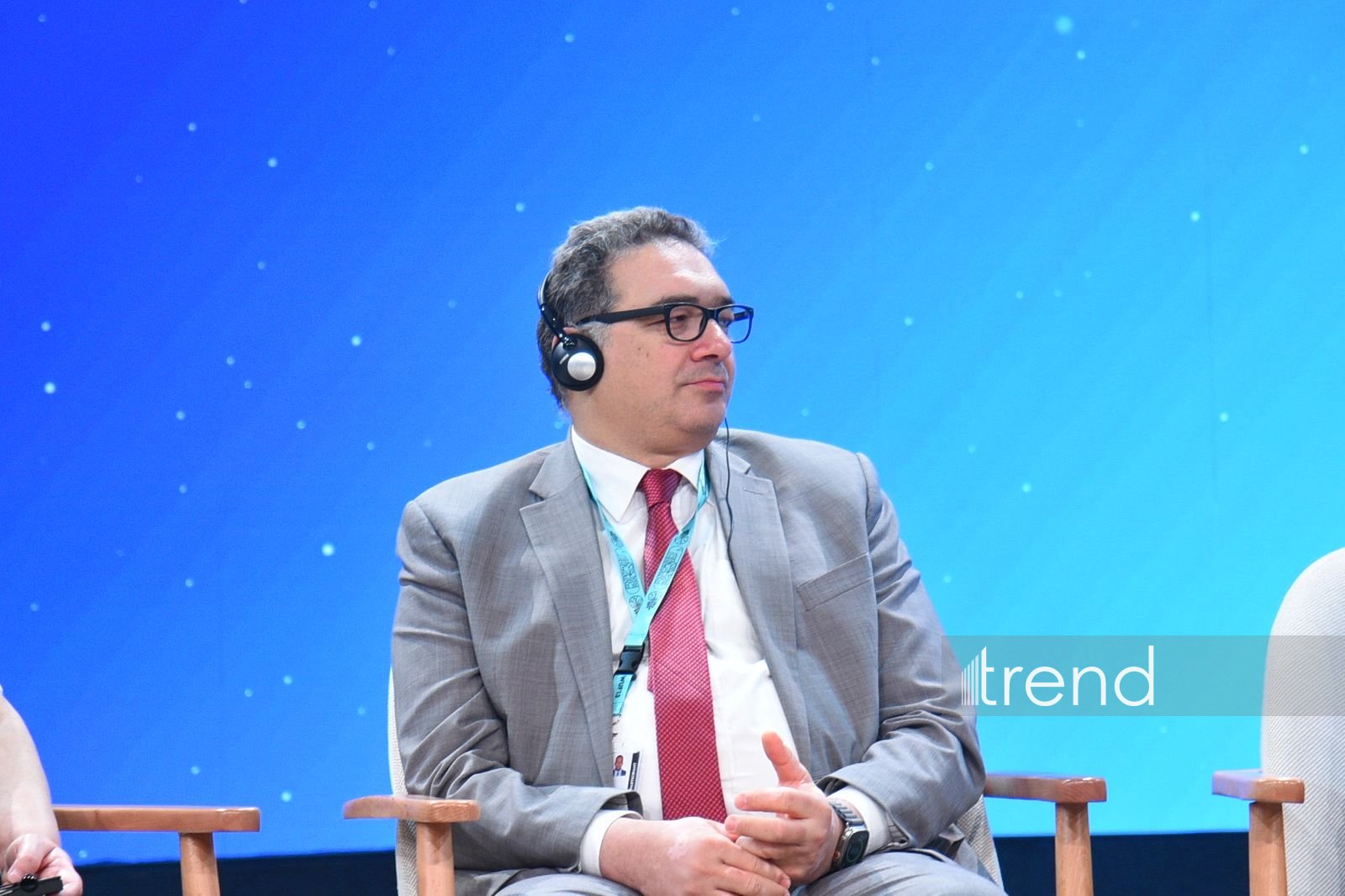

BAKU, Azerbaijan, May 20. Central Asian countries should develop mechanisms to capture land and property value gains resulting from urban development, the World Bank’s representative in Uzbekistan, Nadir Mohammad, said, Trend reports.
Speaking at the panel discussion “Two Regions, One Agenda: Lessons for Inclusive Urban Regeneration” as part of the 13th World Urban Forum (WUF13), Muhammad noted that financing urban development remains one of the main challenges for many countries.
“Very often we have good plans, but we don’t know how to finance them. That is why we are looking for innovative ways to finance development,” he noted.
Muhammad Nadir emphasized that the private sector is already beginning to play a more important role in the urban development process.
“The private sector has its own interests and its own agenda. Therefore, the government must clearly define in which areas the private sector can participate and in which areas government intervention is necessary,” he emphasized.
The World Bank representative noted that the experience of Latin American countries could be useful for Central Asia.
“In Colombia, Brazil, and other Latin American countries, various instruments are used to generate revenue from land value appreciation. These include airspace rights, betterment charges, and development fees,” he said.
According to him, such mechanisms have not yet become widespread in Central Asia.
“State and local authorities should consider how they can generate revenue from the appreciation in land and property values resulting from urban development. These funds can be reinvested in urban development,” Mohammed Nadir added.
Today, the fourth day of the WUF13 conference is taking place in Baku.
The first day included a ministerial meeting dedicated to the New Urban Agenda, a ministerial roundtable, assemblies for women and civil society, business sessions, and discussions on urban prosperity. An official ceremony marking the raising of the UN and Azerbaijani flags also took place.
The second day stood out for the inaugural Leaders' Summit, featuring high-level discussions on the global housing crisis, urbanization policy, and urban resilience. Concurrently, the opening of the Mexico City pavilion took place, serving as a significant platform for expanding cooperation with the Latin American region and preparing for WUF14.
The third day of WUF13 featured a comprehensive program of events covering the global housing crisis, the formation of safe and inclusive cities, climate resilience, artificial intelligence and urban governance, green urbanization, social equity, and sustainable transport.
WUF13, which has attracted more than 40,000 registered participants from 182 countries, will continue until May 22. Held under the theme “Housing the world: Safe and resilient cities and communities,” the forum brings together governments, international organizations, experts, and representatives of civil society to strengthen global cooperation in the field of sustainable urban development.



