


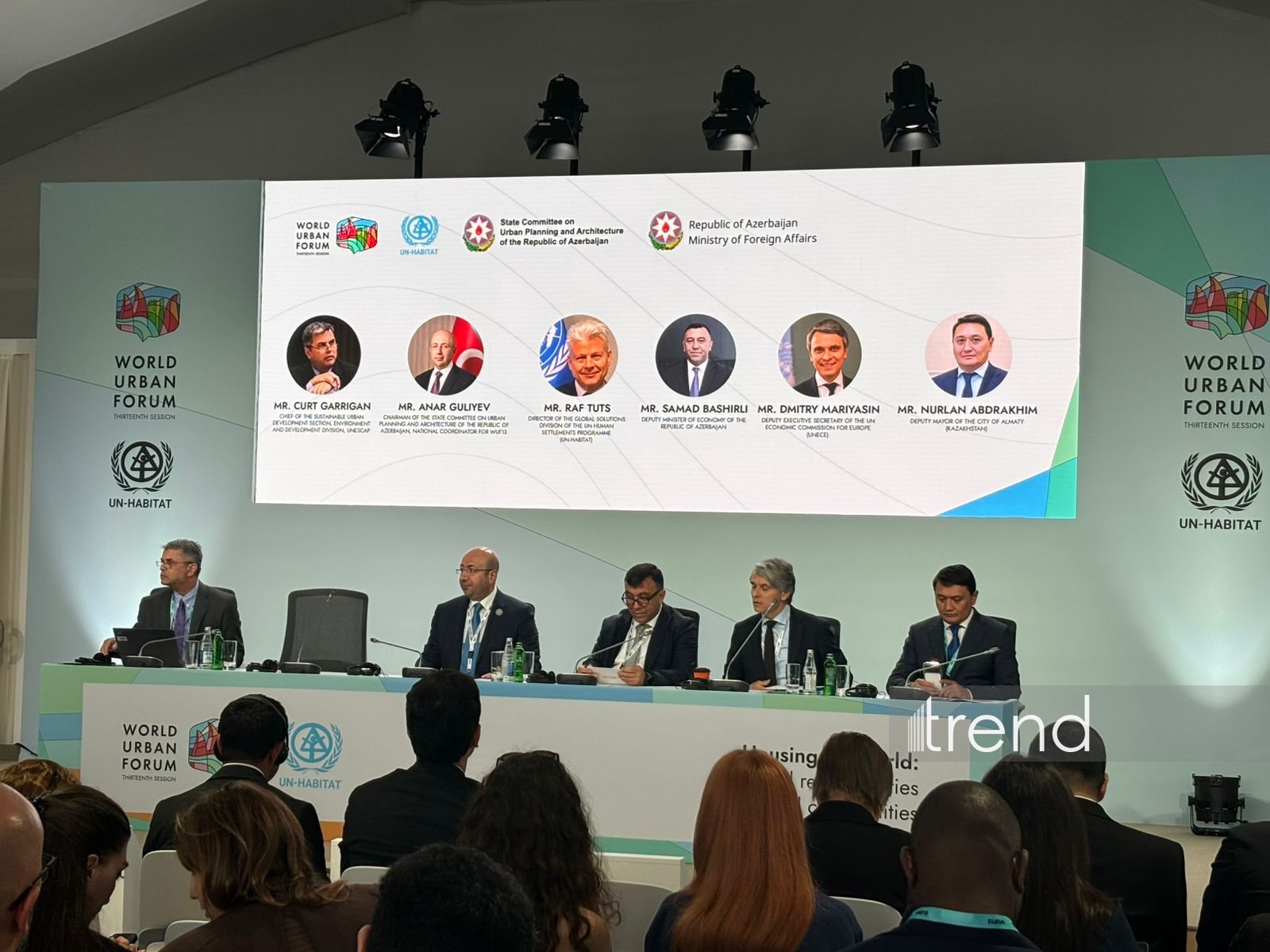

BAKU, Azerbaijan, May 20. The UN Special Program for the Economies of Central Asia (SPECA) Cities Forum took place in Baku as part of the 13th session of the World Urban Forum (WUF13), Trend reports.
The forum’s discussions focused on three interrelated themes based on the practical realities of SPECA cities and reflecting the overarching theme of WUF13, “Housing for Peace: Safe and Sustainable Cities and Communities.”
The first theme addressed affordable housing in the context of rapid urbanization. It was noted that urban growth in SPECA countries continues to outpace housing supply. In this regard, measures to bridge the gap have been examined, including regulatory reform, public-private partnerships, social housing programs, land-use policies, and the rehabilitation of industrial sites, as well as the potential for regional cooperation.
The second theme covered issues of climate resilience and energy efficiency in the housing sector. It has been emphasized that a significant portion of the housing stock in SPECA countries was built before the introduction of modern energy and seismic standards. Participants discussed building retrofits, the adoption of “green” building standards, and the integration of climate risk assessment into urban development processes and housing investments.
The third topic focused on “smart” urban approaches to housing management. It explored the potential of digital planning, e-services, and integrated management systems for regulating housing markets and improving the quality of urban services. The institutional framework for implementing “smart city” technologies in SPECA countries have also be discussed.
Today marks the fourth day of WUF13 in Baku.
The first day included a ministerial meeting dedicated to the New Urban Agenda, a ministerial roundtable, assemblies for women and civil society, business sessions, and discussions on urban prosperity. An official ceremony marking the raising of the UN and Azerbaijani flags also took place.
The second day stood out for the inaugural Leaders' Summit, featuring high-level discussions on the global housing crisis, urbanization policy, and urban resilience. Concurrently, the opening of the Mexico City pavilion took place, serving as a significant platform for expanding cooperation with the Latin American region and preparing for WUF14.
The third day of WUF13 featured a comprehensive program of events covering the global housing crisis, the formation of safe and inclusive cities, climate resilience, artificial intelligence and urban governance, green urbanization, social equity, and sustainable transport.
WUF13, which has attracted more than 40,000 registered participants from 182 countries, will continue until May 22. Held under the theme “Housing the world: Safe and resilient cities and communities,” the forum brings together governments, international organizations, experts, and representatives of civil society to strengthen global cooperation in the field of sustainable urban development.



