


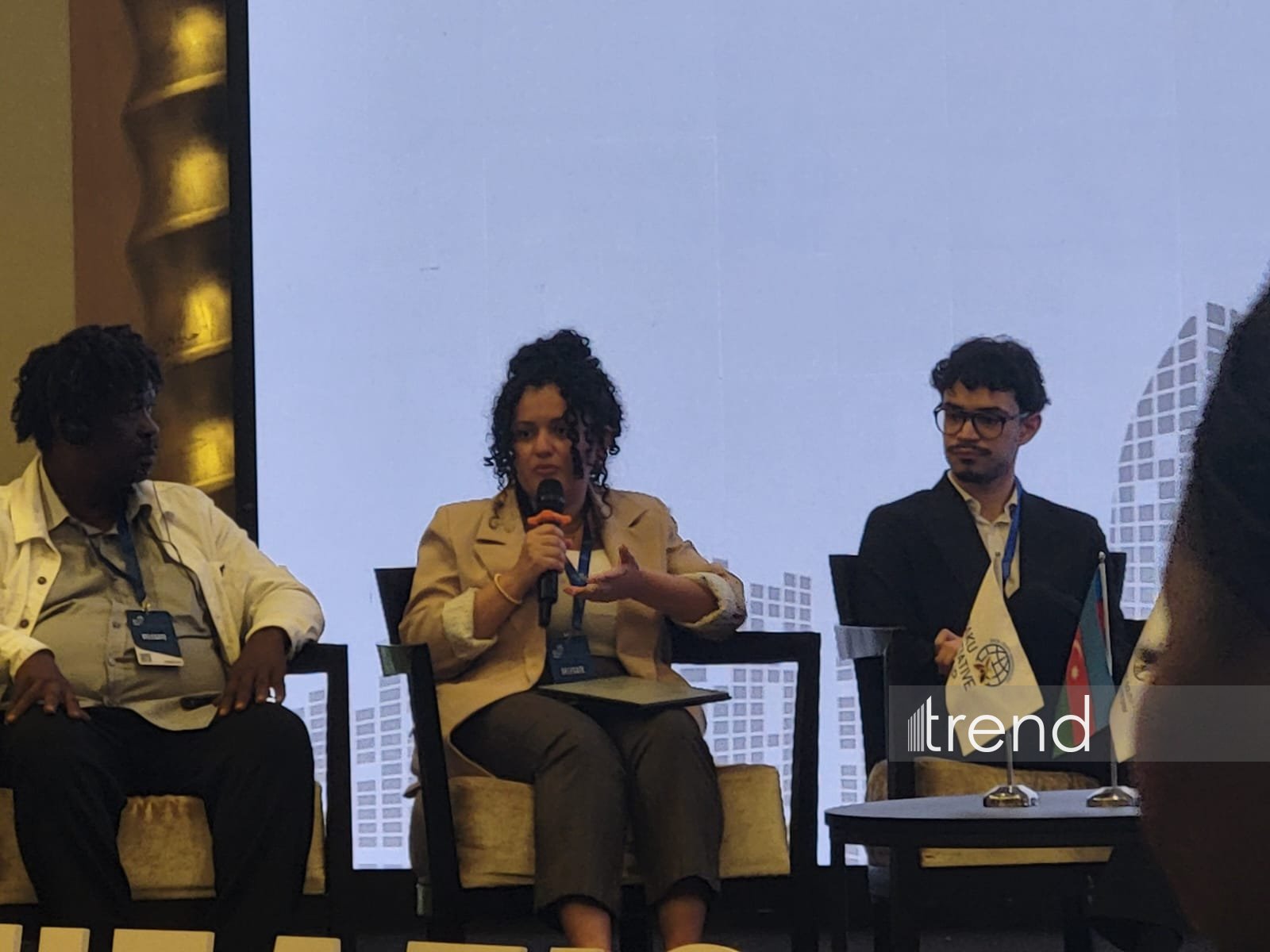

BAKU, Azerbaijan, May 20. The decolonization of urbanization must be based on youth participation, the preservation of cultural heritage, and the creation of an inclusive urban environment, Merna Alzurikat, a consultant for the United Nations Development Programme (UNDP) from Jordan, said, Trend reports.
She made the remark during the international conference "The Role of Youth in Decolonizing Urbanization," held as part of the 13th World Urban Forum (WUF13) in Baku.
“When we talk about the decolonization of urbanization, we are not just talking about changing the architecture of buildings or creating new urban policies. We are talking about who our cities are actually being built for and whose voices are heard in the planning process,” she said.
According to Alzurikat, cities in Yemen, like those in many countries of the Global South, reflect deep social and infrastructural inequalities caused by both historical factors and contemporary crises.
She cited cities such as Sana’a, Aden, and Taiz as examples.
Speaking about Sana’a, the Jordanian representative emphasized the importance of preserving the city’s historical heritage, known for its traditional architecture and tower houses made of clay and fired brick.
“These buildings represent our identity, our heritage, and a sustainable way of life that has been preserved for centuries,” she noted. At the same time, Alzurikat pointed out that population growth and a lack of resources for preserving historic buildings are putting the city’s cultural heritage at risk.
Speaking about Aden, she noted that the city is facing rapid and uncoordinated expansion, as well as severe infrastructure damage. According to her, young residents of Aden face daily challenges accessing housing, public services, and safe public spaces.
Alzurikat paid special attention to Taiz, which she called a symbol of resilience despite the consequences of conflict and siege. “Young people are full of ideas, but opportunities to participate in recovery and planning processes remain limited,” she emphasized.
The Jordanian representative also stated that young people are already actively participating in community initiatives, volunteer projects, and the preservation of cultural heritage. According to her, education plays a key role in urban transformation.
“Quality education helps young people understand urban challenges, advocate for inclusive recovery, and transform from passive victims of circumstance into active citizens capable of reimagining their cities,” said Alzurikat. She added that young people must become full participants in the processes of rebuilding and developing the cities of the future.
Today, the fourth day of the WUF13 conference is taking place in Baku.
The first day included a ministerial meeting dedicated to the New Urban Agenda, a ministerial roundtable, assemblies for women and civil society, business sessions, and discussions on urban prosperity. An official ceremony marking the raising of the UN and Azerbaijani flags also took place.
The second day stood out for the inaugural Leaders' Summit, featuring high-level discussions on the global housing crisis, urbanization policy, and urban resilience. Concurrently, the opening of the Mexico City pavilion took place, serving as a significant platform for expanding cooperation with the Latin American region and preparing for WUF14.
The third day of WUF13 featured a comprehensive program of events covering the global housing crisis, the formation of safe and inclusive cities, climate resilience, artificial intelligence and urban governance, green urbanization, social equity, and sustainable transport.
WUF13, which has attracted more than 40,000 registered participants from 182 countries, will continue until May 22. Held under the theme “Housing the world: Safe and resilient cities and communities,” the forum brings together governments, international organizations, experts, and representatives of civil society to strengthen global cooperation in the field of sustainable urban development.



