


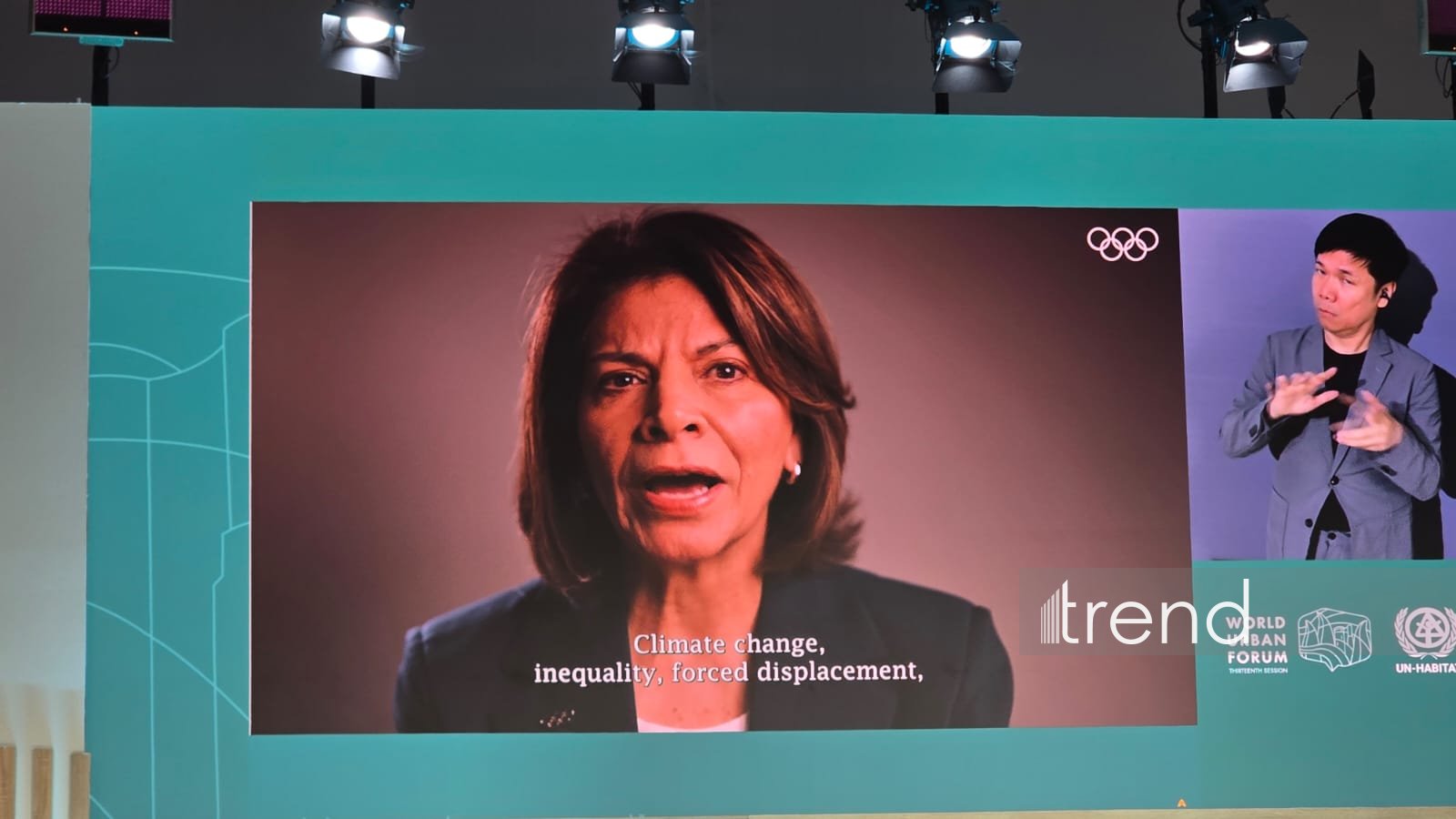
BAKU, Azerbaijan, May 20. Integrating sport into urban policy and planning strengthens health and well-being, creates safe and inclusive public spaces, and fosters community solidarity, Laura Chinchilla, former President of Costa Rica and Permanent Observer of the International Olympic Committee to the UN, said at the 13th session of the World Urban Forum (WUF13) in Baku, Trend reports.
Chinchilla highlighted that urban problems are most pronounced in densely populated areas. By 2050, about 70 percent of the world’s population is expected to live in cities, intensifying these challenges. “Rapid and joint action is necessary. Sport is a low-cost, high-impact tool that accelerates social, economic, and environmental progress,” she said.
She noted that the role of sport in development, social solidarity, and community well-being is reinforced in international frameworks, including the UN 2030 Agenda, the Pact for the Future, and the Doha Declaration.
“The Coalition of Development Banks through Sport for Sustainable Development has pledged $10 billion for inclusive, community-based sports infrastructure and human capital projects by 2030. Together with UN-Habitat, we are working to localize the Sustainable Development Goals in cities,” she said.
Chinchilla outlined four main directions: integrating sport into city planning processes, implementing public campaigns on the benefits of physical activity, strengthening local authorities’ capacity for evidence-based planning, and building high-impact sports infrastructure and human capital projects supported by development financing.
She added that sports initiatives also benefit local businesses, engage youth, promote active mobility, increase use of green spaces, and create multifunctional community spaces. According to the IOC Refugee Fund’s “Cities: Sport and Inclusion” policy, sport also helps integrate displaced communities into urban life.
Chinchilla concluded by stressing the need for unity and stronger cooperation to address urban challenges today.
In the mean time, today marks the fourth day of WUF13 in Baku.
The first day included a ministerial meeting dedicated to the New Urban Agenda, a ministerial roundtable, assemblies for women and civil society, business sessions, and discussions on urban prosperity. An official ceremony marking the raising of the UN and Azerbaijani flags also took place.
The second day stood out for the inaugural Leaders' Summit, featuring high-level discussions on the global housing crisis, urbanization policy, and urban resilience. Concurrently, the opening of the Mexico City pavilion took place, serving as a significant platform for expanding cooperation with the Latin American region and preparing for WUF14.
The third day of WUF13 featured a comprehensive program of events covering the global housing crisis, the formation of safe and inclusive cities, climate resilience, artificial intelligence and urban governance, green urbanization, social equity, and sustainable transport.
WUF13, which has attracted more than 40,000 registered participants from 182 countries, will continue until May 22. Held under the theme “Housing the world: Safe and resilient cities and communities,” the forum brings together governments, international organizations, experts, and representatives of civil society to strengthen global cooperation in the field of sustainable urban development.



