


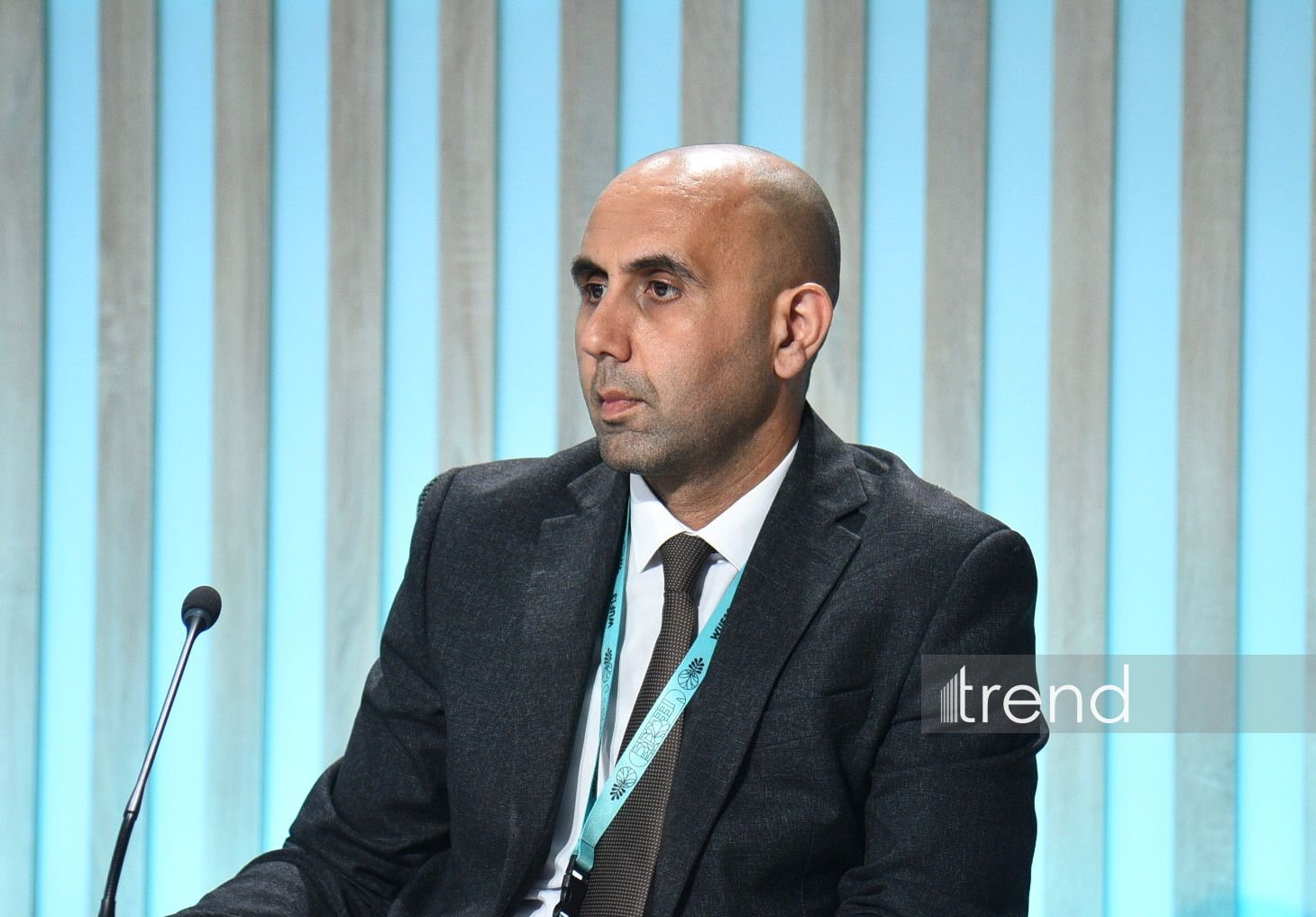

BAKU, Azerbaijan, May 20. Communication and storytelling in the region help people better understand urban transformation, Chairman of the "Azerbaijan Journalists Network" Public Union Ayaz Mirzayev said at an event "Media as a Driver of Public Discourse on Housing and Urban Resilience" within WUF13, Trend reports.
He called for explaining why green spaces and sustainable urban planning matters are important, why social inclusion should be part of urban development, and why communities should be involved in the decision-making process.
Mirzayev noted that today, social media has made the communication process even faster and more powerful. A short video, a documentary, or even a striking photo can spark a wide-ranging international discussion.
According to him, the media has a responsibility. The information must be accurate, balanced, and ethical, because public trust is very important.
"In our region, we clearly see that communication and storytelling help people better understand reconstruction, urban transformation, and community development.
For example, documentaries and visual storytelling show not only the physical reconstruction, but also the human side — the return of families, the restoration of communities, and the rebirth of hope."
In his opinion, collaboration between media professionals, urban planners, government agencies, NGOs, and local communities is very important because strong communication creates stronger public awareness.
"Strong public awareness, in turn, helps to shape stronger cities.
Cities are built of concrete and steel, but sustainable societies are built on trust, dialogue, and shared understanding, and the media plays a key role in shaping this understanding," he concluded.
Today marks the fourth day of WUF13 in Baku.
The first day included a ministerial meeting dedicated to the New Urban Agenda, a ministerial roundtable, assemblies for women and civil society, business sessions, and discussions on urban prosperity. An official ceremony marking the raising of the UN and Azerbaijani flags also took place.
The second day stood out for the inaugural Leaders' Summit, featuring high-level discussions on the global housing crisis, urbanization policy, and urban resilience. Concurrently, the opening of the Mexico City pavilion took place, serving as a significant platform for expanding cooperation with the Latin American region and preparing for WUF14.
The third day of WUF13 featured a comprehensive program of events covering the global housing crisis, the formation of safe and inclusive cities, climate resilience, artificial intelligence and urban governance, green urbanization, social equity, and sustainable transport.
WUF13, which has attracted more than 40,000 registered participants from 182 countries, will continue until May 22. Held under the theme “Housing the world: Safe and resilient cities and communities,” the forum brings together governments, international organizations, experts, and representatives of civil society to strengthen global cooperation in the field of sustainable urban development.



