


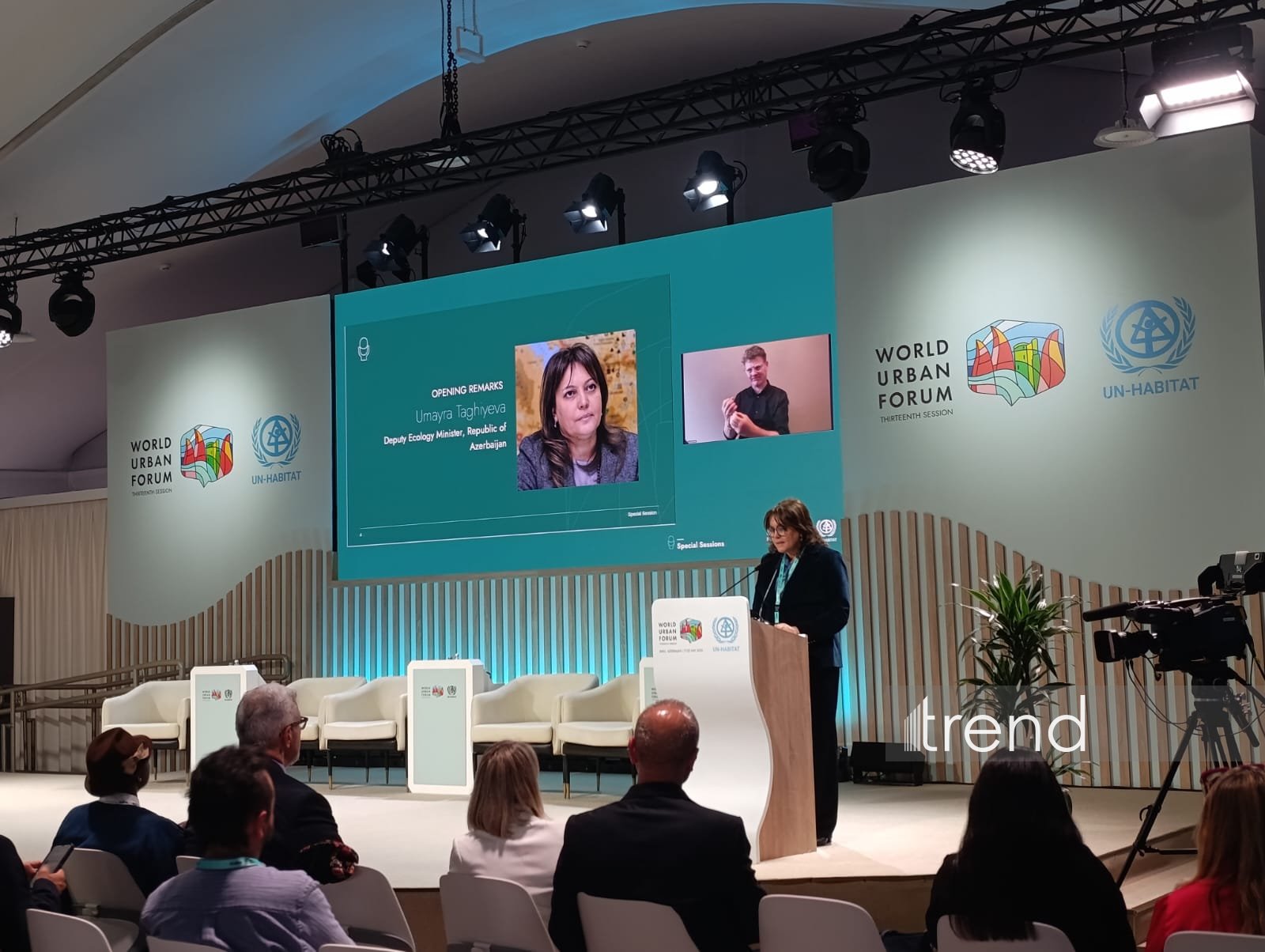

BAKU, Azerbaijan, May 20. Integrating climate factors into urban planning is becoming increasingly important, Umayra Taghiyeva, Deputy Minister of Ecology and Natural Resources of Azerbaijan, said, Trend reports.
She made the statement during a session titled “Stories from Climate Frontlines” as part of WUF13.
“Today, the world is facing a triple planetary crisis: climate change, biodiversity loss, and environmental pollution, which together threaten ecosystems, human well-being, sustainable development, and the resilience of our cities and communities,” she said.
Taghieva noted that environmental problems vary across different regions of the world, but they are caused by the same underlying pressures — the gap between economic development and ecological balance.
“The most severe consequences are felt in vulnerable communities in developing countries, whose experiences remind us that climate action must always remain people-centered and inclusive. Integrating climate considerations into urban planning is becoming increasingly important for cities, which are key players in this struggle,” the deputy minister said.
According to her, sustainable urban development begins with a national vision and long-term political commitments, including closer global cooperation.
Today, the fourth day of the WUF13 conference is taking place in Baku.
The first day included a ministerial meeting dedicated to the New Urban Agenda, a ministerial roundtable, assemblies for women and civil society, business sessions, and discussions on urban prosperity. An official ceremony marking the raising of the UN and Azerbaijani flags also took place.
The second day stood out for the inaugural Leaders' Summit, featuring high-level discussions on the global housing crisis, urbanization policy, and urban resilience. Concurrently, the opening of the Mexico City pavilion took place, serving as a significant platform for expanding cooperation with the Latin American region and preparing for WUF14.
The third day of WUF13 featured a comprehensive program of events covering the global housing crisis, the formation of safe and inclusive cities, climate resilience, artificial intelligence and urban governance, green urbanization, social equity, and sustainable transport.
WUF13, which has attracted more than 40,000 registered participants from 182 countries, will continue until May 22. Held under the theme “Housing the world: Safe and resilient cities and communities,” the forum brings together governments, international organizations, experts, and representatives of civil society to strengthen global cooperation in the field of sustainable urban development.



