


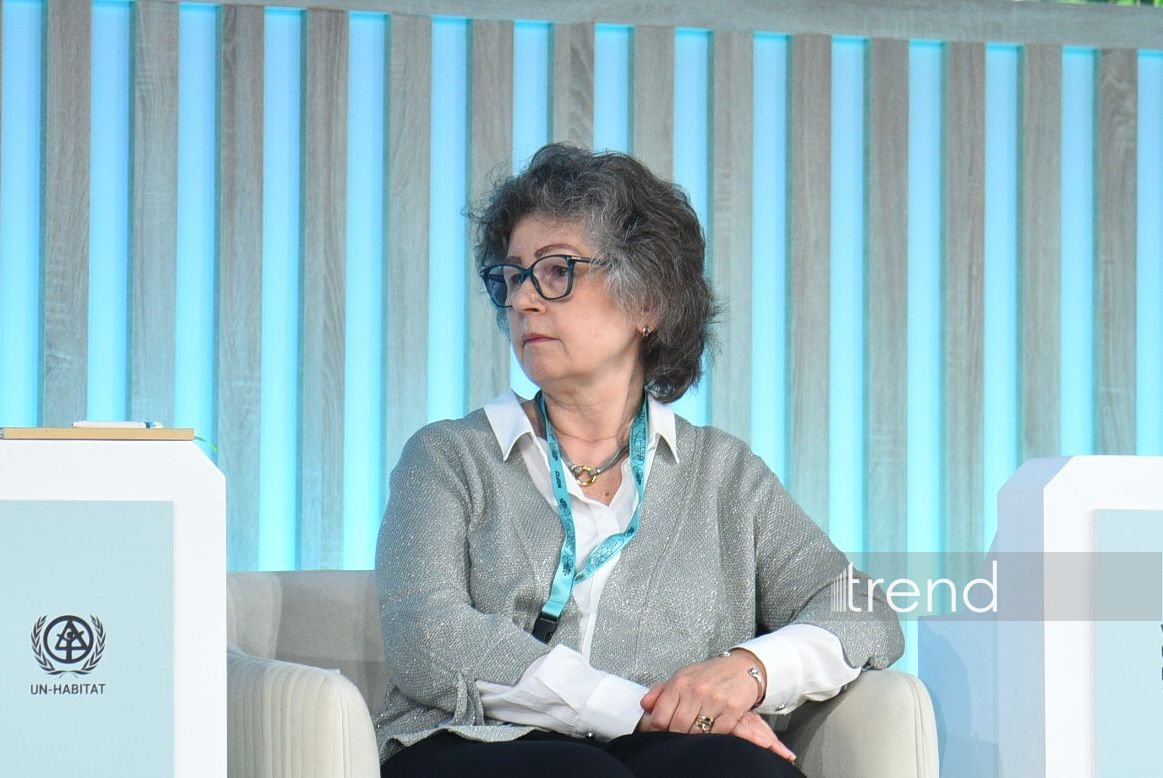

BAKU, Azerbaijan, May 20. Fighting air pollution isn't just a cost, but a significant investment for health, the environment and the economy, Program Manager for Habitat and Climate Mitigation at the World Health Organization (WHO) Regional Office for Europe, Dorota Jarosinska, said at an event "Breathing Life into the New Urban Agenda: Integrating Air Quality and Green Infrastructure for Resilient Cities" within the framework of the 13th session of the World Urban Forum (WUF13) in Baku, Trend reports.
She noted that air pollution causes about 700,000 premature deaths in 53 countries in the European region every year, and most of these deaths are related to non-communicable diseases.
"We can measure effects such as cardiovascular disease, stroke, respiratory problems, but the list is much longer. We are also learning more and more about effects such as neurodegenerative diseases, dementia, and metabolic disorders," she stressed.
Jarosinska pointed out that sometimes people have difficulty understanding the real effects because the numbers are very big.
"Sometimes these numbers paralyze us, but we must not forget that inaction on air pollution is a matter of life and death," she explained.
She added that reducing air pollution brings not only environmental, but also social and economic benefits.
"It's not just a cost, it's an investment. Improving air quality reduces health costs, increases work productivity, and provides multiple benefits to society," Jarosinska said.
The WHO official noted that air pollution is part of a global triple crisis, along with climate change and biodiversity loss.
"The same sources also create climate change. Therefore, reducing air pollution and combating climate change must go hand in hand," she stressed.
Jarosinska highlighted that cities play a key role in this process.
"Cities are places where changes are directly visible and felt. Therefore, it's important to involve communities in the process," she added.
Today marks the fourth day of WUF13 in Baku.
The first day included a ministerial meeting dedicated to the New Urban Agenda, a ministerial roundtable, assemblies for women and civil society, business sessions, and discussions on urban prosperity. An official ceremony marking the raising of the UN and Azerbaijani flags also took place.
The second day stood out for the inaugural Leaders' Summit, featuring high-level discussions on the global housing crisis, urbanization policy, and urban resilience. Concurrently, the opening of the Mexico City pavilion took place, serving as a significant platform for expanding cooperation with the Latin American region and preparing for WUF14.
The third day of WUF13 featured a comprehensive program of events covering the global housing crisis, the formation of safe and inclusive cities, climate resilience, artificial intelligence and urban governance, green urbanization, social equity, and sustainable transport.
WUF13, which has attracted more than 40,000 registered participants from 182 countries, will continue until May 22. Held under the theme “Housing the world: Safe and resilient cities and communities,” the forum brings together governments, international organizations, experts, and representatives of civil society to strengthen global cooperation in the field of sustainable urban development.



