



BAKU, Azerbaijan, May 20. The comprehensive reconstruction process underway across the liberated territories is transforming Karabakh and East Zangezur into one of the primary transport-logistics and economic development hubs of the region, Vahid Hajiyev, Special Representative of the President of the Republic of Azerbaijan in the Jabrayil, Gubadli, and Zangilan districts, said, Trend reports.
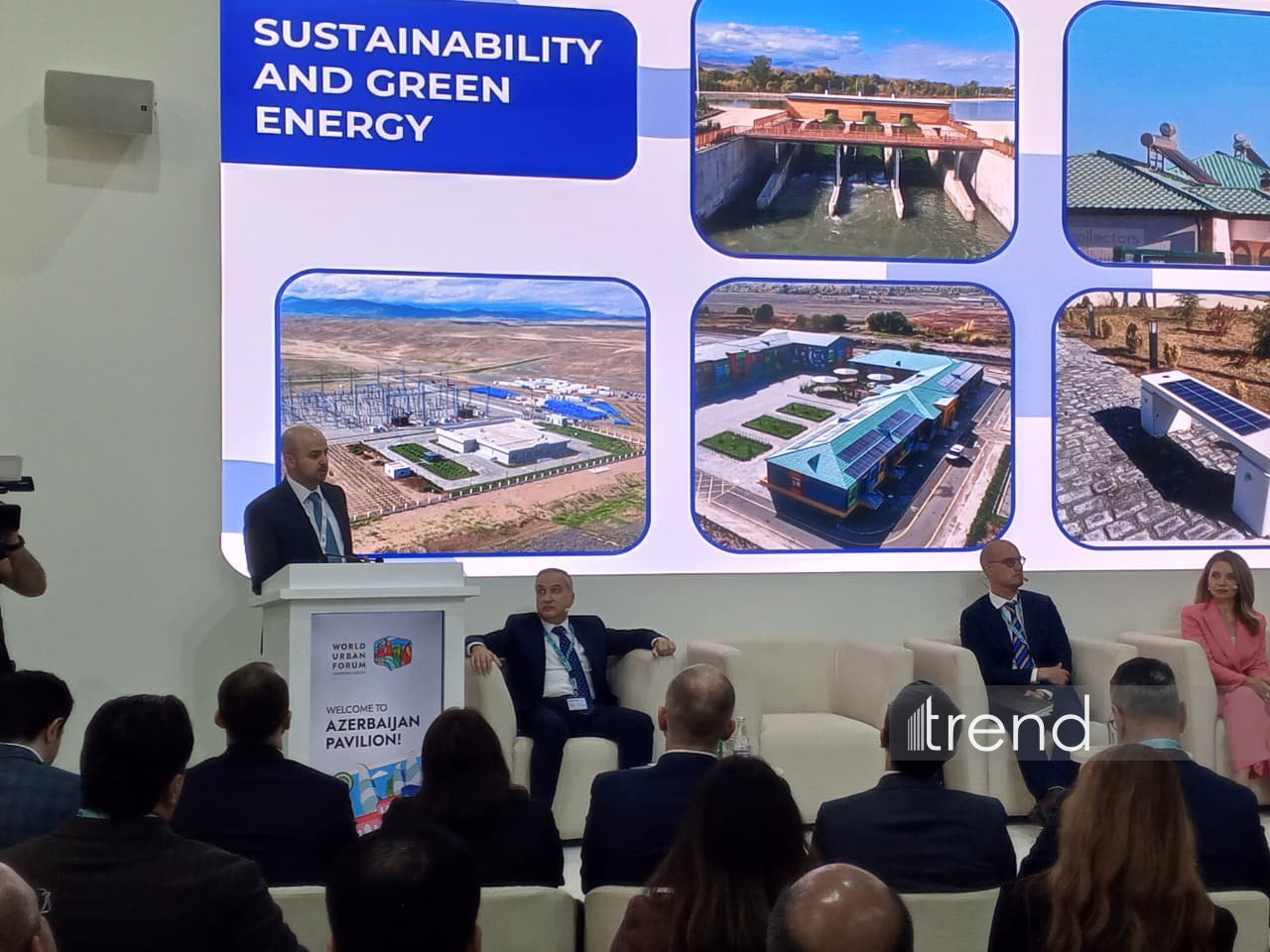
Hajiyev made the remark during an international panel discussion titled "Revival and Urbicide: Sustainable Urban Development and Resilient Communities" held within the framework of the 13th session of the World Urban Forum (WUF13) in Baku.
He noted that during the occupation era, cities, villages, and settlements across Jabrayil, Gubadli, and Zangilan suffered destruction. "This devastation was not merely the demolition of buildings; it represented the deliberate eradication of urban life, urbicide. The occupation also triggered widespread environmental degradation and the systematic destruction of cultural heritage. Furthermore, these territories remain heavily contaminated with landmines, posing one of the most severe challenges we currently confront," Hajiyev stated.
According to him, the "Great Return" program covering the years 2022–2026 was adopted by the decree of President Ilham Aliyev, and the initial phase of this strategic program nears completion.
"Today, over 80,000 individuals already reside in these territories. The reconstruction works executed across the liberated areas align fully with the United Nations Sustainable Development Goals (SDGs). The smart city and smart village concepts serve as foundational pillars of this transformation. Our objective extends beyond merely constructing housing; we aim to cultivate safe, resilient, and highly livable communities," he emphasized.
He noted that settlement planning meticulously integrates educational facilities, healthcare services, clean water networks, renewable energy grids, and diversified employment avenues.
Hajiyev concurrently drew attention to the extensive economic potential of the region. "The economic capacity of Jabrayil, Gubadli, and Zangilan remains remarkably vast. Agriculture, the mining industry, logistics, tourism, and green energy constitute our primary developmental vectors. Special tax and customs exemptions apply for investors operating within the liberated territories. Notably, the Araz Valley Economic Zone located in Jabrayil already hosts 19 registered residents," he pointed out.
Hajiyev added that Karabakh and Eastern Zangezur have undergone official designation as green energy zones by the decision of President Ilham Aliyev. "Concurrently, a 240-megawatt solar power plant is under construction in Jabrayil. In addition, other energy projects totaling 100 megawatts, alongside five hydropower plants with a collective capacity of 45 megawatts, are actively being implemented," he reported.
The special representative also underscored the strategic importance of the Zangezur corridor for the broader region. "Beyond connecting mainland Azerbaijan with Nakhchivan, the Zangezur corridor will function as a pivotal logistics arterial link connecting the East-West and North-South transport corridors," Hajiyev noted.
According to him, the vast majority of the highway and railway infrastructure projects have already achieved completion, while construction on the bridge over the Araz River, securing transit connectivity with Iran, nears its final stage. "These infrastructure pipelines will provide a powerful impetus for trade, logistics, tourism, and the creation of thousands of new jobs across the region," he concluded.
Today marks the fourth day of WUF13 in Baku.
The first day included a ministerial meeting dedicated to the New Urban Agenda, a ministerial roundtable, assemblies for women and civil society, business sessions, and discussions on urban prosperity. An official ceremony marking the raising of the UN and Azerbaijani flags also took place.
The second day stood out for the inaugural Leaders' Summit, featuring high-level discussions on the global housing crisis, urbanization policy, and urban resilience. Concurrently, the opening of the Mexico City pavilion took place, serving as a significant platform for expanding cooperation with the Latin American region and preparing for WUF14.
The third day of WUF13 featured a comprehensive program of events covering the global housing crisis, the formation of safe and inclusive cities, climate resilience, artificial intelligence and urban governance, green urbanization, social equity, and sustainable transport.
WUF13, which has attracted more than 40,000 registered participants from 182 countries, will continue until May 22. Held under the theme “Housing the world: Safe and resilient cities and communities,” the forum brings together governments, international organizations, experts, and representatives of civil society to strengthen global cooperation in the field of sustainable urban development.



