


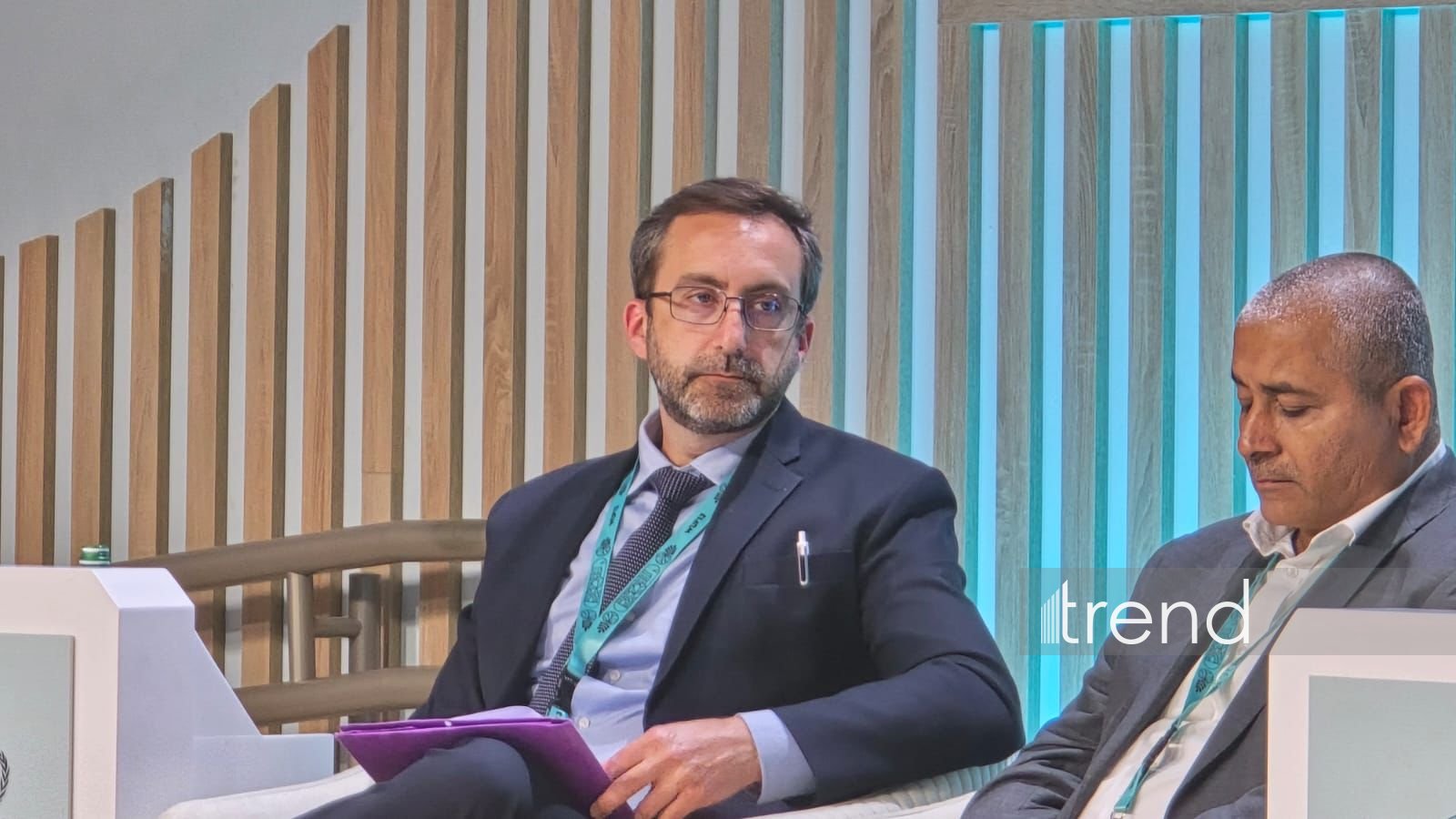
BAKU, Azerbaijan, May 20. Global waste generation will expand by 50% by the year 2050 under a business-as-usual baseline scenario, said Augustin Pierre Maria, Deputy Lead Urban Development Specialist at the World Bank Group, Trend reports.
He made the remarks during a session titled "Closing the Loop: Advancing Waste Management on the Path to a Circular Economy" held within the framework of the 13th session of the World Urban Forum (WUF13) in Baku.
During the event, Maria presented the core findings of the World Bank's new What a Waste 3.0 report, marking the third installment in a diagnostic series initiated in 2012 and updated in 2018. The document serves as a primary global data repository tracking the solid waste management sector.
According to Maria, middle-income economies will absorb the largest volumetric surge, generating an additional 1 billion tons of municipal waste annually.
"Concurrently, the steepest growth rates remain projected for low-income countries, particularly across Sub-Saharan Africa and South Asia, which happen to possess the lowest institutional readiness for such structural shifts. Roughly one-third of global waste currently evades collection or undergoes unmonitored disposal, another third routes to landfills, and only the remaining third undergoes environmentally safe disposal. Low-income nations register an average waste collection rate of approximately 28%, while Sub-Saharan Africa safely disposes of only about 7% of its total volume," Maria pointed out.
The World Bank representative also highlighted that solid waste remains one of the largest source vectors for methane, accounting for roughly 20% of anthropogenic emissions. Absent targeted policy interventions, methane emissions from waste facilities could spike by 40%.
Furthermore, he noted that approximately 80% of marine plastic pollution originates directly from unmanaged municipal waste streams. Economic liabilities arising from substandard waste infrastructure can drain up to 1.5% of an affected nation's GDP.
Maria added that while the sector officially employs around 18 million urban workers, the actual labor pool climbs significantly higher due to pervasive informal employment loops.
"Middle-income countries require fiscal allocations between 0.3% and 0.5% of their GDP toward waste management infrastructure, yet current public expenditure covers less than half of this requirement. The diagnostic document models three potential development tracks: baseline, high-ambition, and intermediate. Under the high-ambition scenario, total waste volumes stabilize at current levels, while collection and safe disposal targets achieve a 100% threshold. Yet even under this high-ambition framework, capital investment requirements remain massive, vastly exceeding historical international aid, which totaled roughly 15 billion dollars over the past 20 years," he stated.
Today marks the fourth day of WUF13 in Baku.
The first day included a ministerial meeting dedicated to the New Urban Agenda, a ministerial roundtable, assemblies for women and civil society, business sessions, and discussions on urban prosperity. An official ceremony marking the raising of the UN and Azerbaijani flags also took place.
The second day stood out for the inaugural Leaders' Summit, featuring high-level discussions on the global housing crisis, urbanization policy, and urban resilience. Concurrently, the opening of the Mexico City pavilion took place, serving as a significant platform for expanding cooperation with the Latin American region and preparing for WUF14.
The third day of WUF13 featured a comprehensive program of events covering the global housing crisis, the formation of safe and inclusive cities, climate resilience, artificial intelligence and urban governance, green urbanization, social equity, and sustainable transport.
WUF13, which has attracted more than 40,000 registered participants from 182 countries, will continue until May 22. Held under the theme “Housing the world: Safe and resilient cities and communities,” the forum brings together governments, international organizations, experts, and representatives of civil society to strengthen global cooperation in the field of sustainable urban development.



