


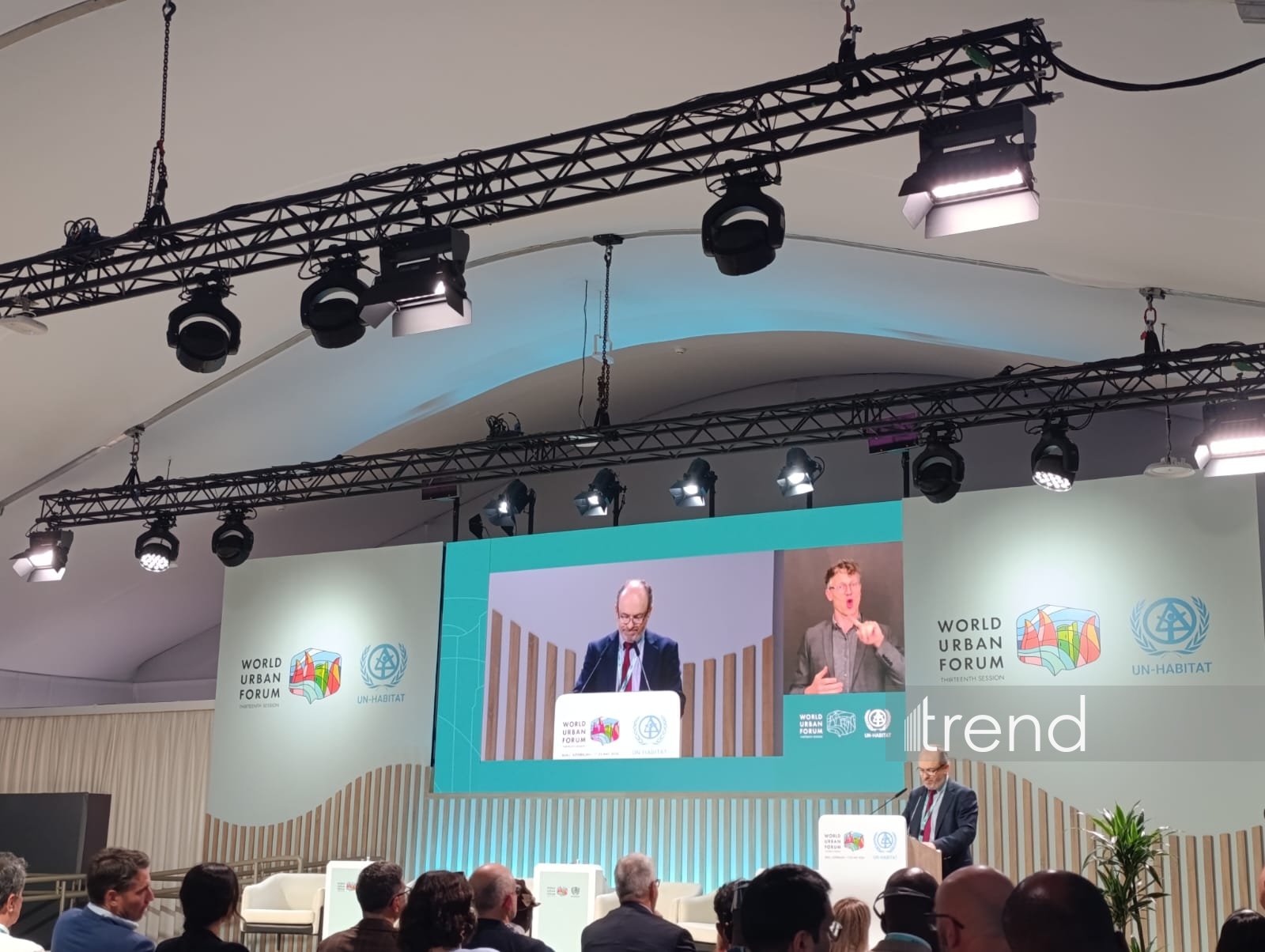

BAKU, Azerbaijan, May 20. The future of the Amazon will be determined not only by the condition of its forests, but also by urban development, Juan Pablo Bonilla, Manager of the Inter-American Development Bank Climate Change and Sustainable Development Sector (CSD), Trend reports.
He made the statement during a session titled “Stories from the Climate Frontlines” at WUF13.
Pablo Bonilla noted that today, special attention must be paid to two important regions of Latin America and the Caribbean, the Amazon and the Caribbean, as well as the role of cities in their development.
“First and foremost, the future of the Amazon will be determined not only by its forests but also by its cities. Protecting this unique biome requires working together with Amazonian cities to promote a more sustainable model of growth, governance, and financing. In this context, the sustainability of the Amazon has effectively become an urban agenda,” he said.
He emphasized that in the Caribbean region, population resilience is a prerequisite for development, and cities play a key role in risk forecasting, protecting the population, and sustaining the economy.
According to him, the Amazon is home to about 60 million people, more than 70% of whom live in urban areas. At the same time, the region is approaching a tipping point due to a combination of deforestation, inequality, and uncontrolled urbanization linked to illegal activities.
He noted that in the Caribbean, cities are hubs for population, tourism, and vital services, yet they remain extremely vulnerable to hurricanes, floods, and other disasters capable of wiping out years of investment.
“The overall goal is to better link human development and financing to achieve meaningful impact in the regions and ensure resilience before, during, and after climate change,” he said.
Bonilla emphasized that cities are a turning point, as they are where jobs, services, and innovation are concentrated, as well as the most serious challenges, such as informal settlements, infrastructure gaps, and environmental pressures.
According to him, it is necessary to move from fragmented projects to integrated regional approaches and from short-term solutions to long-term sustainability.
Today, the fourth day of the WUF13 conference is taking place in Baku.
The first day included a ministerial meeting dedicated to the New Urban Agenda, a ministerial roundtable, assemblies for women and civil society, business sessions, and discussions on urban prosperity. An official ceremony marking the raising of the UN and Azerbaijani flags also took place.
The second day stood out for the inaugural Leaders' Summit, featuring high-level discussions on the global housing crisis, urbanization policy, and urban resilience. Concurrently, the opening of the Mexico City pavilion took place, serving as a significant platform for expanding cooperation with the Latin American region and preparing for WUF14.
The third day of WUF13 featured a comprehensive program of events covering the global housing crisis, the formation of safe and inclusive cities, climate resilience, artificial intelligence and urban governance, green urbanization, social equity, and sustainable transport.
WUF13, which has attracted more than 40,000 registered participants from 182 countries, will continue until May 22. Held under the theme “Housing the world: Safe and resilient cities and communities,” the forum brings together governments, international organizations, experts, and representatives of civil society to strengthen global cooperation in the field of sustainable urban development.



