


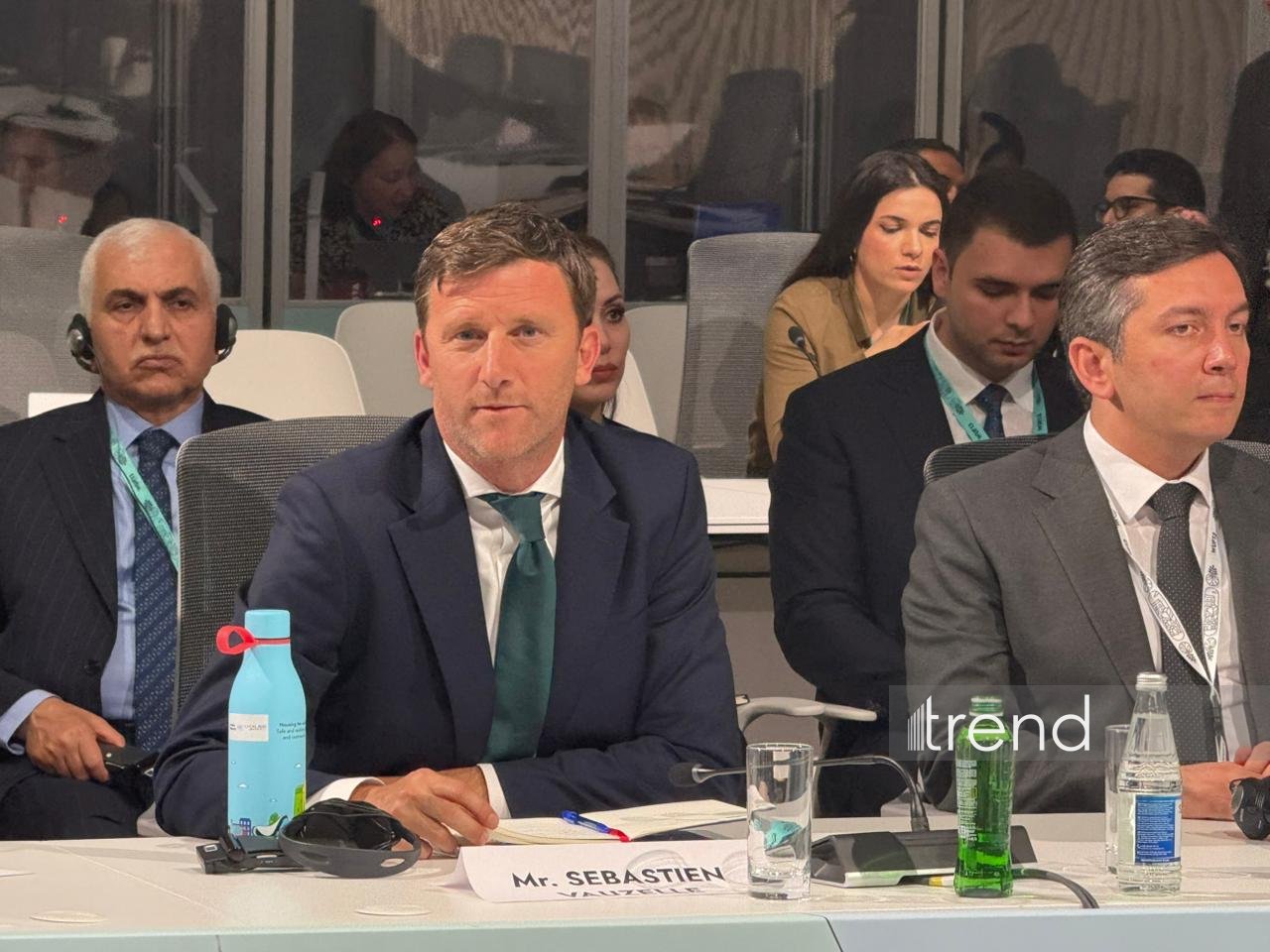

BAKU, Azerbaijan, May 20. The oversight role of parliaments is of fundamental importance, Sébastien Vauzelle, head of the secretariat of the UN-Habitat “Local2030” coalition, said, Trend reports.
He made the remark at a roundtable of parliamentarians on the topic "How National Legislation Can Translate Global Housing Commitments into Tangible Results”, held as part of the 13th World Urban Forum (WUF13).
“Thanks to this oversight function, you can ask questions about the work of governments and assess their alignment with the global agenda and local realities,” he added.
In addition, the oversight function includes budgetary oversight. This is particularly important in financial matters, including in the area of housing finance.
The existence of budgetary lines and financial mechanisms is a key prerequisite for implementing housing policy, attracting private-sector investment, and financing sustainable development at the local level.
“Developing laws grounded in the local context, translating global agendas into national legislation and local action, and ensuring feedback mechanisms in these processes are key functions of legislative bodies,” he added.
He said that this is a very important bridging function between different levels, and the key to resolving today’s systemic crises, as well as to ensuring the sustainable development of people’s lives. Because it is impossible to change people’s lives without changing the systems, it is impossible to change people’s lives.
“You oversee the work of the national government. Governments play a key role in localizing global programs, transforming them into tangible results for citizens, whether in cities or regions.”
Today marks the fourth day of WUF13 in Baku.
The first day included a ministerial meeting dedicated to the New Urban Agenda, a ministerial roundtable, assemblies for women and civil society, business sessions, and discussions on urban prosperity. An official ceremony marking the raising of the UN and Azerbaijani flags also took place.
The second day stood out for the inaugural Leaders' Summit, featuring high-level discussions on the global housing crisis, urbanization policy, and urban resilience. Concurrently, the opening of the Mexico City pavilion took place, serving as a significant platform for expanding cooperation with the Latin American region and preparing for WUF14.
The third day of WUF13 featured a comprehensive program of events covering the global housing crisis, the formation of safe and inclusive cities, climate resilience, artificial intelligence and urban governance, green urbanization, social equity, and sustainable transport.
WUF13, which has attracted more than 40,000 registered participants from 182 countries, will continue until May 22. Held under the theme “Housing the world: Safe and resilient cities and communities,” the forum brings together governments, international organizations, experts, and representatives of civil society to strengthen global cooperation in the field of sustainable urban development.



