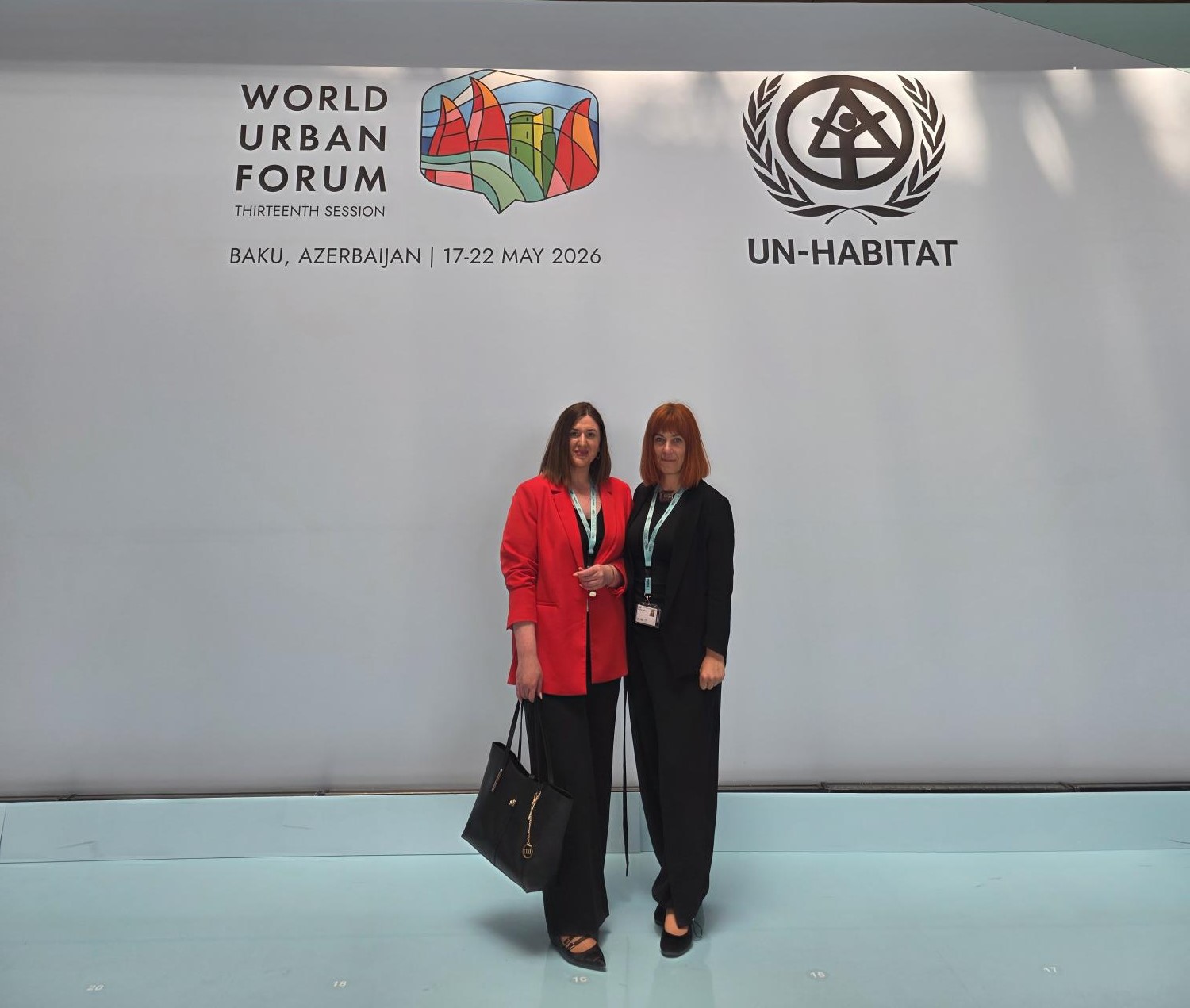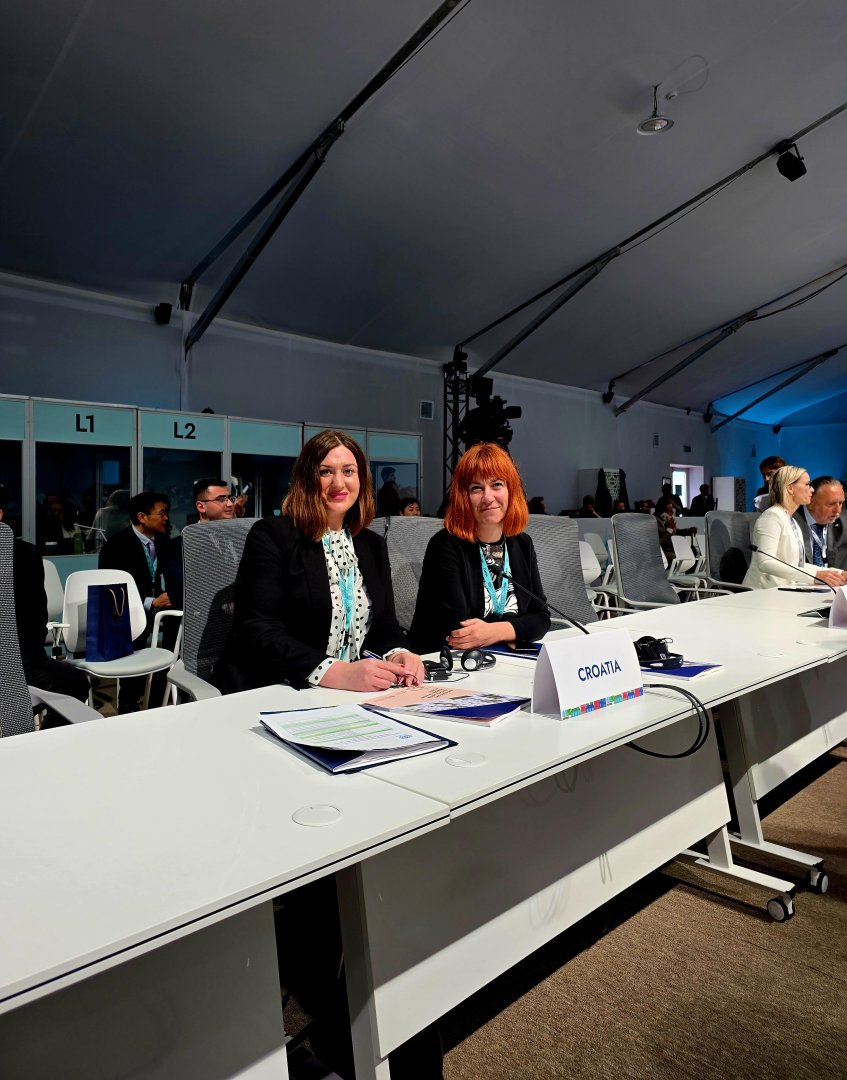

BAKU, Azerbaijan, May 21. The 13th session of the World Urban Forum (WUF13) in Baku is expected to further encourage partnerships for innovative urban development projects, Advisers to the Minister of Physical Planning, Construction and State Assets of Croatia Ana Favro Šaban and Nevena Bjeliš said in an exclusive interview with Trend on the sidelines of the forum.
"Croatia’s key priorities at the World Urban Forum 13 (WUF13) in Baku focus on sustainable and inclusive urban development, with particular emphasis on affordable housing, exchange of experiences in housing policy, and the green transition of the building sector. Croatia aims to present reforms and programmes that integrate spatial planning, housing affordability and energy efficiency within a single strategic framework. A central message Croatia intends to promote is that affordable housing and sustainable urban development must go hand in hand. Through the implementation of the National Housing Policy Plan until 2030 and related legislative reforms, Croatia is working to increase the availability of affordable and quality housing while ensuring balanced spatial development and protection of urban space," they said.
The advisers pointed out that Croatia also sees WUF13 as an important opportunity to exchange international experiences and best practices in housing policy, urban regeneration, demographic challenges and sustainable land use.
"At the same time, Croatia wishes to share its own experiences
in digitalisation of spatial planning and construction procedures
through systems such as ePlans and ePermit, which increase
transparency, efficiency and accessibility for citizens and
investors. Another major priority is energy efficiency in buildings
and the reduction of CO2 emissions. Since the building sector is
one of the largest sources of energy
consumption and emissions, Croatia is implementing extensive
renovation and energy-efficiency programmes for residential and
public buildings. These measures contribute to climate goals,
reduction of energy poverty and improvement of housing quality,"
they noted.
The ministry representatives went on to add that in line with European climate objectives and the revised Energy Performance of Buildings Directive (EPBD), Croatia is advancing policies aimed at increasing the number of zero-emission buildings, promoting renewable energy use, and mobilising investments for building renovation.
"The country considers the green transition in the construction
sector as both an environmental and social opportunity that can
create jobs, strengthen energy resilience and improve living
conditions for citizens. Croatia expects WUF13 to further
strengthen international cooperation, encourage partnerships for
innovative urban development projects, and contribute to the global
dialogue on climate-neutral, resilient, and socially inclusive
cities. At the same time, the Forum represents an important
opportunity for the exchange of experiences and best practices in
the areas of affordable housing for citizens and addressing
demographic challenges, which are among
the key urban and social issues of today," they explained.
Speaking about the opportunities for expanding cooperation between Croatia and Azerbaijan, Šaban and Bjeliš said that their country sees significant potential for strengthening cooperation with Azerbaijan in the fields of urban development, construction, and sustainable infrastructure, particularly by connecting Croatia’s experience in post-earthquake reconstruction, energy renovation, and European green transition policies with Azerbaijan’s infrastructure investments and dynamic urban development.
"From the perspective of the Ministry of Physical Planning,
Construction and State Assets, one of the key areas of cooperation
is post-disaster reconstruction and seismic resilience. Following
the devastating earthquakes in Zagreb and the Banovina region,
Croatia has gained substantial experience in implementing complex
reconstruction processes based on the “Build Back Better”
principle. This means that the objective is not only to restore
damaged buildings, but to create safer, higher-quality, and more
energy-efficient living environments. In this
process, special emphasis has been placed on seismic safety, energy
efficiency, sustainability, and the long-term resilience of urban
areas.
Given that Azerbaijan is also a seismically active country and is simultaneously investing intensively in urban and infrastructure development, including the modernization of Baku, the development of new urban zones, and investments in energy efficiency and smart city concepts, we see strong potential for the exchange of expertise in earthquake-resistant construction, resilient urban planning, energy-efficient public infrastructure, and integrated models of reconstruction and urban management," said the Croatian representatives.
They believe that another important area of cooperation relates to energy renovation of buildings and sustainable urban regeneration.
"In recent years, Croatia has implemented extensive programmes
for the energy renovation of residential and public buildings
through the EU funds and green transition policies. These
programmes contribute not only to decarbonisation and reduced
energy consumption, but also
to tackling energy poverty and improving citizens’ quality of life.
We believe there is considerable room for exchanging knowledge
related to financing models, regulatory frameworks, and
implementation mechanisms in the field of sustainable and
energy-efficient construction.
We also see significant opportunities for cooperation in the field
of affordable and inclusive housing, which today represents one of
the major urban challenges globally. Through its Agency for
Transactions and Mediation in Immovable Properties, Croatia
implements state-supported housing programmes and subsidised
housing construction projects, with a particular focus on young
families and housing accessibility," Šaban and Bjeliš added.
At the same time, as the advisers said, Croatia is increasingly developing models of sustainable urban regeneration and balancing market development with social needs.
"Since Azerbaijan is also developing state- supported housing
programmes and new urban projects, there is clear potential for
dialogue and exchange of best practices in housing policy, housing
finance, and the development of sustainable communities. There is
also strong potential for cooperation between the private sector,
professional institutions, universities, and chambers of commerce,
particularly
through joint projects, expert exchanges, and business forums
related to sustainable infrastructure, green construction, and the
development of resilient cities. Overall, we believe that Croatia
and Azerbaijan have a solid foundation for deepening cooperation
through innovative and future-oriented urban development and
housing policies that support urban resilience, social inclusion,
and sustainable development," they explained.
Šaban and Bjeliš went on to add that Croatia’s current priorities in the areas of physical planning, sustainable urban development and housing policy are focused on balanced territorial development, improving quality of life, strengthening climate resilience and ensuring affordable housing for citizens.
"In the field of physical planning, Croatia is prioritising more
efficient and transparent spatial management through a new
legislative and digital framework. The Government is modernising
spatial planning systems through tools such as ePlans and
integrated permitting procedures, while also strengthening
protection against illegal construction and uncontrolled
urbanisation, particularly in environmentally sensitive and coastal
areas. The objective is to ensure sustainable use of space as a
limited national resource and improve coordination
between national and local authorities.
Regarding sustainable urban development, Croatia is focused on
urban regeneration, energy efficiency, green transition and climate
adaptation. Key priorities include investments in sustainable
mobility, energy-efficient renovation of buildings, decarbonisation
of the construction sector and strengthening resilience to natural
disasters, especially following the post-earthquake reconstruction
process in Zagreb and Petrinja," they said.
The advisers pointed out that housing policy is currently one of
Croatia’s central strategic priorities.
"In 2025, the Government adopted the National Housing Policy
Plan of the Republic of Croatia until 2030, the first comprehensive
national strategic document dedicated to housing policy. The Plan
addresses housing affordability challenges, particularly for young
people and families, and aims to increase the availability of
affordable, sustainable and quality housing across the country. Its
key objectives include increasing the supply of affordable housing,
activating vacant housing stock, regulating the rental market and
encouraging sustainable
and energy-efficient residential construction. Planned measures
include the construction of affordable housing through POS
programmes, incentives for long- term rental, support for housing
cooperatives and tax relief for first-time homebuyers.
Croatia also sees housing policy as an important demographic and social policy instrument that can reduce emigration, support young families and improve living conditions for vulnerable groups, while contributing to a more sustainable and accessible housing system by 2030," the Croatian representatives explained.
They noted that Croatia seeks to balance urban development with environmental sustainability and heritage preservation through an integrated approach that combines spatial planning, green transition policies and the protection of cultural heritage.
"A particularly important dimension of this approach has been
the comprehensive post-earthquake reconstruction following the
devastating earthquakes in Zagreb and Petrinja in 2020. The
earthquakes caused severe damage to thousands of buildings,
including some of Croatia’s most valuable cultural heritage sites
located in historic urban centres. In response, Croatia launched
one of the largest and most complex
reconstruction programmes in its modern history, with the goal not
only of restoring damaged buildings, but also of improving their
seismic resilience, energy efficiency and long-term sustainability.
The reconstruction process therefore became an opportunity to
connect heritage preservation with modern standards of sustainable
urban development.
Croatia’s key principle has been that cultural heritage must be preserved as a living part of urban identity while adapting historic buildings to contemporary safety and environmental standards. During the reconstruction of protected buildings, extensive conservation, restoration and archaeological research has been carried out in parallel with structural strengthening works. This ensures that buildings retain their historical and architectural value while becoming safer, more energy-efficient and more resilient to future risks," noted the ministry representatives.
Šaban and Bjeliš said that the government has invested significant
national and European Union funds into this effort.
"Through the Ministry of Physical Planning, Construction and
State Assets and Ministry of Culture and Media, more than 500
cultural heritage
buildings and inventories have been included in post-earthquake
reconstruction programmes, financed through the EU Solidarity Fund,
the National Recovery and Resilience Plan and the State budget. The
reconstruction model combines seismic strengthening, restoration of
historic elements and energy-efficiency improvements, demonstrating
that heritage protection and climate objectives can be pursued
together. At the broader urban level, Croatia promotes sustainable
spatial planning, urban regeneration and protection of historic
city centres against excessive and unsustainable development
pressures. This is particularly important in sensitive heritage
areas along the Adriatic coast and in historic urban cores such as
Zagreb, Dubrovnik and Split. Croatia recognises that urban
development must respect cultural identity, environmental
protection and quality of life for local communities.
Croatia also sees digitalisation and integrated planning tools
as important instruments for achieving this balance. Modern spatial
planning systems and transparent permitting procedures contribute
to better management of urban growth while ensuring compliance with
environmental and heritage protection standards. Overall, Croatia’s
experience after the 2020 earthquakes has shown that reconstruction
can go beyond simple restoration. It can serve as a model for
sustainable urban regeneration — one that protects cultural
heritage, strengthens
climate resilience, reduces CO2 emissions and improves the quality
and safety of urban life for future generations," they added.
Further, the Croatian representatives noted that one of Croatia’s biggest urban planning and infrastructure challenges today is ensuring balanced and sustainable territorial development after the successful completion of major motorway and road infrastructure projects over the past two decades.
"Having significantly improved road connectivity across the country, Croatia is now entering a new development phase focused on the modernisation of the railway system and strengthening sustainable transport infrastructure. A key national priority is the reconstruction and upgrading of railway corridors, particularly those connected to the Trans-European Transport Network (TEN-T). Croatia aims to increase the efficiency, safety and competitiveness of rail transport for both passengers and freight. Investments are focused on electrification, modernisation of rail infrastructure, development of intermodal transport hubs and stronger integration between ports, railways and urban transport systems. The objective is to shift a greater share of transport from road to rail in line with European climate and sustainability goals," they said.
Another major challenge, as Šaban and Bjeliš said, is strengthening Croatia’s energy resilience, self-sufficiency and diversification of supply routes in response to current geopolitical and climate-related risks.
"Croatia has made important progress through investments in
renewable energy sources, LNG infrastructure and regional energy
connectivity projects. The LNG terminal on the island of Krk has
become an important strategic asset for both Croatia and the wider
region, contributing to
diversification of gas supply and greater energy security. At the
same time, Croatia is accelerating investments in solar and wind
energy, energy-efficient buildings and modern energy infrastructure
as part of its green transition agenda.
Urban planning challenges are also closely linked to the protection of space as a limited national resource. Croatia is placing increasing emphasis on preventing illegal construction and uncontrolled spatial development, particularly in environmentally sensitive and coastal areas. Illegal building has long represented a challenge for sustainable land management, infrastructure planning and environmental protection. In response, the Government has strengthened inspection mechanisms and introduced a new legislative framework aimed at improving spatial governance, legal certainty and transparency in planning procedures," they said.
The ministry representatives noted that the new spatial planning legislation promotes integrated and digitalised planning systems, clearer development rules and stronger coordination between national and local authorities.
"Through digital tools such as ePlans and modernised permitting procedures, Croatia seeks to ensure more transparent, efficient and sustainable urban development," Šaban and Bjeliš concluded.