


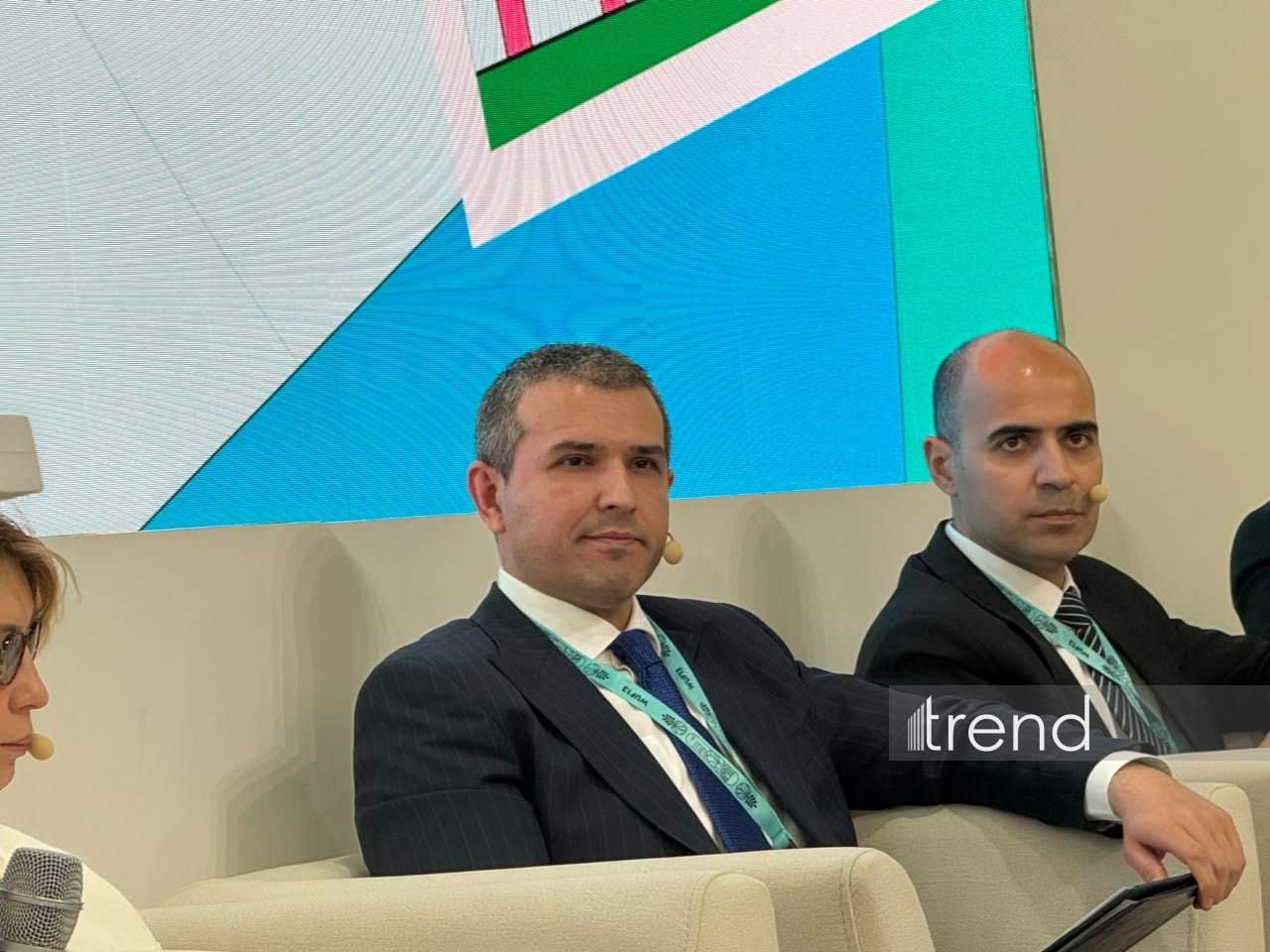

BAKU, Azerbaijan, May 21. MIDA has managed a broader portfolio of 19 distinct real estate developments, successfully completing the construction of 11 large-scale projects comprising more than 14,000 affordable residential units to date, said Jamshid Amirov, Chief of Staff of MIDA, Trend reports.
He made the remarks during a specialized session focused on the Baku City Master Plan, held within the framework of the 13th session of the World Urban Forum (WUF13) in Baku.
According to him, the operational footprint of the State Housing Development Agency of Azerbaijan (MIDA) extends far beyond the capital to aggressively scale affordable housing solutions across multiple regions of the country.
"The agency has also successfully executed three strategic housing projects within the liberated territories, which stands as a source of immense institutional pride for us. MIDA continuously carries out extensive spatial land banking research to identify optimal plots for future developments. Throughout this vetting workflow, proximity to major employment hubs and highly favorable ecological parameters operate as our primary selection criteria," Amirov reported.
He pointed out that the finalized market price of the residential apartments offered to qualifying citizens is, on average, 25 percent lower than prevailing market rates, with the pricing differential shifting even wider across specific premium urban zones.
"Eligible citizens can secure these properties by deploying a minimal 10 percent down payment, gaining access to long-term, low-interest state mortgage credit facilities. Furthermore, all apartments enter the market fully renovated, equipped with kitchen cabinetry systems and integrated individual heating infrastructure ready for immediate occupancy," the chief of staff explained.
"Our residential complexes undergo construction exclusively within highly secure and environmentally viable sectors. The master-planning phase strictly incorporates foundational social infrastructure elements, including secondary schools, kindergarten facilities, medical clinics, spacious common courtyards, extensive green parks, recreational playgrounds, specialized bicycle paths, and seamless links to municipal public mass transit grids," Amirov added.
To guarantee absolute institutional transparency and equal access, the official noted that the government has deployed the specialized "Guzeshtli Menzil" (Affordable Housing) Electronic System.
"This centralized digital platform creates completely equal opportunities for all applicant classes and drastically simplifies the entire property acquisition lifecycle. Applications from eligible citizens undergo real-time online processing, while submitted candidate metrics are verified instantly via automated data integration links connected to core state agency information networks," he emphasized.
Concluding his address, the MIDA official underlined that the concept of affordable housing must transcend simple low-cost real estate valuations.
"True affordable housing must encompass a comprehensively integrated living ecosystem that simultaneously delivers robust public mass transit connections, accessible social infrastructure, open green spaces, and direct proximity to viable macroeconomic employment opportunities," Amirov concluded.
Today marks the fifth day of WUF13 in Baku.
The first day included a ministerial meeting dedicated to the New Urban Agenda, a ministerial roundtable, assemblies for women and civil society, business sessions, and discussions on urban prosperity. An official ceremony marking the raising of the UN and Azerbaijani flags also took place.
The second day stood out for the inaugural Leaders' Summit, featuring high-level discussions on the global housing crisis, urbanization policy, and urban resilience. Concurrently, the opening of the Mexico City pavilion took place, serving as a significant platform for expanding cooperation with the Latin American region and preparing for WUF14.
The third day of WUF13 featured a comprehensive program of events covering the global housing crisis, the formation of safe and inclusive cities, climate resilience, artificial intelligence and urban governance, green urbanization, social equity, and sustainable transport.
One of the highlights of the third day was the signing of a sister-city memorandum between the Azerbaijani city of Shusha and the Turkish city of Trabzon.
The fourth day of WUF13 featured a broad program of events dedicated to urbanization, climate change, inclusive urban development, housing policy, and sustainable governance.
One of the important events of the UN Special Programme for the Economies of Central Asia (SPECA) Cities Forum, held on the fourth day, was the announcement of Almaty’s official accession to the “Declaration of Intent on the Establishment of the SPECA Smart Climate-Resilient Cities Forum.”
Also, for the first time in WUF history and at Azerbaijan’s initiative, the “WUF13 NGO Forum: Global Partnership and Decision-Making” was held.
WUF13, which has attracted more than 40,000 registered participants from 182 countries, will continue until May 22. Held under the theme “Housing the world: Safe and resilient cities and communities,” the forum brings together governments, international organizations, experts, and representatives of civil society to strengthen global cooperation in the field of sustainable urban development.



