


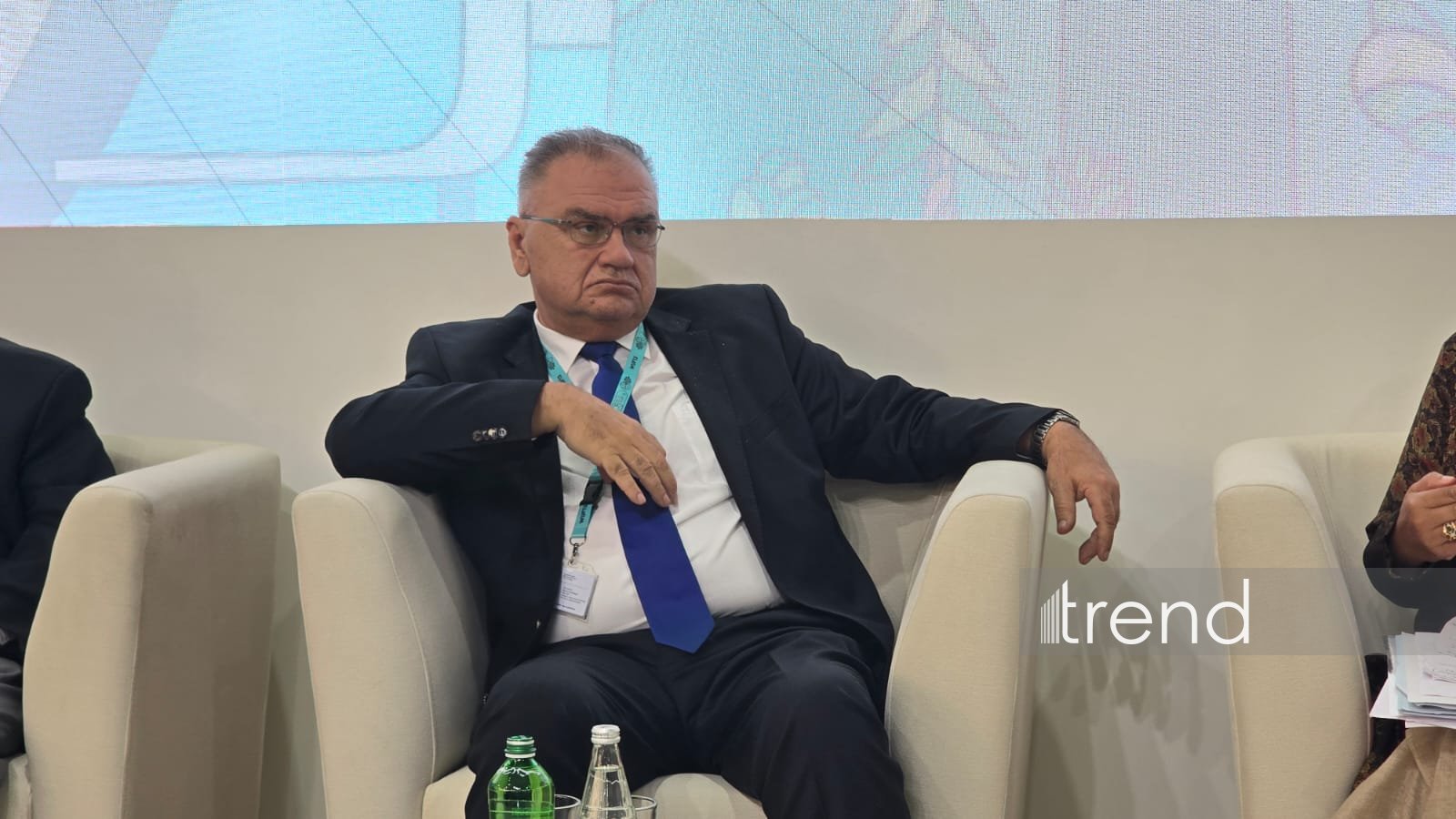
BAKU, Azerbaijan, May 21. Countries should allocate more funds to the World Bank, former Serbian member of the Presidency of Bosnia and Herzegovina, former Minister of Foreign Affairs of this country, former Prime Minister of the Republic of Serbia, member of the Nizami Ganjavi International Center, Mladen Ivanić, said at an event titled "Advancing Housing Policy Through Multilateralism: From Global Commitments to Local Impact" within the framework of WUF13 in Baku, Trend reports.
According to him, the World Bank plays an important financial support role in development and housing provision.
He noted that Bosnia and Herzegovina was one of the countries that suffered heavy destruction as a result of the war, and the main reason for the problems faced in the field of housing provision was precisely the destruction caused by the war.
"Without the support of multilateral institutions after the war, it would not have been possible to provide our citizens with housing. Not only UN agencies, but also numerous international non-governmental organizations played an important role in this process. Especially in the first years after the war, thousands of NGOs operated in the country and contributed to the reconstruction work," he emphasized.
Ivanić pointed out that the role of international financial institutions was decisive in the reconstruction of the country and the restoration of the housing stock.
"These processes would not have been possible without the support of the World Bank, the European Bank for Reconstruction and Development, and the European Investment Bank. As a result of the war, about 40% of the housing stock in the country was destroyed or seriously damaged. Almost one in two houses was either completely destroyed or severely damaged," he explained.
According to him, multilateral institutions not only provided financial and technical support, but also influenced the correct determination of priorities by local authorities.
"Local politicians could sometimes prefer to redirect resources in other directions. However, as a result of the demand and pressure from international institutions, housing provision became one of the main priorities. This allowed people to return to normal life," he added.
Ivanić also said that, contrary to some opinions, he did not share the view that multilateral institutions were in a state of crisis.
"Some political institutions may face certain difficulties. However, specialized multilateral institutions continue to operate effectively.
"It's difficult to imagine a world without UNESCO or the World Health Organization. The same approach applies to international institutions working in the field of housing and development," he stressed.
The member of the Nizami Ganjavi International Center finally called on the international community to support the strengthening of the financial capabilities of institutions such as the World Bank.
"Countries should allocate more funds to the World Bank. Because this institution is one of the most important financial institutions in achieving development goals, including housing," Ivanić concluded.
Today marks the fifth day of WUF13 in Baku.
The first day included a ministerial meeting dedicated to the New Urban Agenda, a ministerial roundtable, assemblies for women and civil society, business sessions, and discussions on urban prosperity. An official ceremony marking the raising of the UN and Azerbaijani flags also took place.
The second day stood out for the inaugural Leaders' Summit, featuring high-level discussions on the global housing crisis, urbanization policy, and urban resilience. Concurrently, the opening of the Mexico City pavilion took place, serving as a significant platform for expanding cooperation with the Latin American region and preparing for WUF14.
The third day of WUF13 featured a comprehensive program of events covering the global housing crisis, the formation of safe and inclusive cities, climate resilience, artificial intelligence and urban governance, green urbanization, social equity, and sustainable transport.
One of the highlights of the third day was the signing of a sister-city memorandum between the Azerbaijani city of Shusha and the Turkish city of Trabzon.
The fourth day of WUF13 featured a broad program of events dedicated to urbanization, climate change, inclusive urban development, housing policy, and sustainable governance.
One of the important events of the UN Special Programme for the Economies of Central Asia (SPECA) Cities Forum, held on the fourth day, was the announcement of Almaty’s official accession to the “Declaration of Intent on the Establishment of the SPECA Smart Climate-Resilient Cities Forum.”
Also, for the first time in WUF history and at Azerbaijan’s initiative, the “WUF13 NGO Forum: Global Partnership and Decision-Making” was held.
WUF13, which has attracted more than 40,000 registered participants from 182 countries, will continue until May 22. Held under the theme “Housing the world: Safe and resilient cities and communities,” the forum brings together governments, international organizations, experts, and representatives of civil society to strengthen global cooperation in the field of sustainable urban development.



