


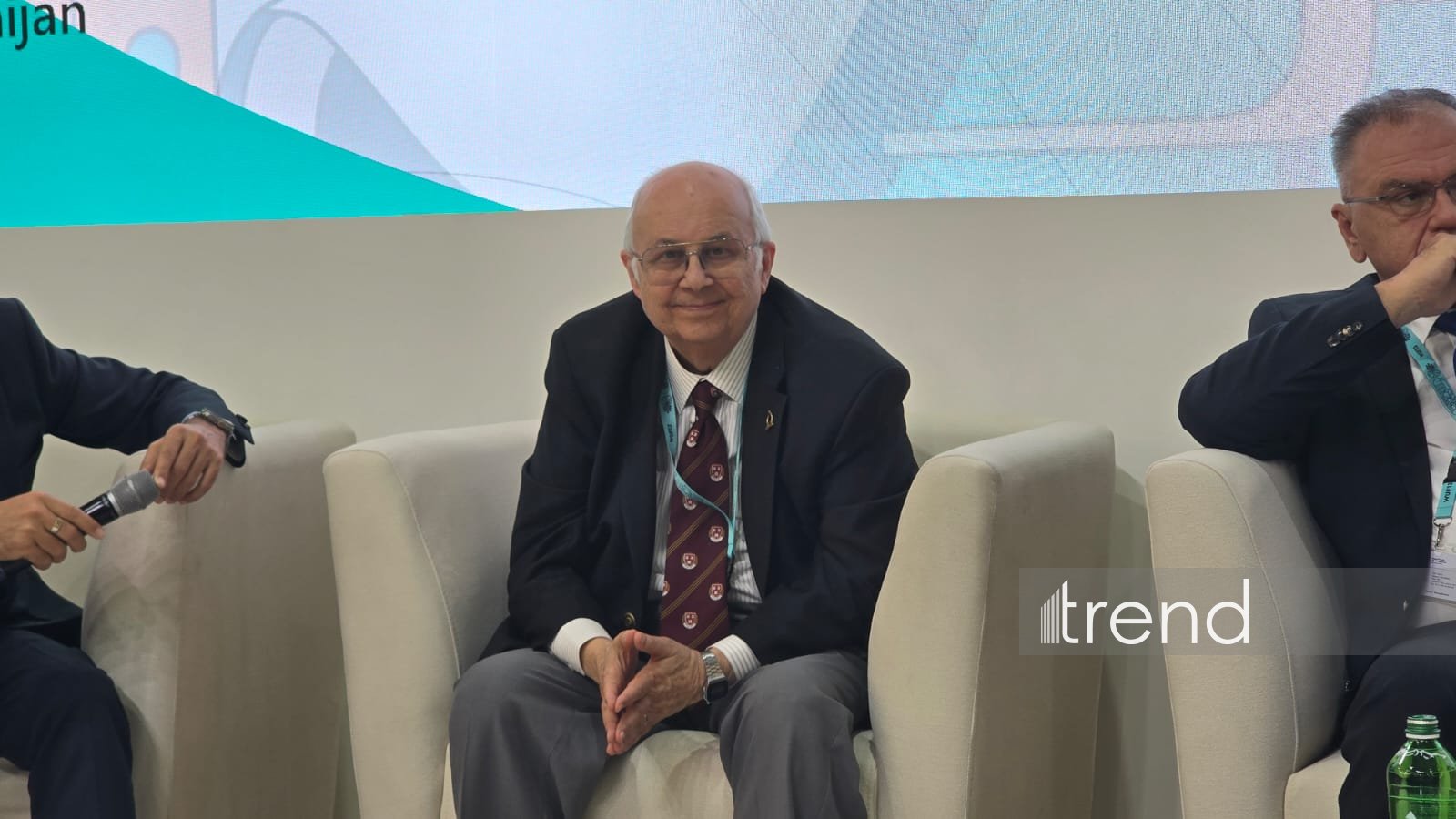
BAKU, Azerbaijan, May 21. Co-chair of the Nizami Ganjavi International Center, Ismail Serageldin said that the role of women in microfinance is decisive in the reconstruction of post-conflict societies, Trend reports.
He made the remarks during his speech at the event titled “Advancing Housing Policy Through Multilateralism: From Global Commitments to Local Impact,” held within the framework of WUF13 in Baku.
He emphasized that the role of international financial institutions, including the World Bank and UN agencies, is not limited to providing financial resources, but also includes drawing on extensive experience and comparative analysis from projects implemented across different countries.
According to him, over many years these institutions have financed projects in various countries and identified which approaches are most effective, transferring this knowledge to local governance structures.
Serageldin noted that microfinance has produced significant results in developing countries, including Bangladesh and several countries in Latin America, with particular importance placed on expanding women’s access to financial systems.
“In many cases, the main beneficiaries of loans have been women. For example, in Bangladesh, around 94% of microfinance program beneficiaries are women. This demonstrates the crucial role of women in rebuilding social capital and communities,” he said.
He added that in post-conflict periods, the rebuilding of societies and social ties is often driven by women’s initiatives.
Serageldin also stressed that international organizations should adopt a modest and supportive approach while strengthening local communities.
“The main goal is to enable local communities to take ownership of their achievements and feel empowered. This is a very important principle in the development process,” he said.
He concluded that further efforts are needed to build more resilient financial institutions in developing countries.
Today marks the fifth day of WUF13 in Baku.
The first day included a ministerial meeting dedicated to the New Urban Agenda, a ministerial roundtable, assemblies for women and civil society, business sessions, and discussions on urban prosperity. An official ceremony marking the raising of the UN and Azerbaijani flags also took place.
The second day stood out for the inaugural Leaders' Summit, featuring high-level discussions on the global housing crisis, urbanization policy, and urban resilience. Concurrently, the opening of the Mexico City pavilion took place, serving as a significant platform for expanding cooperation with the Latin American region and preparing for WUF14.
The third day of WUF13 featured a comprehensive program of events covering the global housing crisis, the formation of safe and inclusive cities, climate resilience, artificial intelligence and urban governance, green urbanization, social equity, and sustainable transport.
One of the highlights of the third day was the signing of a sister-city memorandum between the Azerbaijani city of Shusha and the Turkish city of Trabzon.
The fourth day of WUF13 featured a broad program of events dedicated to urbanization, climate change, inclusive urban development, housing policy, and sustainable governance.
One of the important events of the UN Special Programme for the Economies of Central Asia (SPECA) Cities Forum, held on the fourth day, was the announcement of Almaty’s official accession to the “Declaration of Intent on the Establishment of the SPECA Smart Climate-Resilient Cities Forum.”
Also, for the first time in WUF history and at Azerbaijan’s initiative, the “WUF13 NGO Forum: Global Partnership and Decision-Making” was held.
WUF13, which has attracted more than 40,000 registered participants from 182 countries, will continue until May 22. Held under the theme “Housing the world: Safe and resilient cities and communities,” the forum brings together governments, international organizations, experts, and representatives of civil society to strengthen global cooperation in the field of sustainable urban development.



