


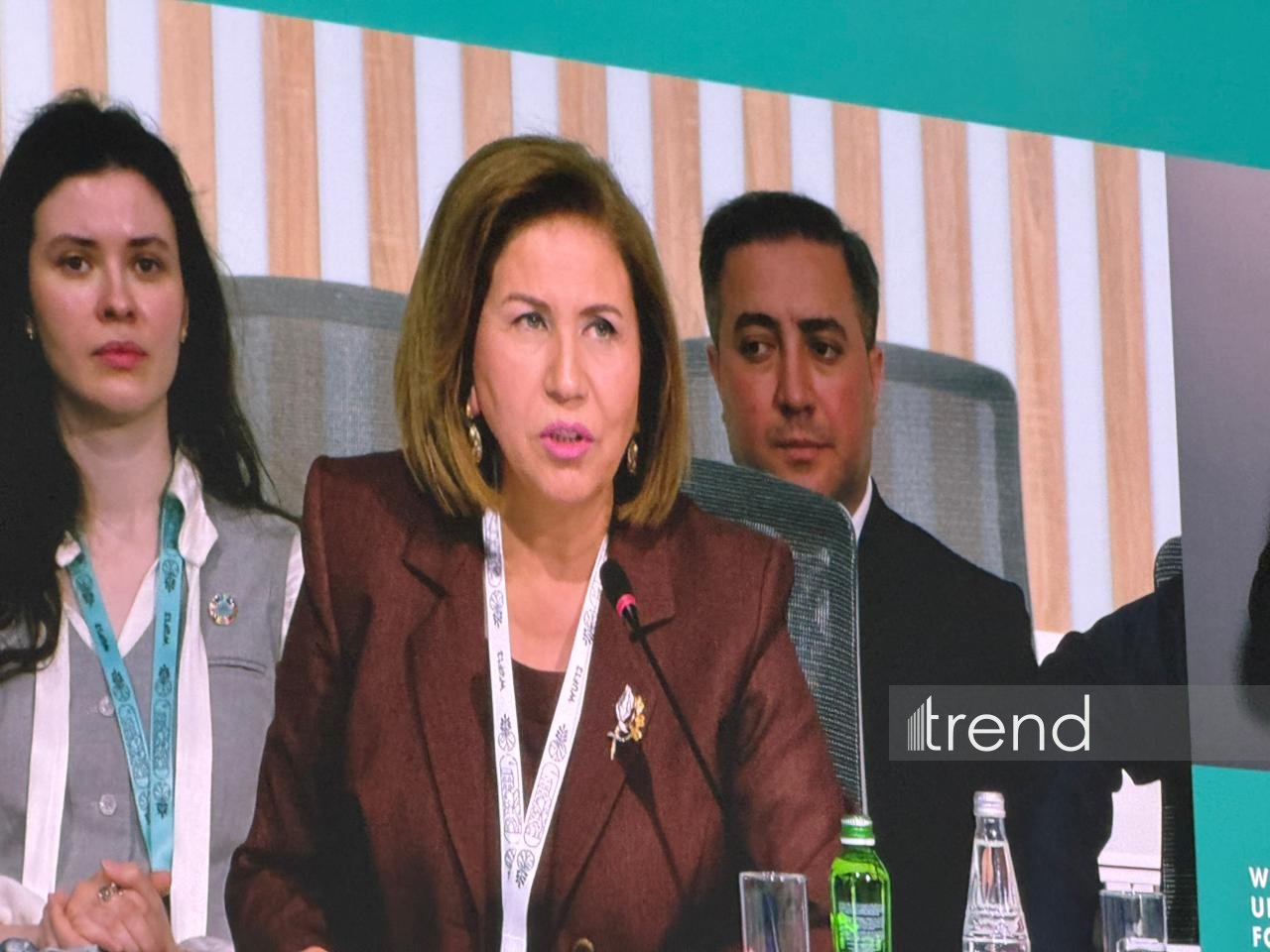
BAKU, Azerbaijan, May 21. Azerbaijan has identified the protection of children, the creation of a safe and supportive environment for their development, and the strengthening of inclusive social policies as one of the main priorities of state policy, Chairperson of the State Committee for Family, Women and Children's Issues Bahar Muradova said at a roundtable event titled "Children and Youth" within the framework of WUF13 in Baku, Trend reports.
The official noted that Azerbaijan's current legislative framework identifies the creation of a safe and inclusive environment for children as a strategic priority.
"At the same time, national policies on urban development and territorial planning are based on the principles of public participation and socially oriented planning. This approach creates an important foundation for a more systematic and sustainable provision of children's well-being in urban governance," she explained.
Muradova emphasized that one of the important approaches presented by Azerbaijan within the framework of the forum is the human-centered recovery model.
"This approach aims to ensure a safe, dignified, and hopeful future for children and young people in post-conflict situations. We believe that child-friendly cities aren't built through infrastructure alone. This requires integrated policies that combine strong social protection systems, inclusive urban planning, community participation, digital security, environmental sustainability, and intergenerational solidarity.
If we truly want to build inclusive and sustainable cities for the future, we must first ensure that they are safe, healthy, and livable for children. We must strengthen the bridge between family environments and society because cities designed for children ultimately become better places for everyone," she added.
Today marks the fifth day of WUF13 in Baku.
The first day included a ministerial meeting dedicated to the New Urban Agenda, a ministerial roundtable, assemblies for women and civil society, business sessions, and discussions on urban prosperity. An official ceremony marking the raising of the UN and Azerbaijani flags also took place.
The second day stood out for the inaugural Leaders' Summit, featuring high-level discussions on the global housing crisis, urbanization policy, and urban resilience. Concurrently, the opening of the Mexico City pavilion took place, serving as a significant platform for expanding cooperation with the Latin American region and preparing for WUF14.
The third day of WUF13 featured a comprehensive program of events covering the global housing crisis, the formation of safe and inclusive cities, climate resilience, artificial intelligence and urban governance, green urbanization, social equity, and sustainable transport.
One of the highlights of the third day was the signing of a sister-city memorandum between the Azerbaijani city of Shusha and the Turkish city of Trabzon.
The fourth day of WUF13 featured a broad program of events dedicated to urbanization, climate change, inclusive urban development, housing policy, and sustainable governance.
One of the important events of the UN Special Programme for the Economies of Central Asia (SPECA) Cities Forum, held on the fourth day, was the announcement of Almaty’s official accession to the “Declaration of Intent on the Establishment of the SPECA Smart Climate-Resilient Cities Forum.”
Also, for the first time in WUF history and at Azerbaijan’s initiative, the “WUF13 NGO Forum: Global Partnership and Decision-Making” was held.
WUF13, which has attracted more than 40,000 registered participants from 182 countries, will continue until May 22. Held under the theme “Housing the world: Safe and resilient cities and communities,” the forum brings together governments, international organizations, experts, and representatives of civil society to strengthen global cooperation in the field of sustainable urban development.



