


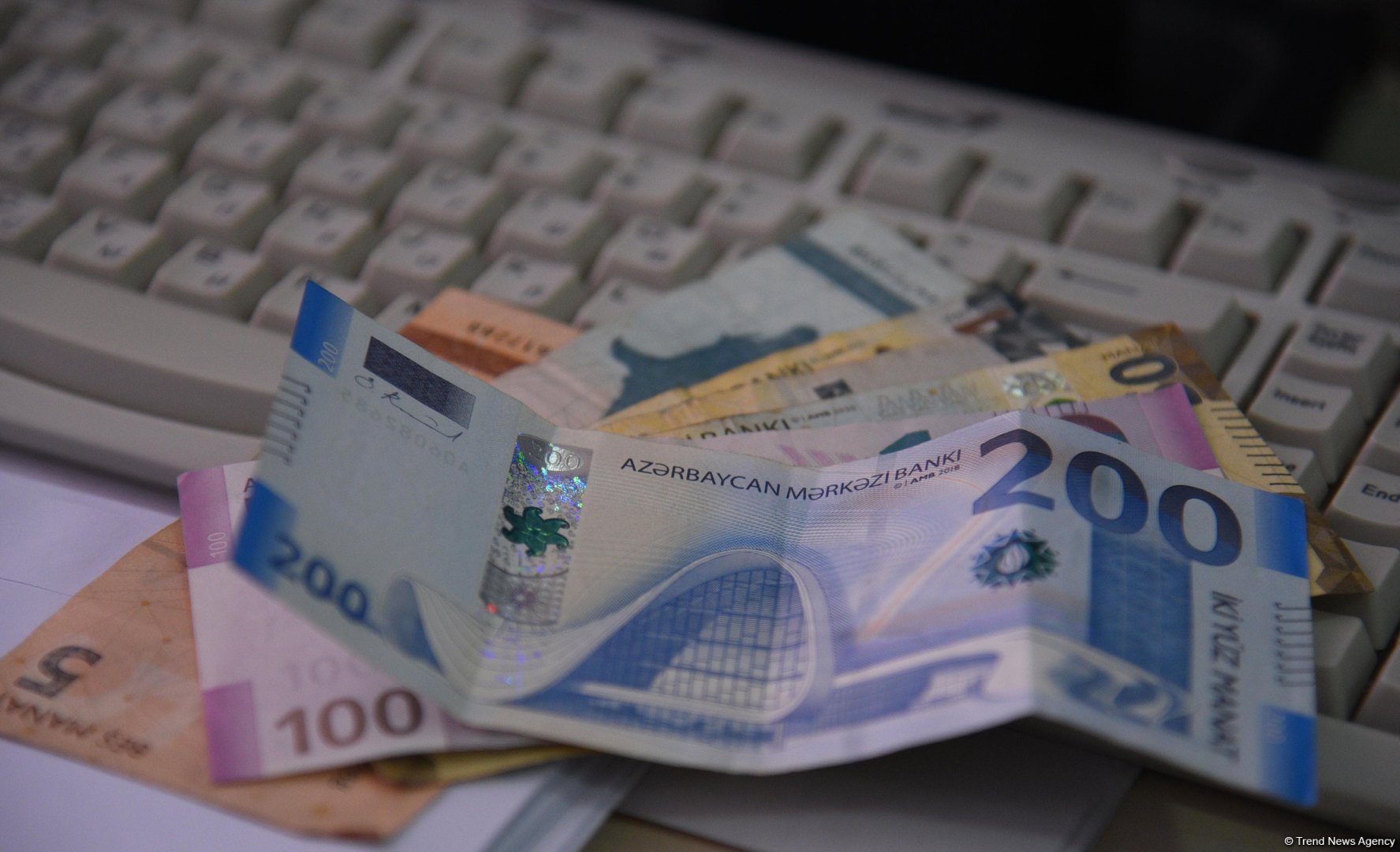

BAKU, Azerbaijan, April 7. Azerbaijan’s financial sector demonstrated macroeconomic stability and continued progress in digital transformation during the first quarter of the year, Trend reports, citing the Central Bank of Azerbaijan (CBA).
Foreign exchange reserves of the Central Bank rose to $11.6 million, reflecting a year-on-year increase of 5.7%, while the country recorded a foreign trade surplus of $1.1 billion in the first months of the year. Annual inflation stood at 5.7% in February, with price increases observed across food products, alcoholic beverages, tobacco (6.8%), services (5.7%), and non-food goods (3.7%). Core inflation was recorded at 5.6%.
As of February 28, 2026, Azerbaijan’s banking sector comprised 22 operating banks with a network of 505 branches, 85 departments, and 3,507 ATMs. Total banking assets stood at 57.1 million manat ($33.5 million), while liabilities reached 49.6 million manat ($29.1 million), and balance capital totaled 7.51 million manat ($4.42 million). During the reporting month, the sector’s credit portfolio expanded by 0.5%, or 138.8 million manat ($81.6 million), to 30.1 million manat ($17.7 million), with business loans accounting for 53.3%, consumer lending for 31.4%, and mortgage loans for 15.3%. In the first two months of 2026, banks generated 189.7 million manat ($111.5 million) in net profit and 301.2 million manat ($177.1 million) in operating profit, while contributing 47.7 million manat ($28 million) in profit tax.
Public finances also showed a positive trajectory over the same period. State budget revenues reached 6.31 million manat ($3.71 million) from January through February 2026, exceeding projections by 0.9%, while expenditures totaled 4.8 million manat ($2.82 million). The consolidated budget was executed with revenues of 7.5 million manat ($4.41 million) against expenditures of 5.33 million manat ($3.14 million).
Meanwhile, conditions in the foreign exchange market remained stable, with purchases of cash foreign currency exceeding sales by $51 million. The level of dollarization among resident individuals’ deposits declined to 27.7%, while the monetary base stood at 23.7 million manat ($13.9 million).
Within the framework of international cooperation, Finance Minister Sahil Babayev held talks with the World Bank on advancing water and agricultural projects, while representatives of the International Monetary Fund (IMF) visited the region to review ongoing reconstruction and infrastructure initiatives. A delegation from the Ministry of Finance also traveled to Serbia to exchange expertise on digital public finance management and budget planning, as Azerbaijan continued to deepen cooperation with Slovakia and the Black Sea Trade and Development Bank in the economic and energy spheres.
On the digital front, President of the Republic of Azerbaijan, Ilham Aliyev, approved the regulations governing the "Digital State Finance" Information System (RDMIS), designed as a unified platform for budget planning, financial oversight, and the monitoring of public debt and investment projects. Complementing this, legislative amendments were adopted to establish clear mechanisms for the provision of bank secrecy data to the Ministry of Finance.
Further reinforcing transparency and modernization efforts, the Ministry of Finance launched the "e-budget.maliyye.gov.az" Electronic Budget Guide portal during the first quarter of the year. The platform is intended to broaden public participation in budget processes, enhance transparency and efficiency, and consolidate financial data into a single, accessible system. Officials подчеркнули that the portal represents a key component of broader institutional and digital reforms, enabling the centralized collection and management of information on both state and consolidated budgets.
During the reporting period, Bank BTB OJSC was restructured into a non-bank credit institution (NBCI), with its assets and liabilities transferred to the International Bank of Azerbaijan (IBA). Authorities emphasized that the transformation poses no risks to creditors or depositors.
Additionally, the CBA signed a cooperation agreement with UnionPay aimed at expanding non-cash payments, boosting card issuance, and advancing the integration of QR-based technologies. In parallel, a draft law on the crypto-asset market is expected to support the development of the fintech ecosystem and improve access to digital financial services.
International rating agencies and analysts continue to deliver favorable assessments of Azerbaijan’s financial stability and the outlook for its banking sector. According to Fitch Ratings, many local banks are already aligned with Basel III requirements, and the implementation of these standards is unlikely to materially affect their credit portfolios. The agency notes that lending activity remains largely concentrated in the trade and services sectors, with limited exposure to oil and gas companies, contributing to the overall stability of the loan structure.
Fitch further highlights the country’s strong fiscal flexibility, low level of public debt, and ongoing improvements to the regulatory framework. At the same time, it points to lingering uncertainties regarding the division of responsibilities between the State Oil Fund and the Central Bank.
The international rating agency Moody’s forecasts that Azerbaijan’s public debt will stand at 23.9% of GDP in 2026 and 23.8% in 2027. According to the agency, the cost of servicing this debt will remain within 6-7% of budget revenues, indicating a comfortable position in terms of fiscal sustainability.
The Dutch banking group ING highlights the continued growth of Azerbaijan’s foreign exchange reserves and the stability of the manat. Analysts note that stronger external buffers, a surplus in the consolidated budget, and the appreciation of regional currencies are reinforcing exchange rate stability. In addition, relatively moderate inflation and economic growth create room for potential interest rate cuts in the medium term.
S&P Global Ratings has upgraded its assessment of Azerbaijan’s banking sector risk from 8 to 7, citing improved regulatory oversight and declining credit risks. The agency emphasizes that alignment with Basel III standards, stricter stress testing, and the introduction of resolution mechanisms will further strengthen the sector’s resilience. Ratings for several banks, including PASHA Bank and Kapital Bank, have been affirmed with a positive outlook, while a potential IPO by PASHA Bank is expected to bolster capital buffers.
The International Monetary Fund (IMF) projects that Azerbaijan’s public debt will amount to 20.7% of GDP in 2026 and decline to below 20% by 2032. The share of state-guaranteed debt is expected to remain stable, with the average maturity of external debt standing at 5.1 years.
Overall, international financial institutions and analysts consistently assess Azerbaijan’s financial system as stable, highlighting strengthened regulatory frameworks, improved capital positions in the banking sector, and a public debt trajectory that poses no significant risk to macroeconomic stability.
Taken together, these indicators suggest that in the first quarter of 2026, Azerbaijan’s financial sector preserved its resilience, sustained its development trajectory, and continued advancing its digital transformation agenda while deepening international cooperation.



