


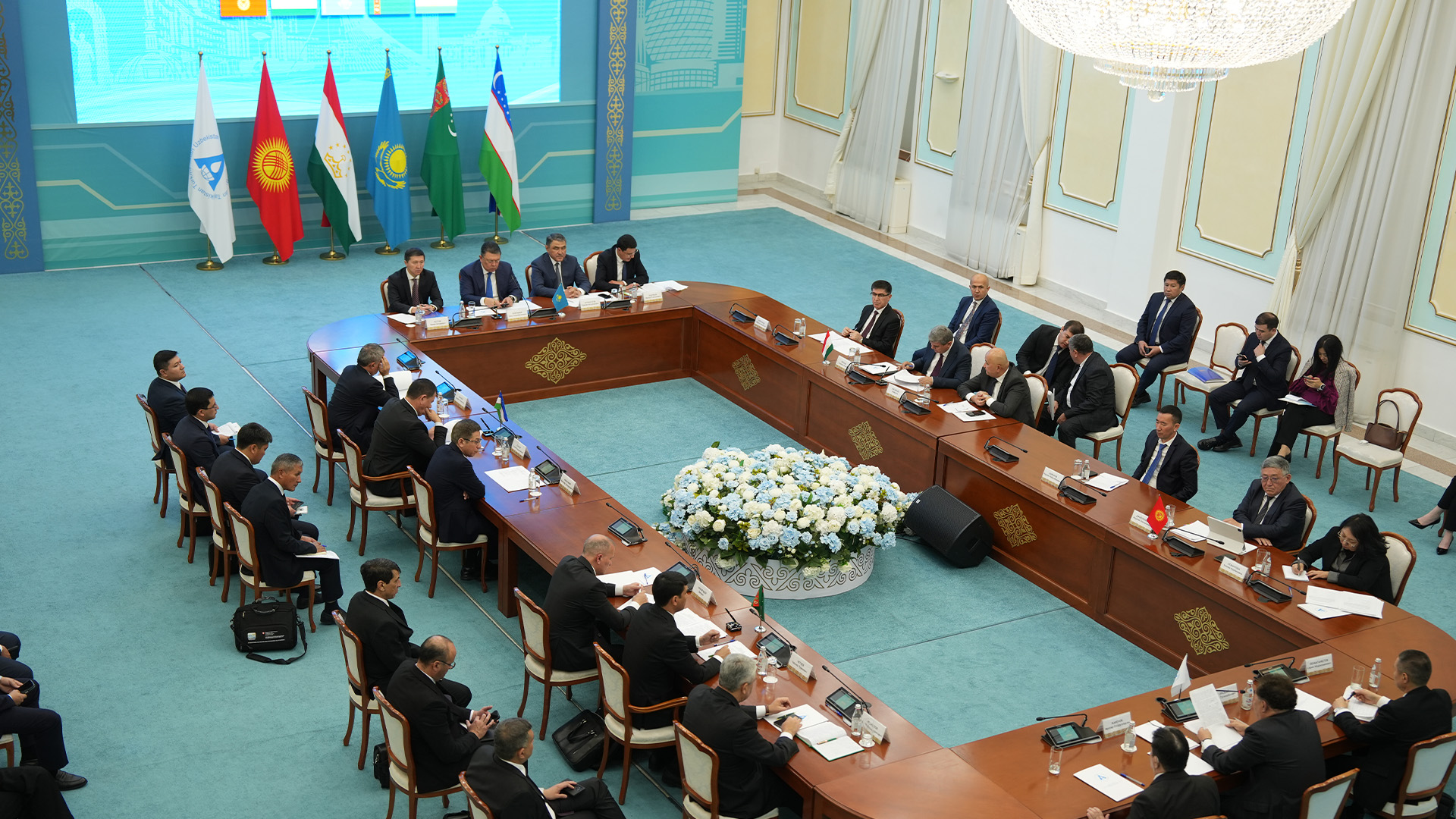

BAKU, Azerbaijan, April 22. Leaders of regional countries are arriving in Astana, where the Regional Ecological Summit and the meeting of the Council of Heads of States-founders of the International Fund for Saving the Aral Sea (IFAS), are scheduled to begin on April 22.
While global actors continue to debate climate finance, Central Asian states are demonstrating that coordinated regional action can have a direct impact on economic outcomes.
Despite differing priorities in water and energy management, Kazakhstan, Kyrgyzstan, Tajikistan, Turkmenistan, and Uzbekistan are steadily strengthening IFAS — a mechanism established in January 1993 in Tashkent — which has already attracted over $8.5 billion in national and donor funding for water and environmental projects. In this context, effective water resource management is closely associated with the GDP performance of each republic.
As Deputy Minister of Foreign Affairs of Kazakhstan, Alibek Bakayev noted during a recent panel discussion at the Antalya Diplomacy Forum, cooperation in the water and energy sector remains a key priority for Central Asia.
He emphasized the importance of continuing close cooperation in this field, making full use of existing platforms, including the International Fund for Saving the Aral Sea.
The financial model of IFAS today is of a hybrid nature. National budgets act as an anchor, and international grants and loans act as a lever for the implementation of large-scale projects, such as RESILAND CA+. The more coordinated the countries work within the fund, the cheaper access to global financial markets becomes for the region’s environmental and infrastructure projects.
Over three decades, the fund has progressed from the first Aral Sea basin programs to real economic results. Recent summits have consistently strengthened the focus on institutional reform and attracting investment. Preparations for this year’s meeting confirmed this course. In the period from March through April, the IFAS Board adopted five decisions on improving the structure, digitizing water accounting in the Syr Darya and Amu Darya basins, developing a Framework Convention on Water Use, and the idea of declaring 2026–2036 the “Decade of Practical Actions.”
The most noticeable economic effect is the restoration of the North (Small) Aral Sea. Thanks to the Kokaral Dam and interstate coordination of the Syr Darya flow, the water volume increased from 18.9 billion cubic meters in 2022 to 23 billion by the end of 2025 - the inflow exceeded 6 billion cubic meters. The second phase of the project (2026–2029), with World Bank support, provides for the reconstruction of the dam, raising the level to 44 meters, and increasing the volume to 34 billion cubic meters and the area to 3913 km². Irrigation modernization on 143,000 hectares has already saved about 500 million cubic meters of water, which can be directed to further development.
This directly impacts the Aral Sea region's economy. The decrease in salinity has brought back 20 species of fish that had previously disappeared. The catch has grown to 8,000 tons per year, and 10 fish processing plants are in operation, four of which have European certification. Fish are exported to 13 countries, including the EU, China, and Russia. Thousands of jobs have been created, and the outflow of the population has decreased. In Uzbekistan, large-scale afforestation of the dried seabed (the goal is more than 70% by 2030) fixes the sand, reduces dust storms, and opens up opportunities for sustainable agriculture and new projects.
Central Asian countries are uniting for a single pragmatic goal - to turn a transboundary environmental threat into a common economic driver. The new meeting, the reform of IFAS, the digitalization of monitoring, and the launch of new programs could attract additional investments from the World Bank, the EU, the Asian Development Bank, and other donors.
Saving the Aral Sea has ceased to be solely an environmental task, becoming a powerful tool for Central Asian economic integration.



