


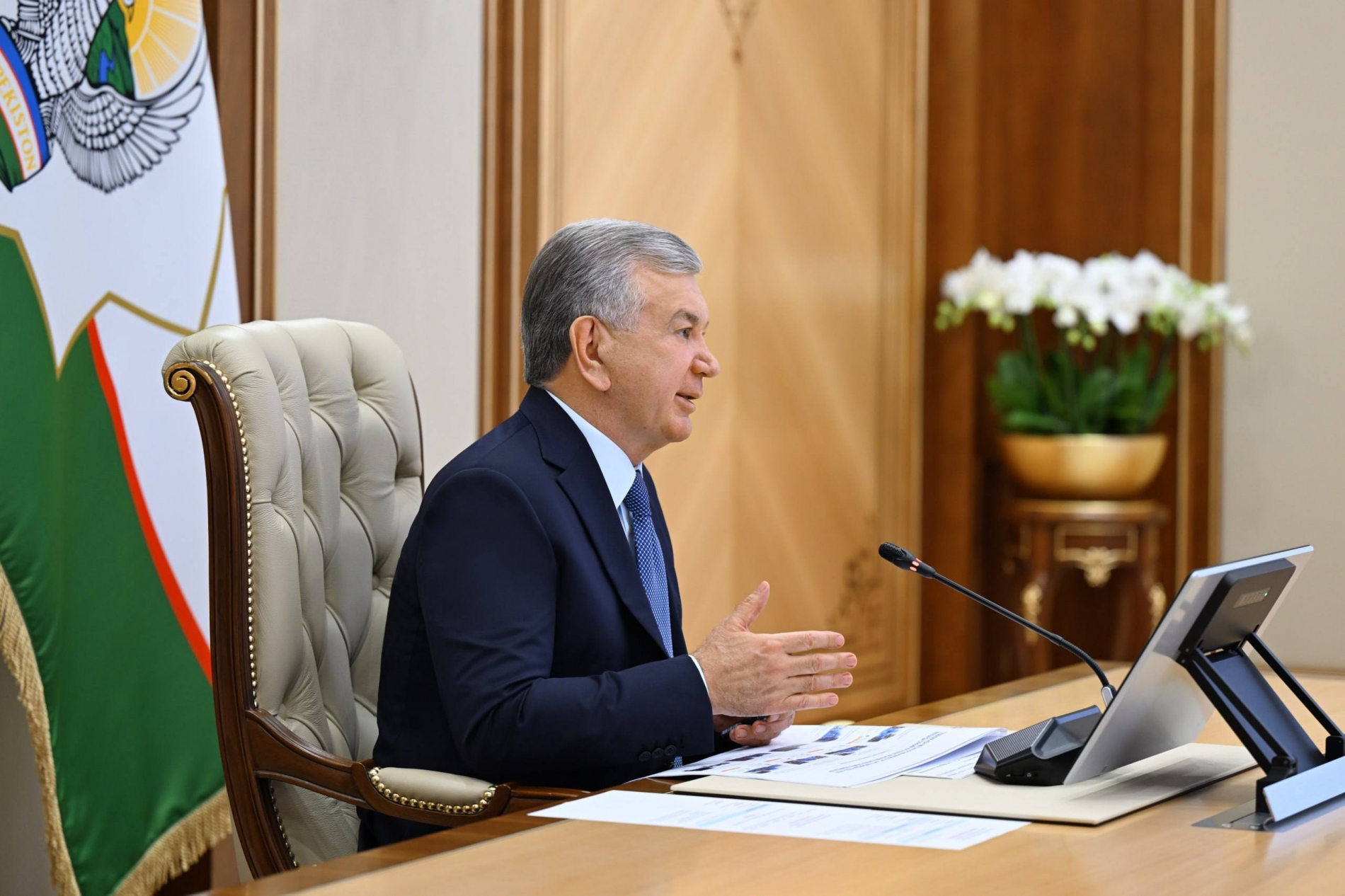

BAKU, Azerbaijan, June 10. President Shavkat Mirziyoyev has reviewed plans to expand the use of digital technologies and artificial intelligence across Uzbekistan’s mining and geology sectors, part of a broader effort to increase efficiency, attract investment, and strengthen the country's resource base, Trend reports via the press service of the Uzbek president.
Mining remains one of the key pillars of Uzbekistan’s economy. In 2025, mining and geological enterprises accounted for 20% of the country’s total industrial output and generated 118.5 trillion soms (about $9.8 billion) in budget revenues.
During the presentation, ongoing efforts to modernize the industry through digital transformation and advanced technologies were outlined. The government reported that major mining enterprises reduced operating costs by 7.3 trillion soms (about $607 million) in 2025 and lowered production costs by 9.1% through efficiency measures and digitalization initiatives.
Authorities have also introduced the GeoMonitoring information system and digitized data from more than 2,000 mineral deposits, creating a foundation for broader technological integration.
Officials said geological exploration programs are underway to increase Uzbekistan’s mineral reserves over the next five years by 879 tons of gold, 510 tons of silver, and 676,000 tons of copper.
According to the presentation, artificial intelligence will be deployed throughout the geological exploration process, enabling faster analysis of geological data, more accurate resource assessments, improved mineral deposit forecasting, and enhanced drilling efficiency.
Mirziyoyev emphasized the need to elevate the technological transformation of the sector by creating AI-based systems capable of managing and analyzing production processes.
The initiative envisions consolidating vast volumes of geological information—including maps, exploration results, drilling records, laboratory analyses, and production data—into a unified digital platform. Combined with 3D modeling and advanced analytics, the system is expected to improve the identification of new mineral deposits and accelerate project development.
The adoption of AI and digital technologies is estimated to reduce production costs by 10%, cut the time required to discover new deposits by half, and increase the number of investment opportunities available to potential investors by a factor of four.
The government aims to attract $30 billion in investment into the geology and mining sectors by 2030. To support that goal, the establishment of a National Geological Data Repository, that would provide investors with reliable and standardized geological information is proposed.
As part of the initiative, a Technology Transformation Center will be established, while more than 36,000 geological reports and primary datasets will be digitized. Authorities expect these measures to double the speed and quality of geological data processing, deposit modeling, and reserve calculations.
The government also unveiled plans for 44 digitalization and AI projects to be implemented between 2026 and 2030 across the geology sector and six major state-owned enterprises, including the Navoi Mining and Metallurgical Company (NMMC), Almalyk Mining and Metallurgical Complex (AMMC), Navoiuran, Uzmetkombinat, Uzbekcoal, and the Uzbek Technological Metals Plant.
The projects will focus on five key areas: production automation, digital corporate governance, artificial intelligence deployment, industrial and workplace safety, and the digital transformation of geological exploration.
It is expected that the projects will increase operational efficiency by 7%, improve equipment reliability by 20%, and boost energy efficiency by 8%. Human-error-related risks are also expected to decline by 15%.
Mirziyoyev instructed officials to incorporate productivity and workforce-efficiency measures into mining companies’ business plans and to approve dedicated programs supporting technology and artificial intelligence initiatives across the industry.
The president also stressed the importance of securing intellectual property rights for domestically developed technological solutions as Uzbekistan seeks to build a more innovative and competitive mining sector.



