


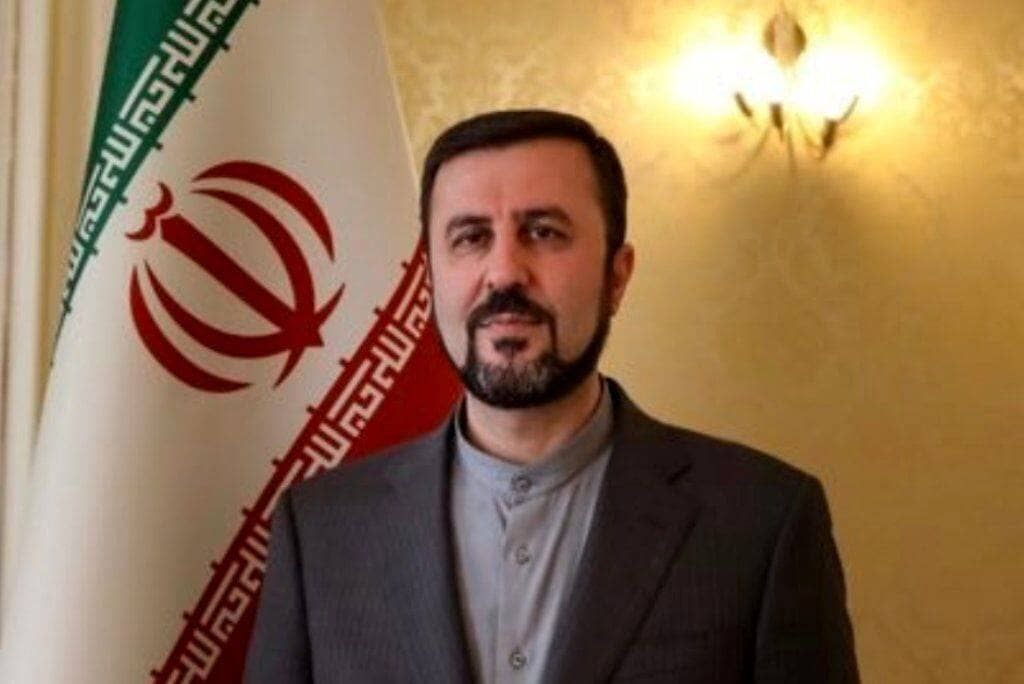
BAKU, Azerbaijan, June 6. Iran doesn't consider the latest report of the International Atomic Energy Agency to be either verification or confidence-building, Iranian Deputy Foreign Minister Kazem Gharibabadi wrote on his X page, Trend reports.
According to him, IAEA Director General Rafael Grossi speaks of the unknown, lack of access, and loss of continuity of knowledge in Iran's nuclear program. However, this situation didn't arise as a result of any gap. Iran's nuclear facilities, which are protected by the IAEA (safeguards), have been subjected to military air strikes by the U.S. and Israel. The IAEA director general has never condemned these attacks. One should never forget the origin of the problem and then draw conclusions against Iran based on that problem.
The deputy minister said that if the issue related to Iran's nuclear program was not verified and non-proliferation, the first expectation from the IAEA director general was to take a clear position against the attack on Iran's nuclear facilities, which are protected by safeguards because this attack is not only a violation of Iran's sovereignty, but also a direct blow to nuclear security, safeguards, and the non-proliferation status of nuclear weapons.
Gharibabadi said that repeating the 60% figure for Iran's uranium enrichment and putting forward possible scenarios for nuclear weapons without a clear explanation in the legal framework is not a technical but a political bias. The percentage figure for uranium enrichment is not recorded in the Treaty on the Non-Proliferation of Nuclear Weapons (NPT). The legal criterion is that nuclear activities and nuclear materials are not directed towards military purposes. In this regard, Iran's nuclear program is peaceful and has fulfilled its obligations within the framework of the law.
"The IAEA reports on the consequences of a military attack, bypassing the responsibility of those who carried out the attack. Moreover, it demands technical and political obligations from Iran as a result of the attack. This is neither verification nor confidence-building," he noted.
According to the deputy minister, if the IAEA wants to be part of a diplomatic solution, it must prevent the technical report from turning into political pressure. Safeguards aren't strengthened by military action, threats, or resolutions, but can be strengthened by impartiality, compliance with international law, respect for the sovereignty of states, and direct condemnation of attacks on nuclear facilities under agency control.
Gharibabadi concluded that bombing nuclear facilities under safeguards would destroy the necessary security for inspections. In such a case, the negative consequences of an attack on Iran cannot be used as a tool.



