


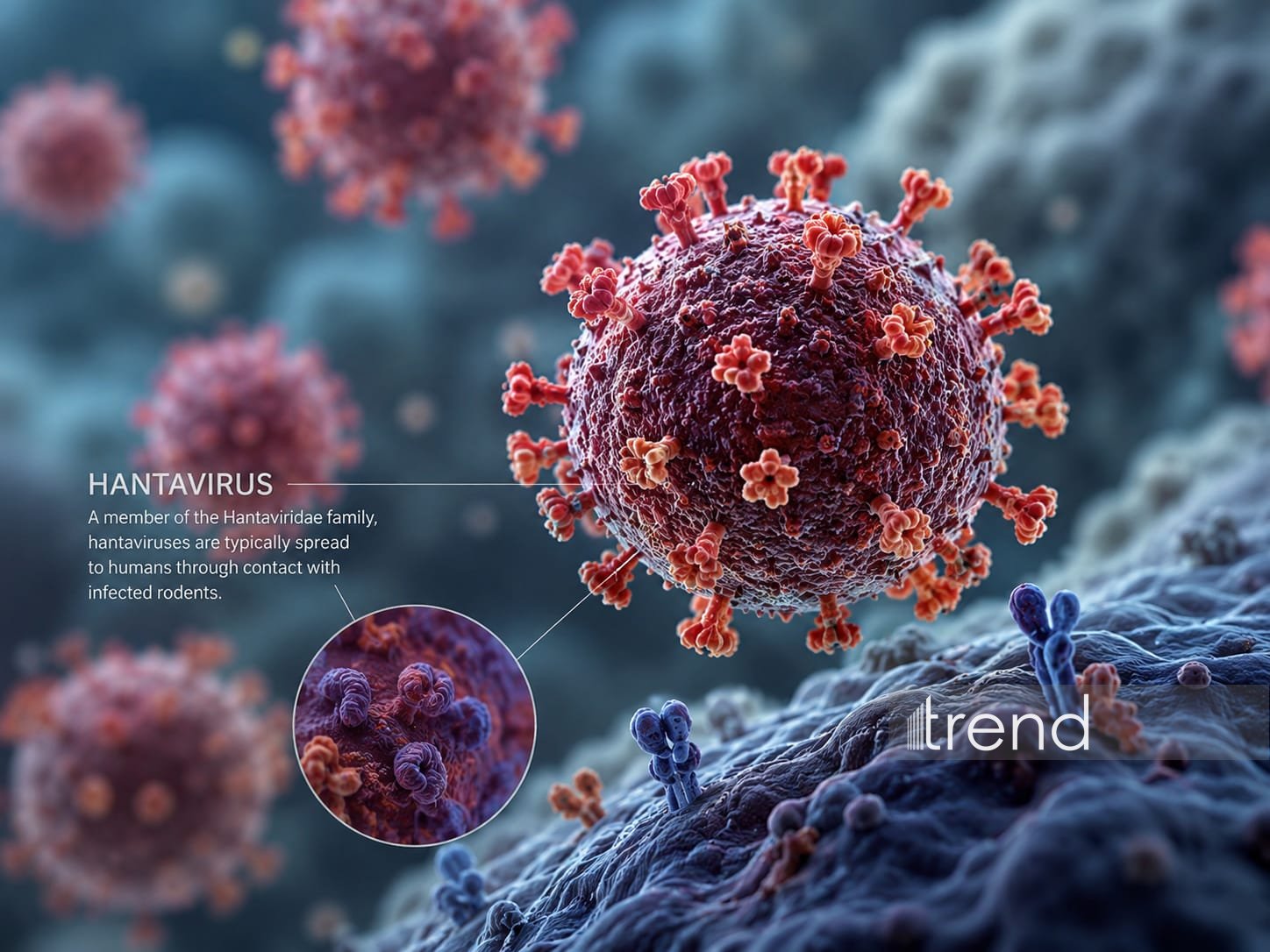
BAKU, Azerbaijan, May 12. The risk of hantavirus to the public is currently low, Trend reports, citing the World Health Organization (WHO) Representative Office in Azerbaijan.
According to the office, WHO is working with several countries to respond quickly within the framework of the International Health Regulations. The focus is on patient care, safety, and stopping further spread:
"People usually get hantavirus from contact with infected rodents, especially their urine, droppings, or saliva. Sometimes, breathing in contaminated dust can cause infection. Rarely, rodent bites can also spread the virus. Activities that increase risk include cleaning closed or poorly ventilated areas, farming, forestry work, or staying in places where rodents are present. Person-to-person spread is very rare and has only been seen with the Andes virus in the Americas. When it happens, it usually involves close, long contact, such as between family members or partners, especially early in the illness," the statement says.
WHO has informed 12 countries whose citizens were on the ship. These include Canada, Denmark, Germany, the Netherlands, New Zealand, Saint Kitts and Nevis, Singapore, Sweden, Switzerland, Türkiye, the United Kingdom, and the United States. WHO is also helping South Africa follow up with people who were on a related flight. International contact tracing is ongoing. Passengers have been informed and asked to report any symptoms. WHO stresses the importance of quickly identifying and managing any suspected cases through testing, treatment, and isolation if needed. WHO is also working closely with Argentina, which has experience managing this type of virus, to better understand the situation and improve response efforts.
WHO stated that Azerbaijan has laboratory capabilities for diagnosing this virus:
"Azerbaijan has the capacity to test for hantavirus using PCR methods in both human and animal health laboratories. WHO is also working with laboratories across Europe to ensure reliable testing for the Andes virus. If needed, samples can be safely sent to specialized WHO reference laboratories for confirmation. WHO will soon release updated laboratory guidance to support testing across the region," the office noted.
WHO emphasized that it considers the overall global risk low:
"For people who were on the ship, the risk is considered moderate. Hantavirus does not spread easily. It usually spreads from rodents to humans, and human-to-human transmission is very rare. There are thousands of cases globally each year, which is not a large number compared to the world population. The situation on the ship is being handled carefully to reduce risk," the statement highlighted.
The organization added that spreading rumors and unconfirmed information is unacceptable.



