BAKU, Azerbaijan, June 5. An international conference dedicated to World Environment Day (WED) took place in Baku, Trend reports.
The event, organized under the slogan “Inspired by Nature. For the Climate. For Our Future," has been held as part of a partnership between the Ministry of Ecology and Natural Resources and the United Nations Environment Programme (UNEP).
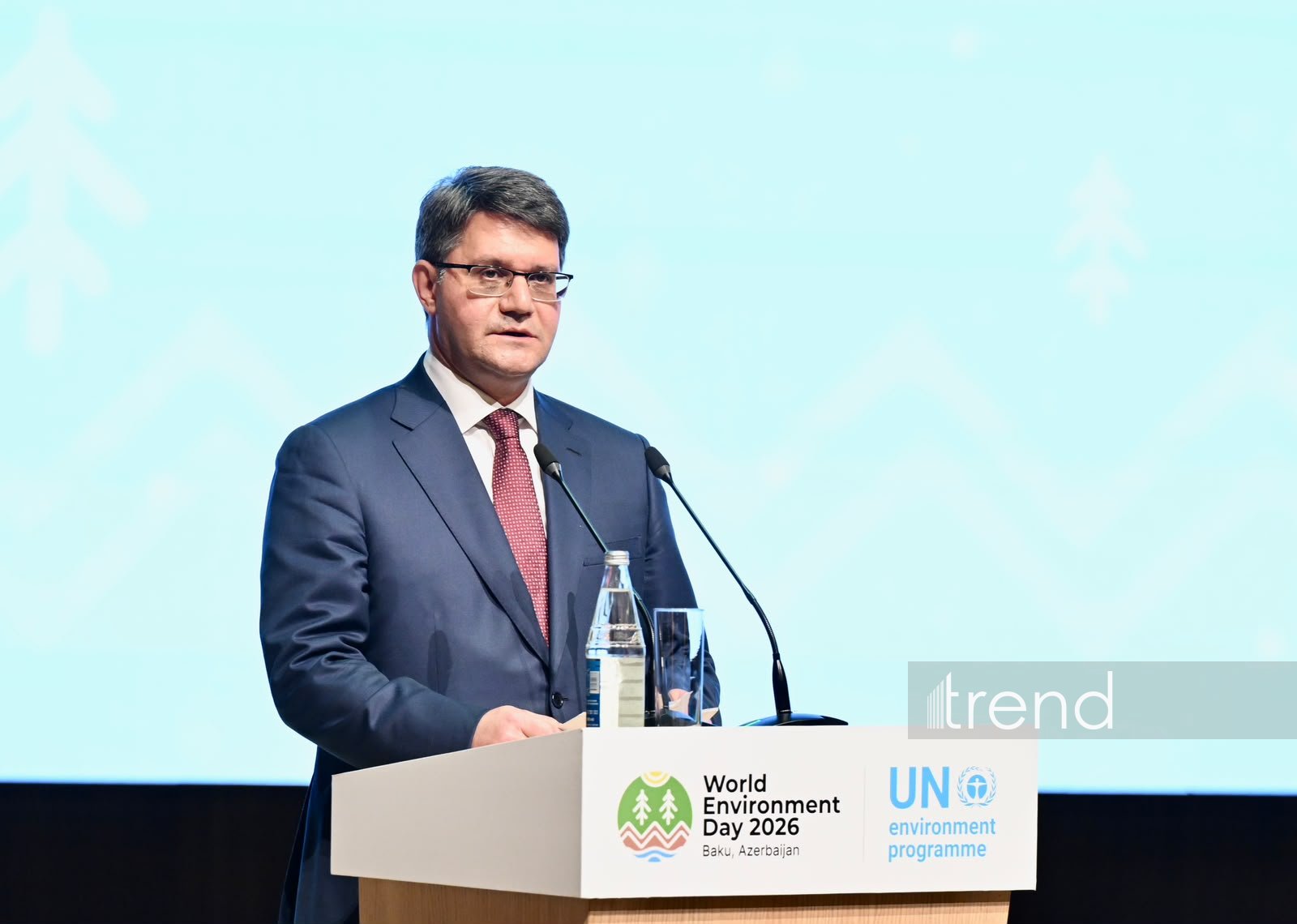
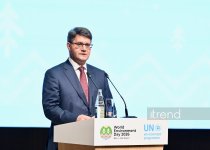
Minister of Ecology and Natural Resources Rashad Ismayilov and UNEP Executive Director Inger Andersen addressed the conference.
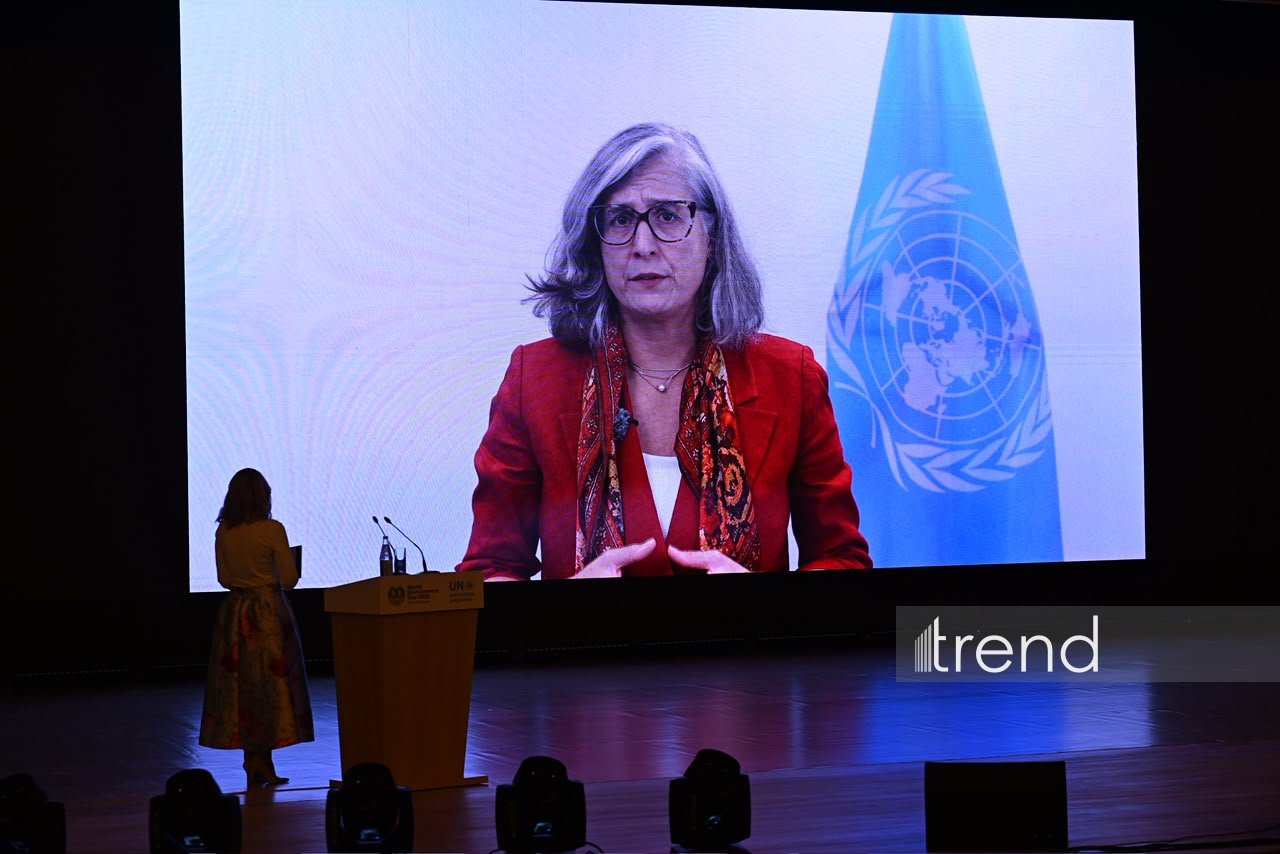
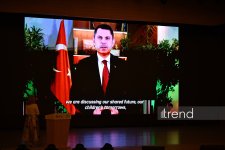
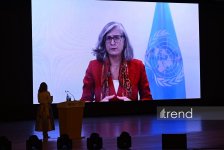
Video messages also delivered by UN Secretary-General António Guterres, Murat Kurum, the Minister of Environment, Urbanization, and Climate Change of the Republic of Türkiye, and the President of the UN Climate Change Conference, COP31, COP30 President André Aranha Corrêa do Lago, UN-Habitat Executive Director Anacláudia Rossbach, and Executive Secretary of the UN Framework Convention on Climate Change (UNFCCC) Simon Stiell.
Speaking at the event, Minister of Ecology and Natural Resources Rashad Ismayilov said that issue of water level changes in the Caspian Sea is the key priority for Azerbaijan.
"The issue of changing water levels in the Caspian Sea is our top priority. Monitoring and discussions have already begun with the three Caspian littoral countries," he explained.
According to him, Azerbaijan has already joined more than 20 environmental conventions and protocols.
"This is a clear indicator of our country's commitment to the global environmental and climate agenda and the importance it attaches to international cooperation.
By hosting COP29, Azerbaijan has become an important center of dialogue in the climate negotiations process and has played an active role in strengthening global solidarity. Some time ago, Azerbaijan successfully hosted the 10th session of the World Urban Forum together with the UN-Habitat Program. Such events, among other things, have contributed to the growth of the ecological culture and ecological thinking of our population," the minister noted.
Inger Andersen, Executive Director of the United Nations Environment Programme (UNEP), said that Azerbaijan continues to play an important role in combating climate change at the global, regional, and national levels.
According to her, hosting COP29 contributed to achieving the goals of the “Baku commitment” and the “Baku outcomes”:
“The climate negotiations held in Baku in 2024 led to an agreement to mobilize $300 billion in climate finance by 2035. Recently, Baku also hosted the World Urban Forum, which focused on climate resilience and the connection between cities and nature. Today, we have gathered here to strengthen our resolve and take practical steps in the fight against climate change. Climate change is a global problem that must be at the forefront of each of our minds. Global temperatures are rising, and the consequences of climate change are becoming increasingly severe. The Earth is sending us signals — heat waves, droughts, floods, desertification, and sand and dust storms are manifestations of these signals.
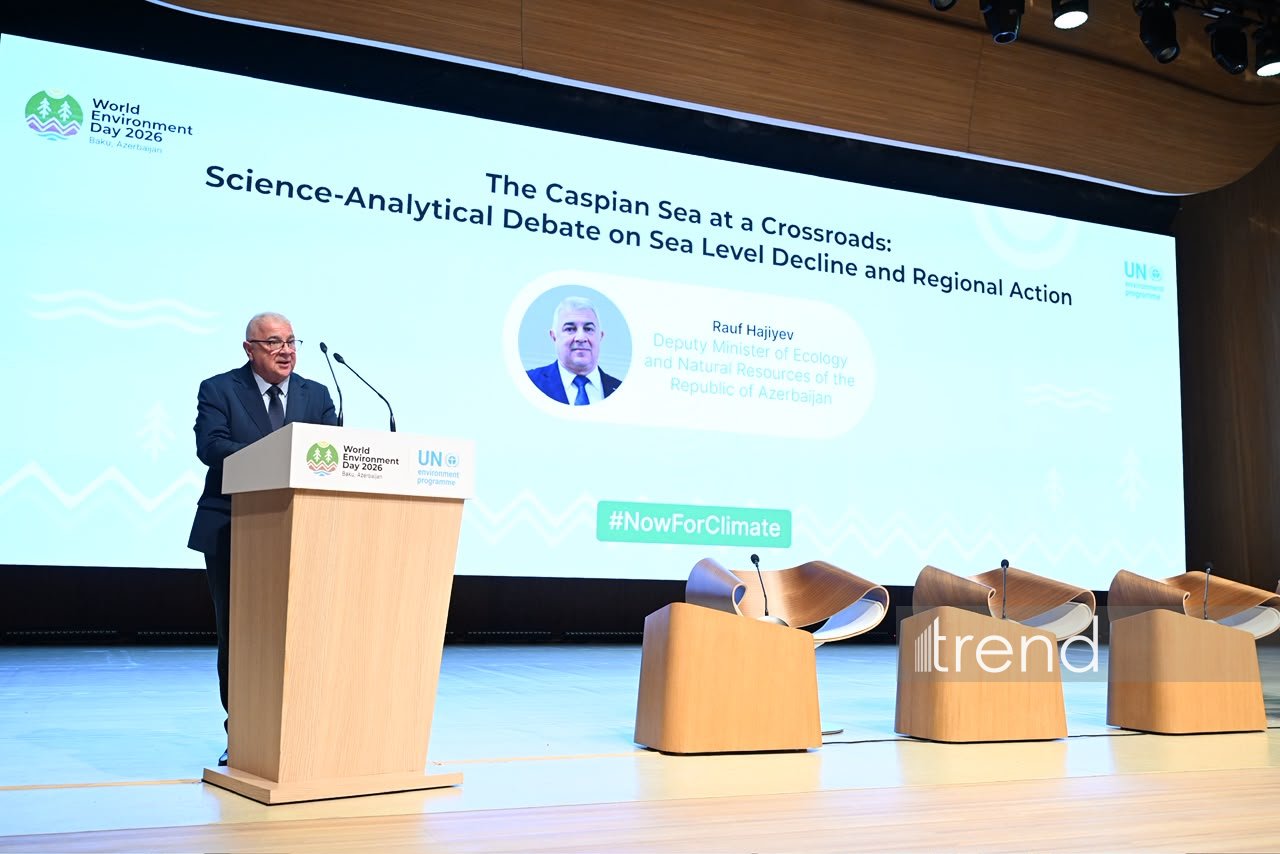
These consequences affect everyone, but the poor and vulnerable segments of the population suffer the most. Azerbaijan, like other countries, faces serious climate challenges. The degradation of mountain ecosystems and the drop in the water level of the Caspian Sea are having a significant impact on ports, economic activity, fisheries, infrastructure, and coastal communities.
“However, this should not lead to despair. This is not the story we are writing to be desperate – the story has not yet been written, and the pen is in our hands. We can shape this future,” she noted.
The UN representative stated that the rise in global temperatures is likely to exceed the 1.5-degree Celsius limit set in the Paris Agreement in the near future.
“Therefore, we must work even harder to return to that level by the end of the century, while simultaneously protecting communities and countries, especially small island developing states, from the more severe and frequent impacts of climate change.
This means a just, orderly, and equitable transition away from fossil fuels in our energy systems. This requires urgent and large-scale investment and the implementation of all available solutions. It also means, as promised in Baku, robust financing, effective adaptation measures, early warning systems, and strengthened disaster preparedness. Multilateral cooperation on climate change can make this happen. “When the Paris Agreement was adopted in 2015, global temperature rise was projected to reach 3.5 degrees. Azerbaijan is also sending important signals on climate change,” she added.
COP30 President André Corrêa do Lago said in a video message that COP29 opened important pathways for COP30.
Corrêa do Lago described World Environment Day as an important platform for addressing climate change challenges and advancing global environmental action.
“COP29 has opened important pathways for COP30,” he said. “I hope we will achieve the implementation of climate commitments as quickly as possible.”
His remarks highlighted the link between the outcomes of COP29 and preparations for COP30, as countries continue efforts to advance climate action and fulfill international commitments.
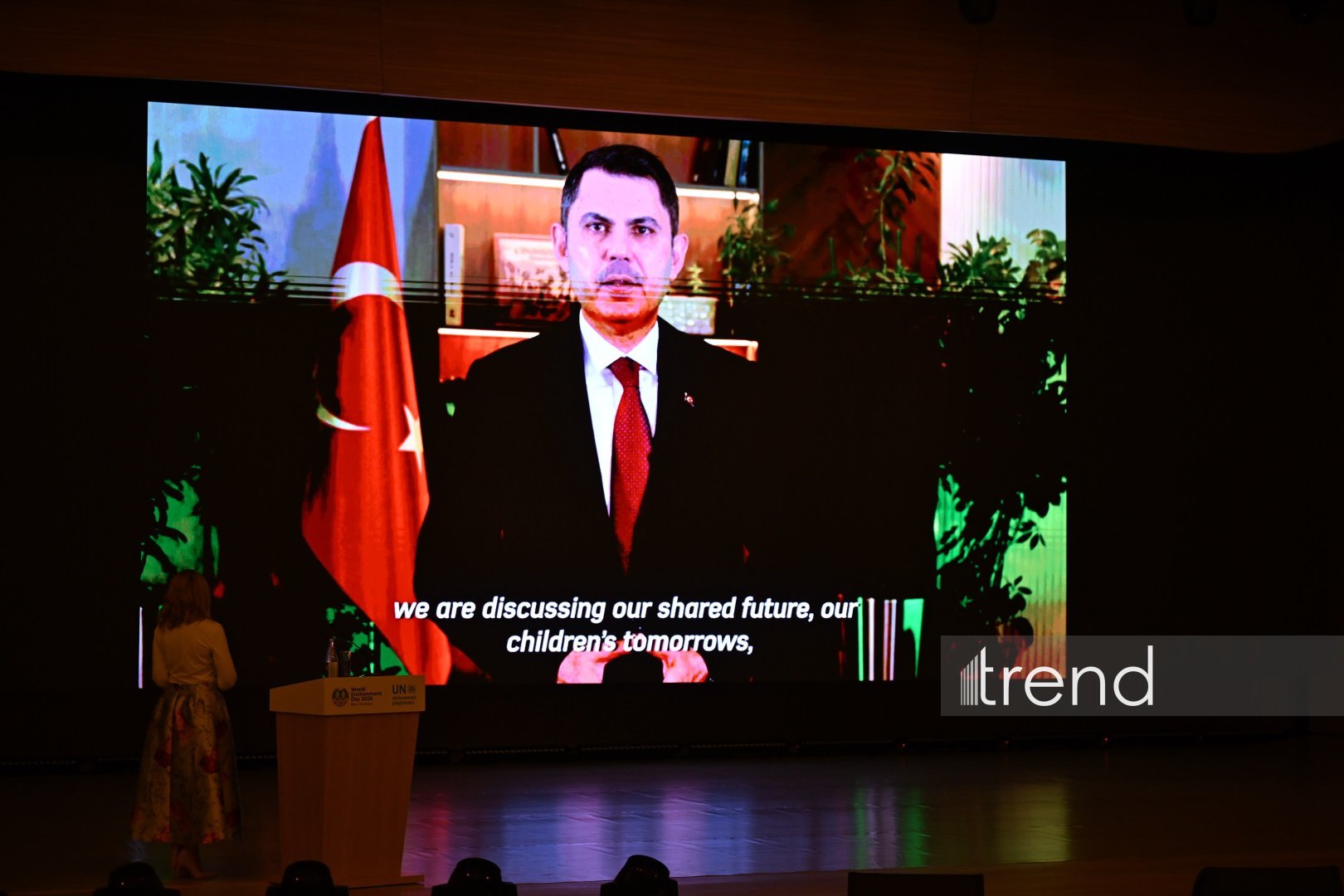
Minister of Environment, Urbanization, and Climate Change of the Republic of Türkiye and President-designate of COP31, Murat Kurum said that COP31 will focus on the practical implementation of climate commitments.
“The fight for the environment is also love for one’s homeland and love for humanity. It is the will to protect our land, water, air, and future generations.
As the Chair of COP30, we acted with this understanding at every stage. In particular, we will closely monitor the implementation of the goals set at COP29, including the Baku Goal. Because the multilateralism we speak of is not achieved merely by setting goals. It is achieved by fulfilling these promises, putting adopted decisions into practice, and delivering concrete results that touch people’s lives.
With this understanding, COP30 will not be merely a summit where new commitments are discussed. COP30 will be an event where practical implementation, cooperation, and concrete results take center stage. Because the world no longer wants to hear just new promises. The world wants to see them fulfilled.
The key to this success lies in the participation of all segments of society in the process. I am convinced that everyone – from governments to local administrations, from the private sector to academia, from young people to women, and from civil society to the financial sector – must be part of this transformation,” he added.
UN Secretary-General António Guterres said that emissions must be drastically reduced, and the transition to renewable energy sources must be accelerated.
According to him, the United Nations Environment Programme (UNEP) is committed to working with governments to save lives, protect people, and strengthen economies.
"We must implement more sustainable and affordable energy solutions and ensure real energy security.
I want to emphasize that the fastest and most cost-effective way to achieve this goal is already apparent, and effective solutions exist. It is important to protect forests, land, and seas, as well as to help communities adapt to climate change, which is becoming increasingly destructive every year,” Guterres noted.
Executive Director of the United Nations Human Settlements Programme (UN-Habitat), Anacláudia Rossbach said that COP29 and the World Urban Forum (WUF13) this year serve as an important bridge to the global events of World Environment Day, as well as to the subsequent official UNFCCC (United Nations Framework Convention on Climate Change) Climate Week.
According to her, at the World Urban Forum, the Baku Coalition for Sustainability created an important platform that brings together COP presidencies and World Urban Forums, and promotes the development of an integrated approach that unites urban and climate policy agendas and strengthens coherence between the Paris Agreement and the New Urban Agenda.
Anacláudia Rossbach added that this demonstrates the high level of importance the Government of Azerbaijan attaches to coordinating global agendas,” she noted.
''The Baku Call to Action from the World Urban Forum reminds us that our cities must develop in harmony with the natural systems that sustain life. At the same time, the theme of World Environment Day – “Inspired by nature: for Climate, for our future” – further reinforces this approach.
The Baku Call to Action highlights the key role of housing in sustainable urban development and calls for a decisive transition toward inclusive, affordable, and climate-resilient housing for all.
This call requires a renewed commitment to environmentally friendly solutions, ecosystem restoration, the creation of greener urban spaces, and increased resilience. Its goal is not only to reduce the environmental impact of human settlements (the carbon footprint) but also to actively strengthen the resilience of communities.
By aligning urban planning with the wisdom of nature, we can make our cities a driving force for climate action and inclusive well-being, and thus ensure a more sustainable and promising future for generations to come,” she noted.