


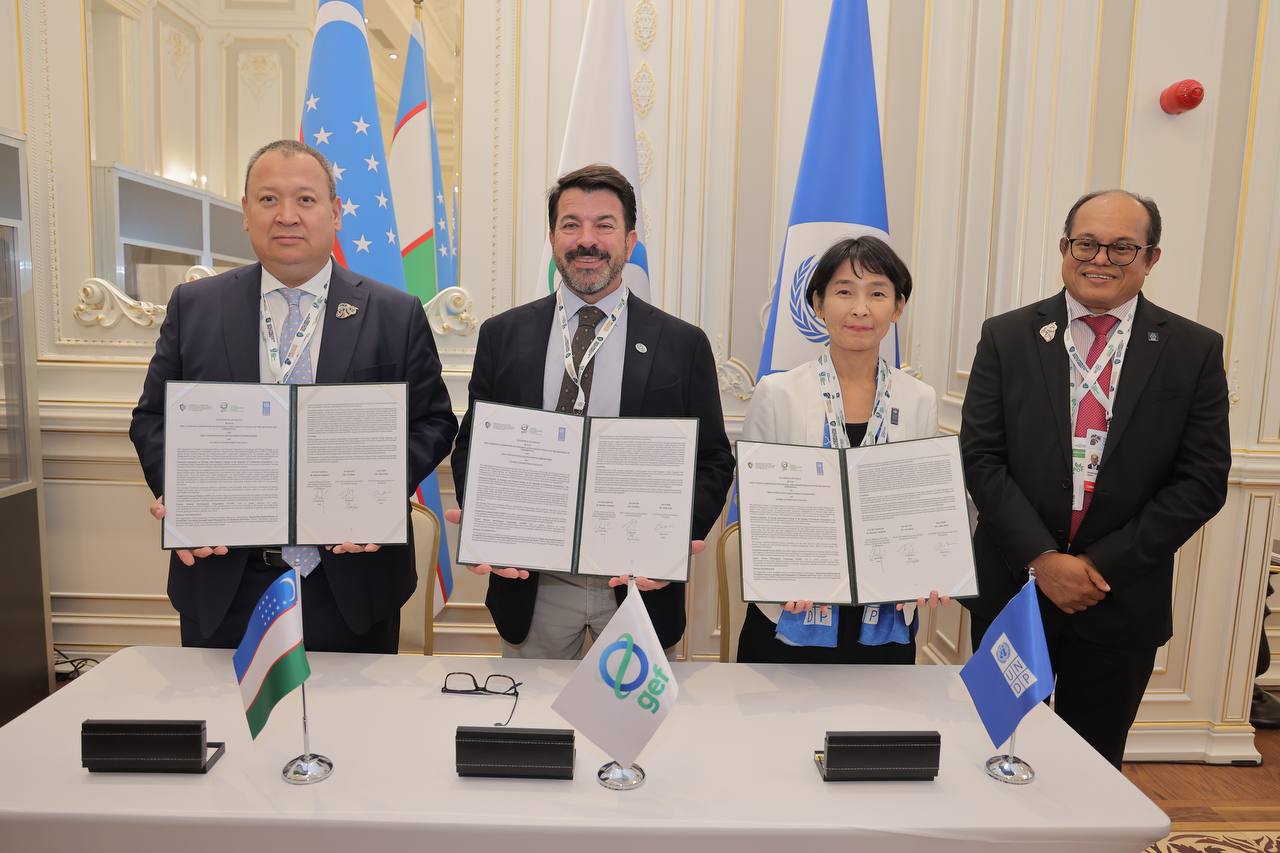

BAKU, Azerbaijan, June 5. Uzbekistan’s National Committee on Ecology and Climate Change and the United Nations Development Programme (UNDP) have signed a Letter of Intent and announced the launch of a new Global Environment Facility (GEF) project aimed at strengthening the country’s hazardous chemicals and waste management systems, Trend reports via the National Committee on Ecology and Climate Change.
The announcement of the new initiative was made on the sidelines of the Eighth Global Environment Facility Assembly, currently taking place in Samarkand under the theme “Supporting the Implementation of the Stockholm Convention through Sound Management of Chemicals and Waste in Uzbekistan.”
The initiative is designed to enhance national capacity for environmentally sound chemical and waste management while supporting the country’s commitments under the Stockholm Convention on Persistent Organic Pollutants (POPs). During the meeting, it was noted that persistent organic pollutants remain among the most serious environmental and public health challenges worldwide. These substances can accumulate in ecosystems, adversely affect biodiversity, and pose long-term risks to sustainable development.
The project will focus on strengthening monitoring systems and laboratory capacities, improving hazardous chemicals and waste management mechanisms, supporting the identification and remediation of contaminated sites, and enhancing technical expertise and interagency cooperation.
Participants emphasized that addressing the challenges associated with persistent organic pollutants requires not only effective legislation and regulatory frameworks but also modern monitoring systems, robust scientific and technical capacity, institutional resilience, and coordinated action at national and regional levels.
The signing of the Letter of Intent reflects the shared commitment of the Government of Uzbekistan and UNDP to advancing environmental safety, protecting public health, and promoting sustainable management of chemicals and waste.
The project is also expected to create new opportunities for knowledge sharing, technical cooperation, and stronger regional collaboration among Central Asian countries in the field of environmentally sound chemical management.



