


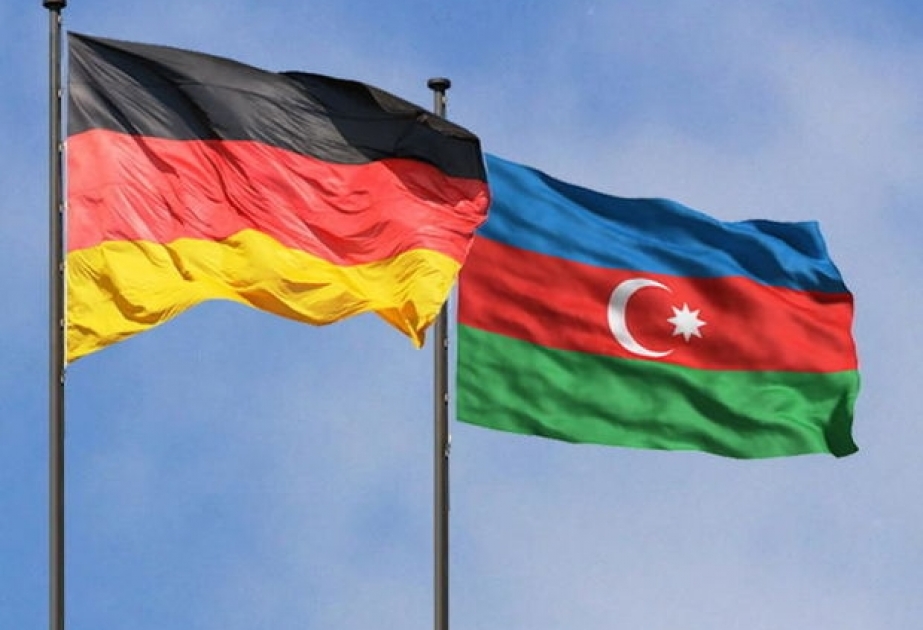

BAKU, Azerbaijan, July 19. Against the backdrop of profound changes in Europe’s energy sector, logistics, and industrial policy, relations between Azerbaijan and Germany are gradually moving beyond the traditional “oil-for-technology” model. On the one hand, Germany remains one of the largest European consumers of Azerbaijani energy resources; on the other hand, it is increasing its interest in Azerbaijan as a transit hub for the Middle Corridor, a partner in “green” energy, and a key element of the EU’s strategy in the South Caucasus. The combination of economic indicators, energy contracts, transportation initiatives, and political contacts points to a transition in bilateral relations toward a more comprehensive and strategic phase.
Trade: Solid Foundation and a Course Toward Diversification
In 2025, trade between Azerbaijan and Germany totaled approximately 1.7 billion euros, and in the first six months of 2026, trade volume reached nearly $573 million. These figures confirm the stability of economic ties, although the structure of trade remains asymmetrical.
Oil continues to account for the bulk of German imports from Azerbaijan. Germany ranks among the top ten buyers of Azerbaijani oil: according to the latest data alone, 360,300 metric tons were imported, worth approximately $210.9 million. In return, Azerbaijan primarily purchases machinery, equipment, electronics, and automobiles.
This distribution reflects the traditional model of relations between a raw materials exporter and an industrialized economy. However, the political leadership of both countries is already openly discussing the need to change this model. President Ilham Aliyev’s statement during German President Frank-Walter Steinmeier’s visit in 2025 regarding the need to diversify trade, particularly in the field of renewable energy, effectively sets a new agenda for bilateral cooperation.
“We believe that we should take more active steps in the coming years to diversify our trade, especially in the field of renewable energy, where German companies have extensive experience, and Azerbaijan has a very large program and ambitious plans,” said President Ilham Aliyev during a joint press statement with German President Frank-Walter Steinmeier on April 2, 2025, in Baku.
Meanwhile, the volume of foreign direct investment from Germany to Azerbaijan in 2025 amounted to $26.3 million. Nevertheless, the potential for investment cooperation is far from being fully realized, and infrastructure, energy, and technology projects remain the main drivers of growth.
Energy: From oil to a long-term gas partnership
A key qualitative change was the start of direct deliveries of Azerbaijani gas to Germany beginning in January 2026. Through Italy and the Southern Gas Corridor system, Azerbaijan’s state-owned oil company SOCAR has begun supplying German companies with Azerbaijani gas, with the total volume of contracts amounting to approximately 2 bcm per year.
A distinctive feature of these agreements is that they are based not only on the physical delivery of gas but also on a mechanism of swap transactions with European importers, primarily Italian ones. Since Italy receives about 90% of the Azerbaijani gas entering the EU, German companies gain access to this resource through the European gas infrastructure. This demonstrates Azerbaijan’s high degree of integration into Europe’s energy system.
The long-term nature of the contracts — approximately ten years — is particularly significant. Following the energy crises of recent years, Germany has sought to reduce its dependence on a limited number of suppliers and diversify its gas sources. For Azerbaijan, this means transforming from a regional exporter into a key component of European energy security.
The deepening of cooperation between SOCAR and the German company Uniper is also significant. The Cooperation Program for 2025–2026, which was signed, indicates that this collaboration is taking on an institutional character.
In a broader context, these developments are directly linked to EU policy. Today, half of Azerbaijan’s natural gas exports go to EU member states, and ten EU countries already receive Azerbaijani gas. The Southern Gas Corridor is becoming not just an energy project, but a tool for strengthening the strategic partnership between Baku and Brussels.
“Green” Energy: A New Growth Driver
Alongside cooperation in the gas sector, a new area of activity is taking shape: the export of “green” electricity. The support provided by the German-Azerbaijani Chamber of Commerce (AHK Azerbaijan) for the project to lay a high-voltage cable across the Black Sea, along with Siemens Energy’s participation in collaboration with the Green Corridor Alliance JV, demonstrates that Germany is interested not only in hydrocarbons but also in future supplies of renewable energy from Azerbaijan.
This is particularly important in light of European climate policy. For Germany, participation in such projects means an opportunity to diversify its sources of “green” electricity, while for Azerbaijan, it represents a chance to turn its growing potential in wind and solar power generation into an export product.
The Middle Corridor: Economic and Geopolitical Logic
If the energy sector provides Azerbaijan with strategic importance for Europe today, the Middle Corridor could define its role in Euro-Asian trade tomorrow.
Germany’s interest in this route is becoming increasingly concrete. Rhenus Logistics, an international logistics group headquartered in Germany, is developing its own software to manage terminals and transshipment operations along the corridor, signaling a shift from political declarations to practical engagement by German businesses.
The announcement by European Commission President Ursula von der Leyen regarding the allocation of up to 200 million euros in grants under the Global Gateway initiative, with the potential to attract up to 2 billion euros in investments, shows that the EU views the transport connectivity of the South Caucasus as part of its long-term strategy. Potential projects — such as the development of the Port of Baku and rail connections through Nakhchivan — directly reinforce Azerbaijan’s importance as a transit hub.
Frank-Walter Steinmeier’s comment that the Middle Corridor is of interest to the German economy, given the limitations of existing transport routes, is also significant. Essentially, this involves seeking alternative routes to markets in Central Asia, China, and Southwest Asia against the backdrop of global geo-economic competition.
“Both of us are interested not only in Central Asia but also in economic and trade relations with the Far East, South-West Asia, and China. At the same time, we are well aware of how limited the current transport routes are and how they operate within their existing capabilities. In this regard, the Middle Corridor offers an interesting prospect for the German economy. As the South Caucasus continues to develop politically in a more stable manner, this prospect will become even more attractive,” said German President Frank-Walter Steinmeier during a joint press statement with Azerbaijani President Ilham Aliyev on April 2, 2025, in Baku.
Transport Diplomacy and the Institutionalization of Cooperation
Azerbaijan’s chairmanship of the International Transport Forum summit in Leipzig in May 2026 was a key element of this strategy. By promoting the themes of “green” transportation, digital logistics, and sustainability, Baku was able to position itself not only as a transit hub but also as a key player in shaping new transportation standards.
The signing of a memorandum of understanding on the mutual recognition of seafarers’ certificates and discussions on expanding cooperation in road and air transport demonstrate the gradual institutionalization of transportation cooperation between Azerbaijan and Germany.
Political Context: Azerbaijan as a key EU partner in the South Caucasus
These economic developments have been accompanied by a noticeable intensification of political contacts. Since the beginning of the year, Baku has been visited by European Council President António Costa, High Representative of the EU for Foreign Affairs Kaja Kallas, Slovak President Peter Pellegrini, and European Commission President Ursula von der Leyen.
President Ilham Aliyev’s statement regarding the unprecedented momentum in relations with the European Commission reflects a broader trend: the European Union is Azerbaijan's main trading partner. More than 40% of our trade is with the member states, and for the European Union, Azerbaijan is the main trading partner in the South Caucasus. Almost 70% of trade in the South Caucasus is trade with Azerbaijan.
The region’s growing strategic importance, as noted by Ursula von der Leyen, also strengthens Germany’s role as one of the key European players in engagement with Baku.
The opening of the “House of Azerbaijan” in Stuttgart and the Azerbaijani Sunday school has a broader significance than merely a cultural initiative. The development of sustainable humanitarian and social ties creates a long-term social foundation for economic and political partnership.
Contemporary Azerbaijani-German relations are undergoing a phase of qualitative transformation. Oil remains the most important element of trade, but gas contracts, renewable energy projects, transportation connectivity, and digital logistics are beginning to play an increasingly prominent role.
For Germany, Azerbaijan is becoming at once a source of diversified energy resources, a partner in Europe’s “green” agenda, and a key link in the Middle Corridor. For Azerbaijan, Germany is not only a market for its goods, but also a potential investor, a technology partner, and a gateway to broader European infrastructure projects.
The main conclusion is that cooperation between the two countries is gradually shifting from a predominantly raw materials-based model to a multi-level strategic partnership in which energy, transportation, digital infrastructure, and “green” technologies reinforce one another. It is precisely this interconnectedness that is shaping the new architecture of Azerbaijani-German relations within the European context.



