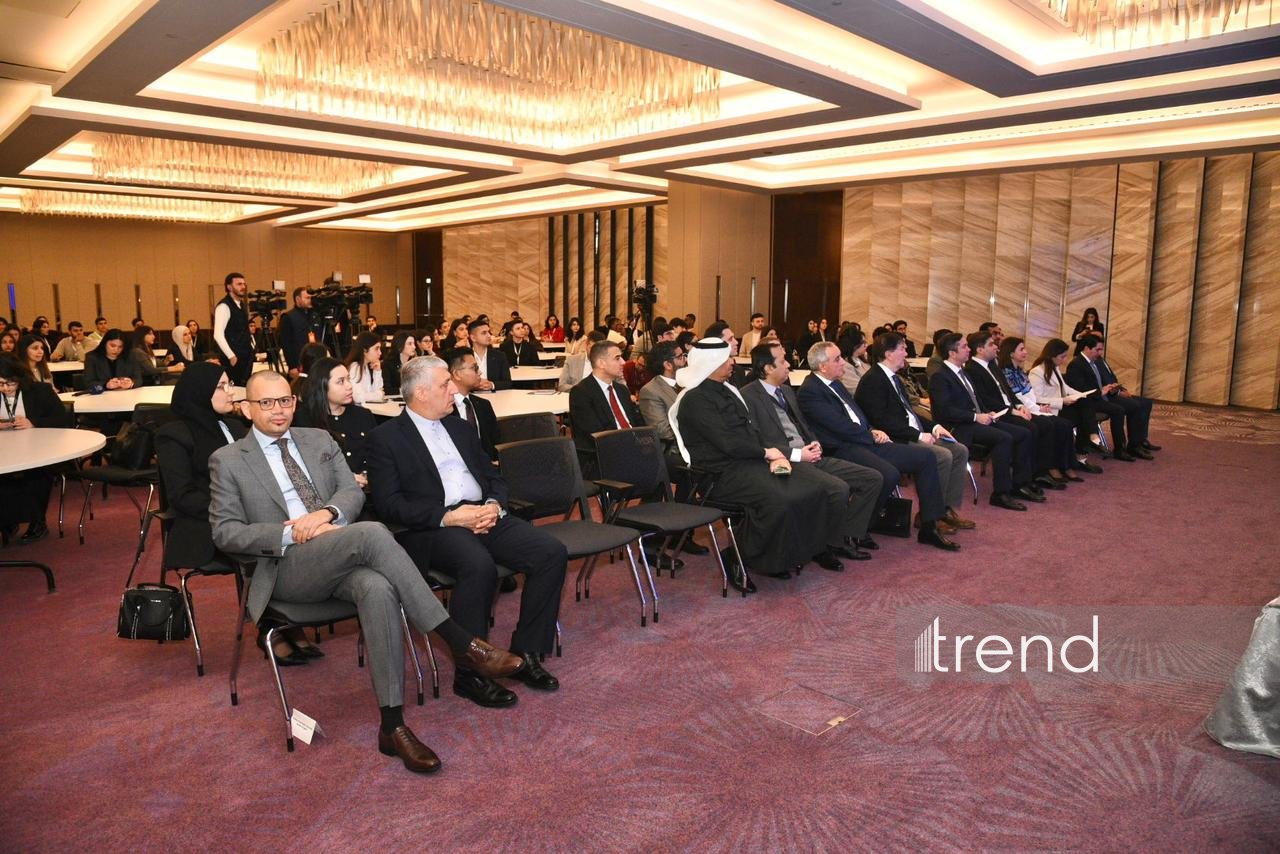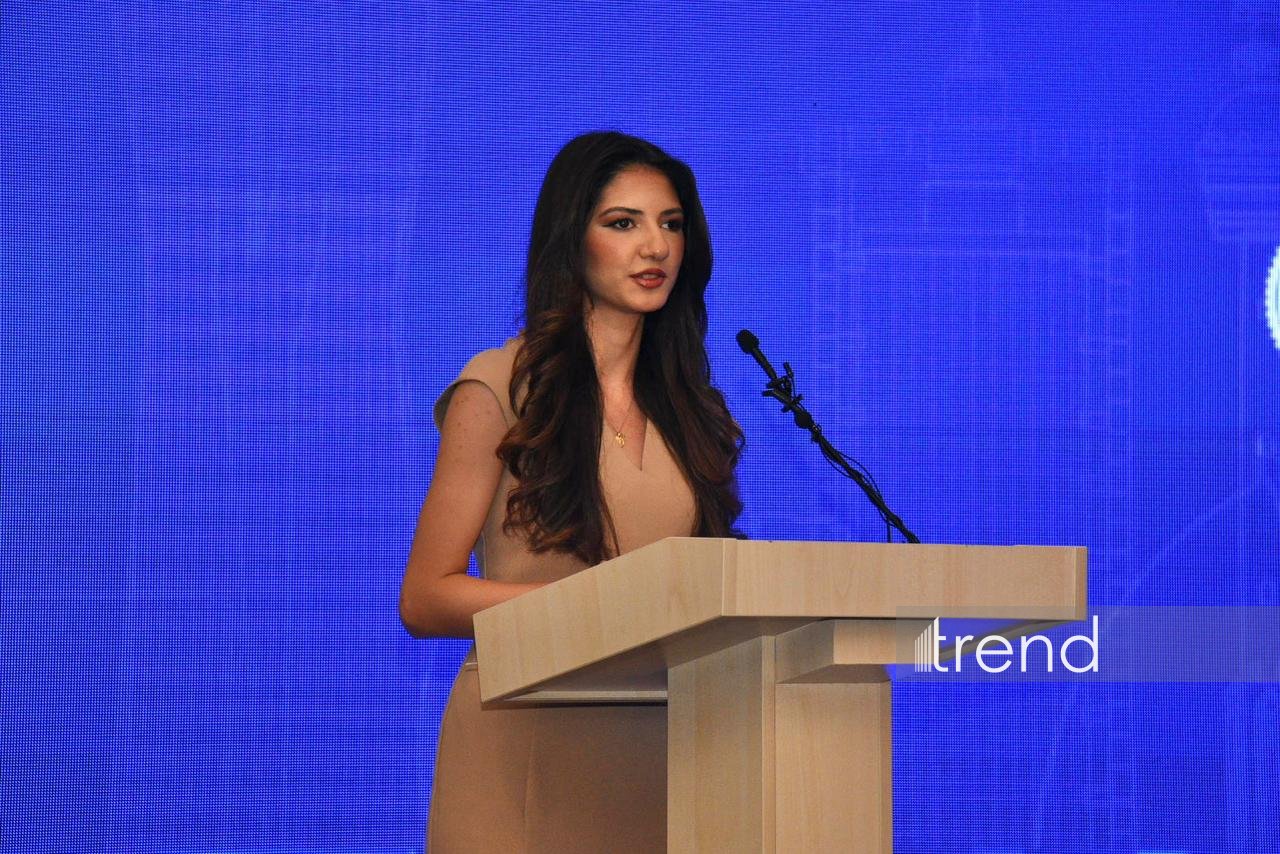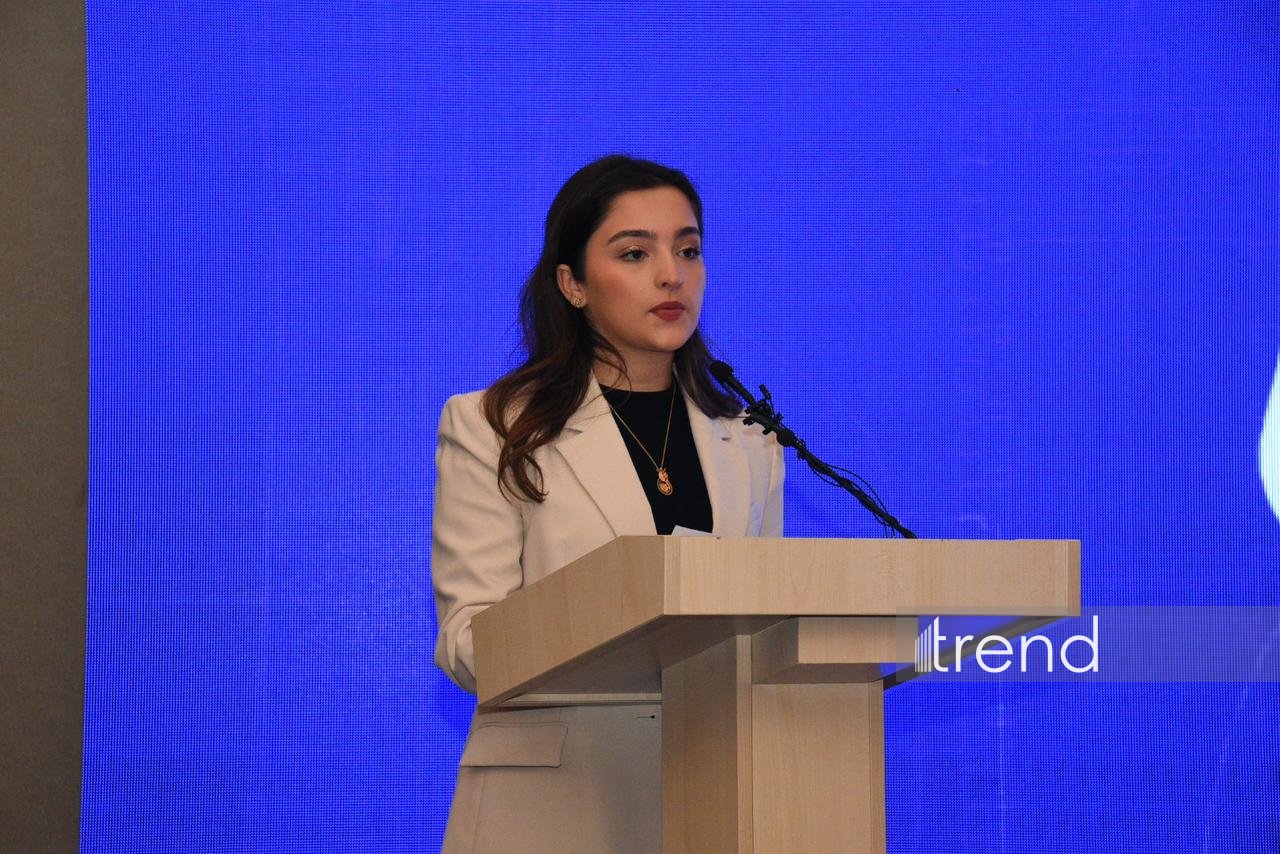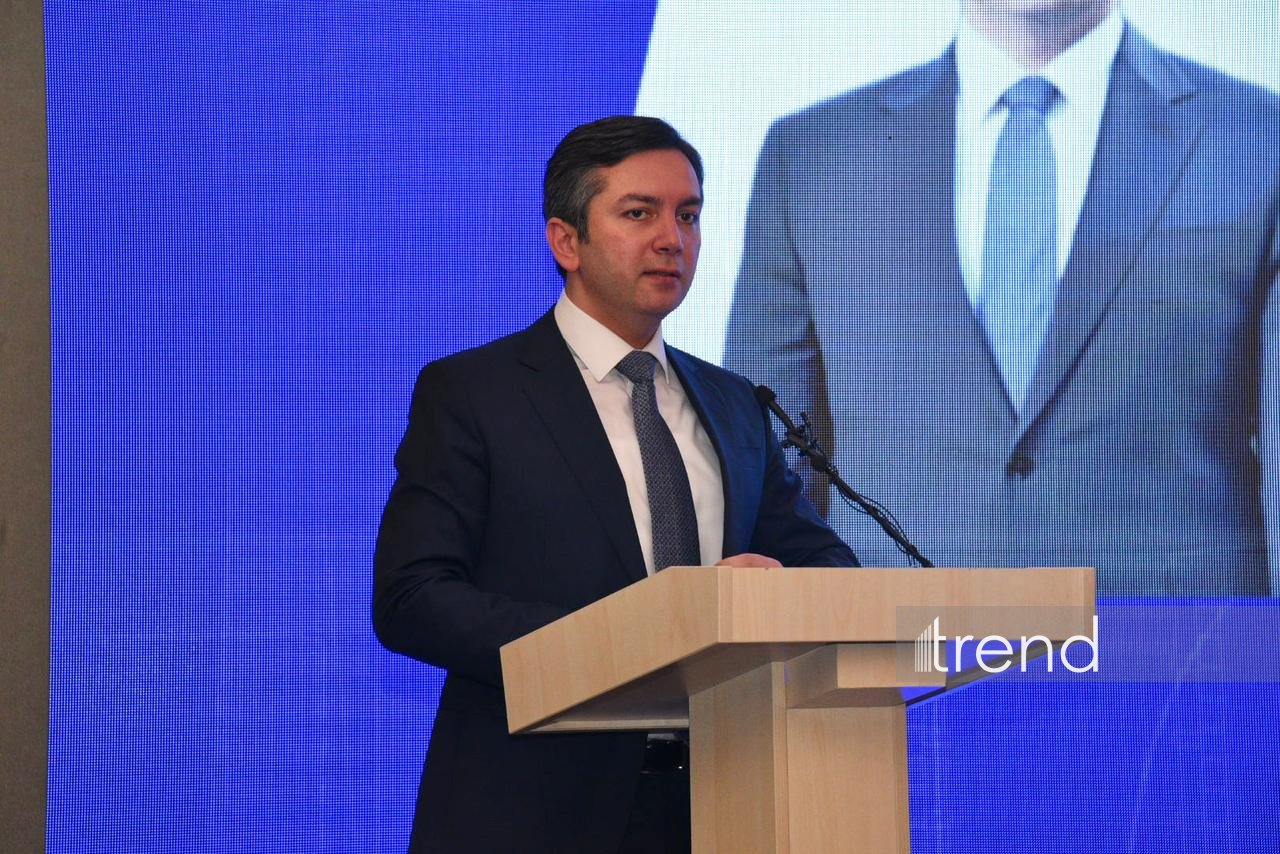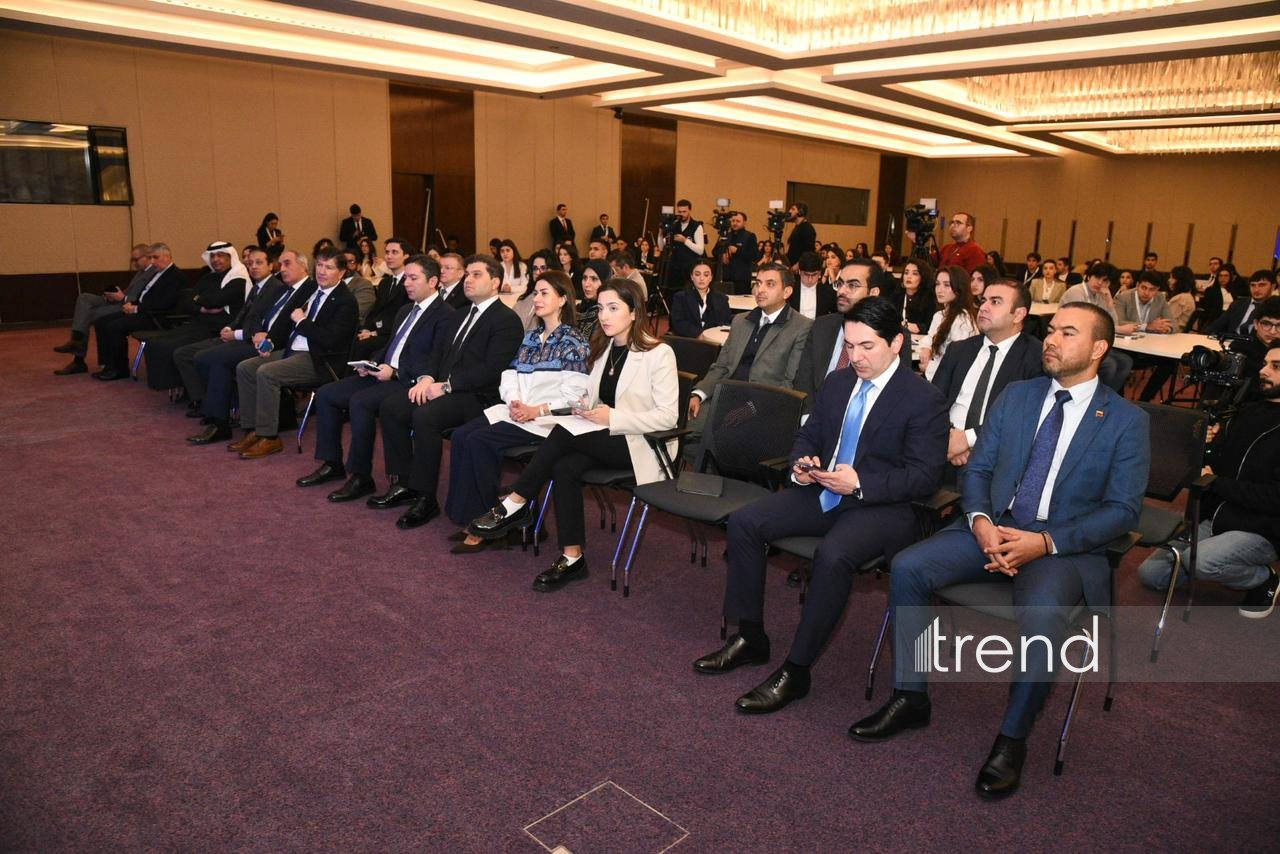

BAKU, Azerbaijan, February 5. The opening of Youth Week of the Non-Aligned Movement (NAM) took place in Baku, Trend reports.
Panel discussions scheduled for today included “The Impact of Education: The Role of Science, Policy, and Communication in Diplomacy” and “From Commitment to Action: Sustainable Development in Civil Society, Industry, and Business.”
Speaking at the event, Leyla Hasanova, chairperson of the Youth Organization of the NAM stated that the Youth Week of the Non-Aligned Movement (NAM) is a space created for open, honest, and intergenerational dialogue.
“Over the coming days, we will discuss diplomacy in times of uncertainty, sustainable development and the energy transition, urban development, as well as the skills young people need to build meaningful careers in international and policy-oriented fields. These discussions reflect both global challenges and the core values of the Non-Aligned Movement, including cooperation, dialogue, and mutual respect,” she said.
According to Hasanova, the week is dedicated to moving beyond discussions alone. “It is about connecting ideas with action, and policies with people,” she emphasized.
“We often hear that young people are the leaders of tomorrow, but they are also active participants today, bringing fresh perspectives, responsibility, and a sincere commitment to finding solutions,” Hasanova noted.
She added that more than 100 participants are taking part in the event.
In turn, Deputy Foreign Minister Yalchin Rafiyev emphasized that Azerbaijan has always supported resolving issues through diplomatic and political means.
“Today, we see that dialogue and diplomacy remain the most effective ways to address many challenges. Azerbaijan’s modern role as a mediator and ‘bridge-builder’ is reflected not only during conflicts but also in our practical actions, including during the COP29 held in Baku,” Rafiyev said.
He added that Azerbaijan is a well-known and respected platform for international dialogue.
The deputy minister also noted that later this year, Azerbaijan will host the World Urban Forum (WUF), which will gather thousands of representatives from different countries to discuss contemporary urbanization challenges and the development of sustainable and resilient cities in line with climate and environmental standards.
Rafiyev highlighted that Azerbaijan will also initiate and host several other important international events this year, including a UNESCO session in April, the annual meeting of the Islamic Development Bank (IsDB) in June, and the Conference on Interaction and Confidence-Building Measures in Asia (CICA) Summit.
Additionally, he noted that Azerbaijan is ready to act as a mediator and initiator of dialogue on a range of important international issues.
“We have already hosted meetings of representatives of various countries and political groups to discuss problems and seek possible solutions,” Rafiyev said.
According to him, Azerbaijan pursues a policy of good neighborliness, contributes to strengthening Islamic solidarity, while being part of European civilization, and consistently promotes a policy of non-alignment.
“All this once again confirms that Azerbaijan's contribution to world politics and the formation of a stable international system is significant and in demand,” he noted.
The deputy minister emphasized that Azerbaijan's role as a “bridge builder” has traditionally had a geographical dimension, thanks to the country's location at the crossroads of East and West, North and South.
Chief of Staff of the Ministry of Science and Education Matin Karimli stated that many opportunities are available for introducing artificial intelligence (AI) into the education system of Azerbaijan.
"We have launched a digital learning platform using AI tools, and we see many opportunities in the education system of Azerbaijan. This concerns, for example, the organization of classes for children living in mountainous and remote areas, school preparation, teacher training, and the knowledge assessment process," he explained.
Karimli noted that AI opens up huge prospects for education. Simultaneously, it calls for technical know-how, hefty investments in infrastructure, and a mindset that's ready to roll, which is the crux of the matter.
He believes that, although there is some apprehension surrounding the integration of AI into the education system, many view it as a significant opportunity.
Elshad Iskandarov, Ambassador-at-Large at the Ministry of Foreign Affairs of Azerbaijan outlined that disinformation is being increasingly widespread in modern times.
"We are currently living in an era characterized by the pervasive spread of misinformation. This phenomenon becomes particularly evident when engaging in discussions about the news, whether with younger generations or older family members. It is not uncommon for individuals to share content seen on social media without applying any filtering or fact-checking, often unknowingly disseminating sensationalized information that ultimately proves to be disinformation, fabricated, or purposefully engineered as a form of informational disruption," he explained.
Iskandarov further emphasized the significant role played by technologies in this process, particularly highlighting artificial intelligence as a clear example of how scientific and technological advancements can be exploited to distort reality.
"This underscores the urgent necessity for continuous and methodical efforts to harness science and technology for a fundamentally different purpose — one that serves to combat disinformation, promote critical thinking, and integrate these efforts into the diplomatic sphere," he stressed.
According to him, at the same time, this is an extremely sensitive topic, as the issues of censorship, freedom of information, and freedom of expression come to the fore. Finding a balance between these principles remains a serious challenge.
Vice rector of the ADA University Fariz Ismailzade said that universities play a key role in shaping the thinking of future leaders.
"Indeed, it is during the university years that a person's values and worldview are formed. All of you have either already been students or are students now, and you are the future leaders, including in business and the public sector. Therefore, universities play a key role in shaping the mindset of future leaders. When graduates become heads of companies or leaders of government institutions, they begin to take environmental issues much more seriously, such as the development of 'green' energy, waste recycling, energy conservation, and the overall preservation of the planet," he said.
According to him, students are exposed to the best global practices for sustainable development and are shown how to care for the environment and the planet through everyday actions and long-term strategies.
"Later, when they take leadership positions, they have the opportunity to implement these approaches at the policy and management levels," Ismailzade mentioned.
He also pointed out that this is precisely the vision of ADA University. Solar panels have been installed on campus with the participation of Masdar, and geothermal power plants have also been created.
"Thus, we are implementing best practices in renewable energy not only in theory but also in practice, through research and specific projects," Ismailzade said.
According to him, the university has plans to create laboratories where companies can establish their research centers and collaborate with students and faculty on the development of green energy, renewable energy sources, and new technologies.
The event will continue tomorrow.