


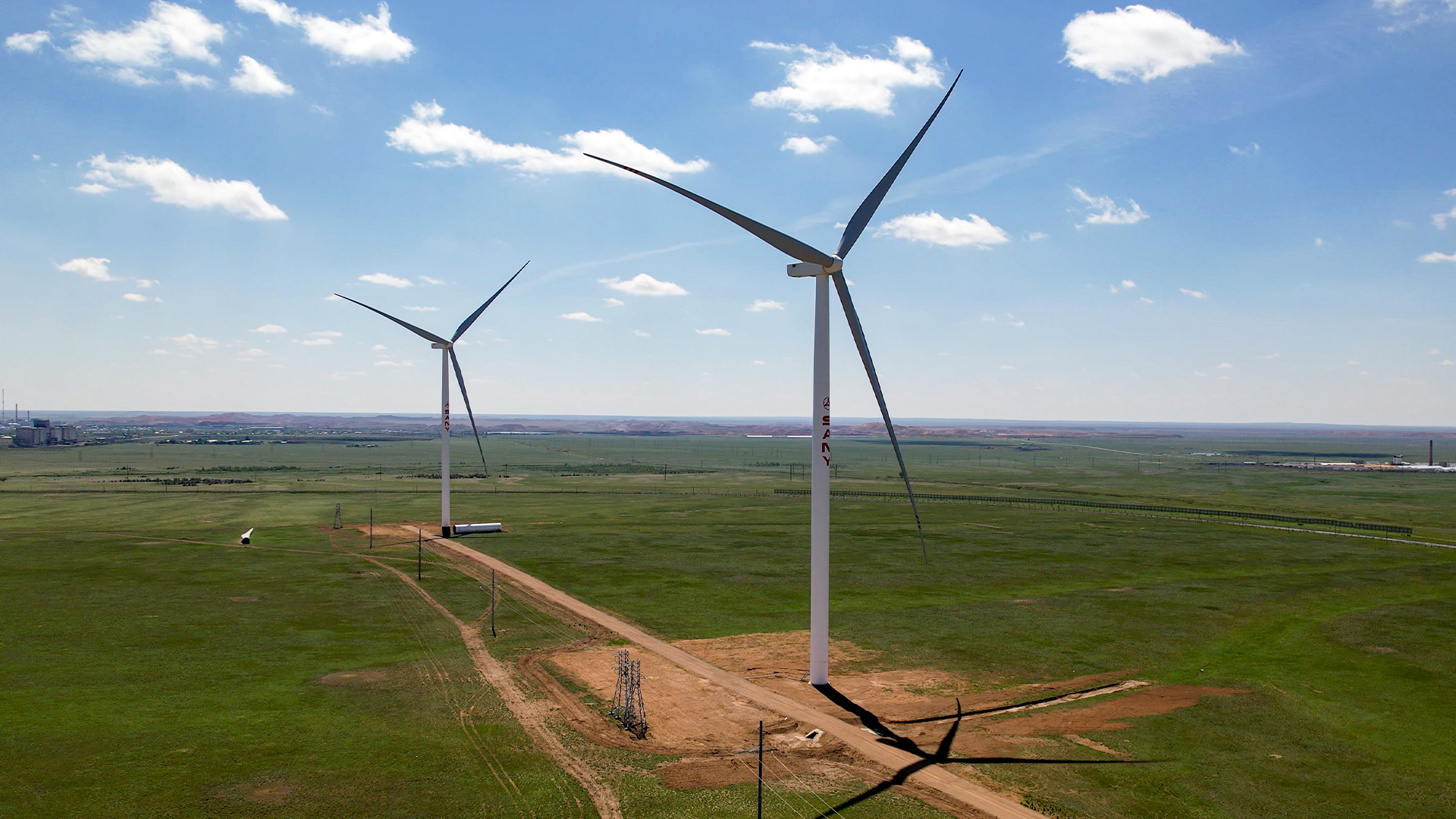

BAKU, Azerbaijan, August 3. Kazakhstan’s onshore wind energy capacity has witnessed a significant increase over the past decade, expanding more than twentyfold between 2015 and 2024, Trend reports via the International Renewable Energy Agency (IRENA).
The country’s wind capacity grew from just 72 MW in 2015 to an estimated 1,520 MW in 2024. This marks a staggering cumulative growth of over 2,011 percent.
| Year | Capacity (MW) | Annual Growth (percent) | Cumulative Growth (percent) from 2015 |
|---|---|---|---|
| 2015 | 72 | — | — |
| 2016 | 98 | 36.11 percent | 36.11 percent |
| 2017 | 112 | 14.29 percent | 55.56 percent |
| 2018 | 121 | 8.04 percent | 68.06 percent |
| 2019 | 284 | 134.71 percent | 294.44 percent |
| 2020 | 486 | 71.13 percent | 575.00 percent |
| 2021 | 684 | 40.74 percent | 850.00 percent |
| 2022 | 1,108 | 61.87 percent | 1,438.89 percent |
| 2023 | 1,440 | 29.98 percent | 1,900.00 percent |
| 2024 | 1,520 | 5.56 percent | 2,011.11 percent |
The most accelerated proliferations transpired between 2018 and 2022, notably in the years 2019 and 2022, with annual compounding growth rates surpassing 130 percent and 60 percent, respectively. This significant escalation underscores substantial capital infusion strategies and advantageous regulatory frameworks fostering the advancement of wind energy infrastructure throughout Kazakhstan's expansive steppes.
The wind energy sector in Kazakhstan is garnering substantial capital influx from a diverse array of both multinational and local enterprises. The Italian enterprise Eni and the UAE's Masdar represent pivotal global stakeholders, infusing advanced technology and substantial capital into the market. These multinational corporations frequently engage in synergistic partnerships with state-owned entities such as Samruk-Energy JSC, which is proactively developing and managing its proprietary wind energy installations.



