

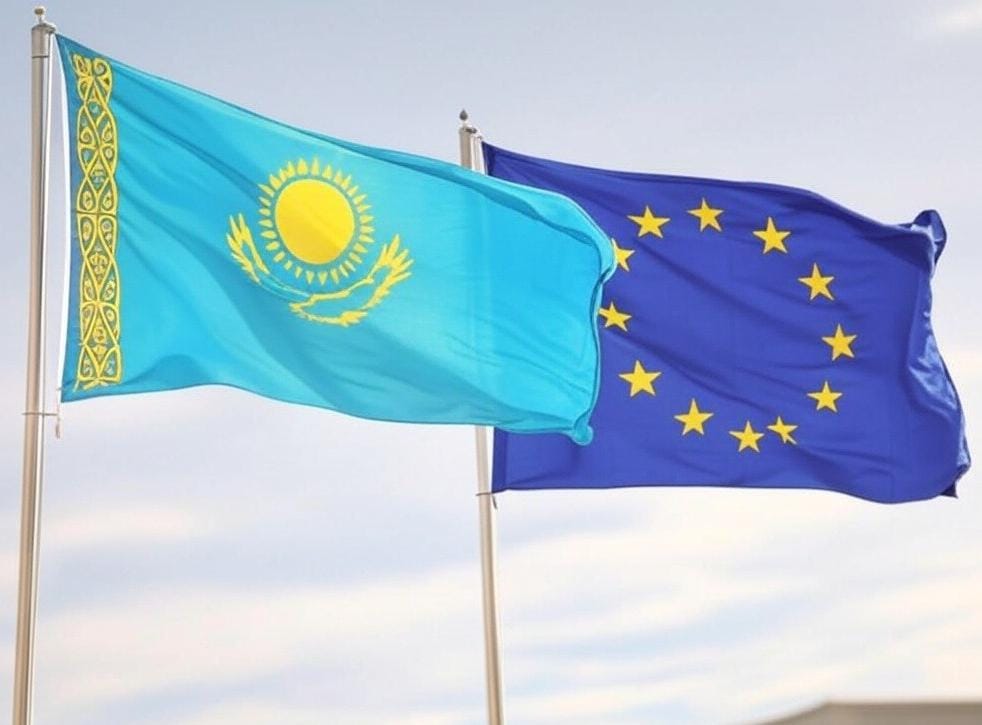



ASTANA, Kazakhstan, December 4. The official visit of European Council President António Costa to Astana on December 4th is a natural step in the ongoing political back-and-forth between Kazakhstan and the European Union, which in 2025 takes on a special meaning. Ten years ago, the two sides signed the Enhanced Partnership and Cooperation Agreement (EPCA), a document that became the foundation for closer strategic interaction between Astana and Brussels.
Additionally, on December 2nd, Kazakhstan and the EU held the first round of official negotiations on the conclusion of a visa facilitation agreement and a readmission agreement. This is the first time the EU has entered into such negotiations with a Central Asian country. This step elevates EU-Kazakhstan relations to a new level.
A hallmark of the present stage of the current stage of dialogue between the two sides is its multifaceted nature. The emphasis on strengthening political interaction is combined with growing economic interdependence. The EU remains Kazakhstan's largest trading partner and investor: European investments have exceeded 200 billion euros over two decades, and around 80% of EU trade with all Central Asian countries is with Kazakhstan.
In 2024, bilateral trade reached nearly $50 billion, and these figures continue to rise. For Brussels, Kazakhstan is a golden goose when it comes to energy: a whopping 90% of Kazakhstan's exports to the EU are made up of oil, gas, and uranium. On the flip side, Kazakhstan is a key player in the energy game, supplying over 13% of the EU’s oil imports and more than 21% of its uranium needs, keeping the lights on across the continent. Given the current challenges to energy security in Europe, Astana’s role only grows in importance.
Europe is increasingly focused on creating sustainable raw material supply chains. Kazakhstan produces 19 types of raw materials that are critical for the EU's economy, including uranium, lithium, titanium, copper, and cobalt. The Memorandum of Understanding on sustainable raw material, battery production, and renewable hydrogen value chains, signed in 2022, has become a crucial pillar of resource cooperation. For Kazakhstan, this is a dream opportunity to carve out a niche in the new technological supply chains; for the EU, it’s a crucial piece of the puzzle in broadening supply sources amidst the fierce competition for rare earth materials.
Another key direction that is currently shaping the logic of cooperation is the development of the Trans-Caspian International Transport Route (TITR). EU investments in the modernization of the Aktau port and the reconstruction of roads in Kazakhstan show that the EU considers Kazakhstan one of its key partners in creating a sustainable transport infrastructure in the region. The EU has previously announced plans to allocate 10 billion euros for the development of the TITR. For Kazakhstan, this means not only an enhanced logistical role but also increased transit revenues and strengthened infrastructure resilience.
Simultaneously, cooperation is expanding in the areas of digitalization and innovation. Kazakhstan is part of the Global Gateway initiative, under which the EU plans to mobilize 12 billion euro for Central Asia. These are not only transport projects but also digital connectivity initiatives: the EU is investing in satellite infrastructure, expanding internet bandwidth, and creating a secure digital space in the region. In this context, Kazakhstan is actively developing digital technologies, including artificial intelligence, and has proposed the creation of an Innovation Campus Central Asia-EU based at the Astana Hub.
EU support also extends to the climate agenda, ranging from reforms in emission regulation to climate change adaptation. European companies are rolling up their sleeves and diving headfirst into Kazakhstan's ambitious green energy projects, including harnessing the wind and cooking up green hydrogen.
The visit of António Costa to Astana will solidify the agreements reached and demonstrate that the EU is committed to building a partnership with Kazakhstan as a key player in Central Asia. For Astana, closer ties with the EU represent an enhancement of its multivector foreign policy, with Europe offering economic and technological integration aligned with the country's modernization goals.
The decade of the EPCA may mark a threshold beyond which relations enter a new phase. The next ten years, as emphasized by the European side, should be a period of tangible results: modernized infrastructure, resilient supply chains, new industries, and expanded human contacts.
In this context, the visit of the European Council President could be the spark that lights the fire for deeper development and a stronger bond of cooperation between the two sides. For both the EU and Kazakhstan, the current moment presents an opportunity to solidify mutual cooperation at a level that ensures resilience in the face of unstable geopolitics and global challenges.
Stay up-to-date with more news on Trend News Agency's WhatsApp channel