


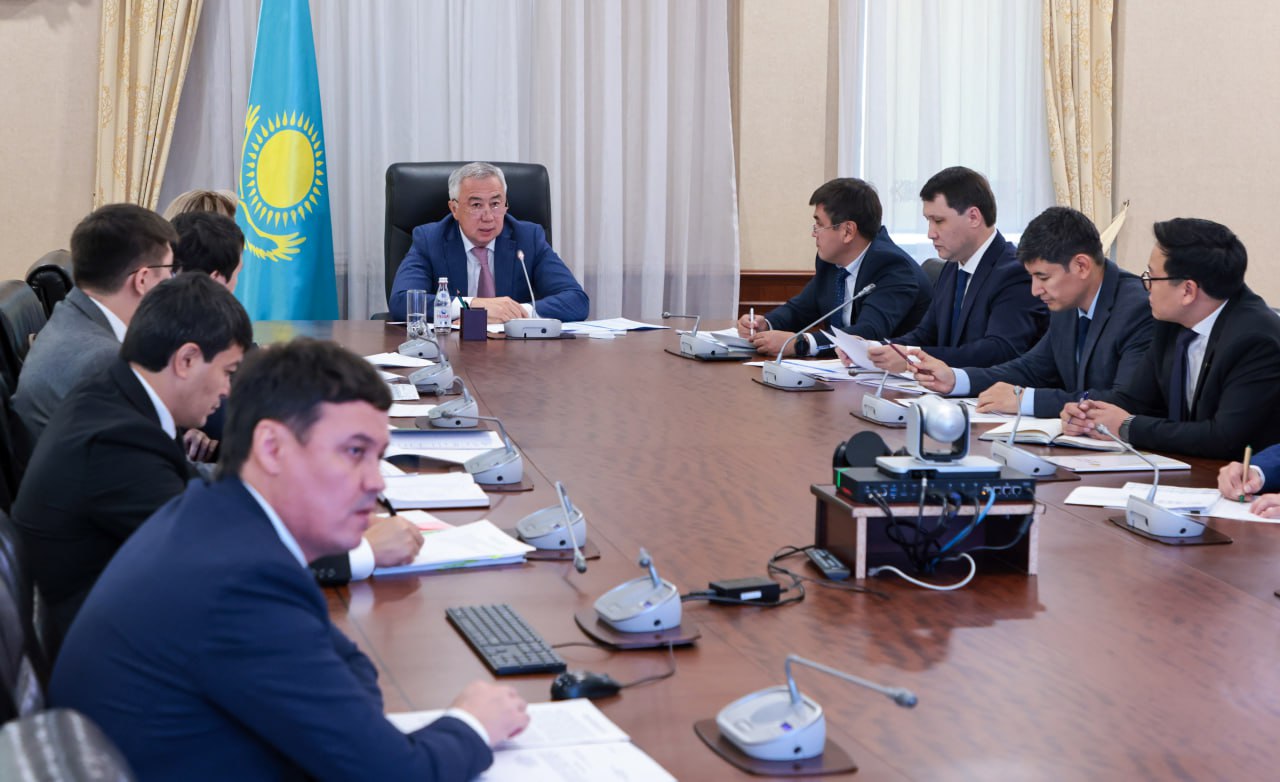

ASTANA, Kazakhstan, August 19. In the first half of 2025, food production in Kazakhstan grew by 10.5 percent, reaching 1.8 trillion tenge (approximately $3.42 billion), Trend reports, citing the press service of the Prime Minister of Kazakhstan.
The throughput of dairy, protein, grain, carbohydrate, produce,
and lipid processing has experienced an uptick.
“Kazakhstan achieves self-sufficiency in fundamental alimentary
commodities, reaching levels of 80 to 100 percent and beyond.”
Protein sources such as meat, dairy products, ovum, horticultural
produce, and grain derivatives are generated in ample volumes to
satisfy the consumption demands of our national populace.
Concurrently, the influx of imports persists for avian protein,
processed meat products, dairy derivatives, sucrose, and aquatic
commodities,” articulated Deputy Minister of Agriculture Yermek
Kenzhekhanuly during a governmental assembly.
He posits that capital allocation initiatives are currently
underway to mitigate reliance in these sectors. Specifically,
during the period spanning 2022 to 2024, a total of 17 avian
protein production facilities with an aggregate throughput of
144,000 metric tons were operationalized. This facilitated an
elevation in the poultry meat self-sufficiency ratio from 67
percent to 79 percent. By 2028, the strategic rollout of 41
additional ventures is projected, facilitating comprehensive
operational autonomy.
In 2019, the national dairy farm landscape comprised a mere 19
operational entities; however, the current count has escalated to
69, with an additional 47 in the developmental pipeline. Upon the
full operationalization of all 116 agricultural enterprises, the
output of dairy will escalate by 600,000 metric tons annually,
thereby adequately satisfying the market demand for both cheese and
cottage cheese products.
In alignment with the strategic framework for enhancing economic
accessibility to essential alimentary commodities, the Ministry of
Trade and Integration is executing a comprehensive suite of
interventions aimed at mitigating the escalation of pricing for
staple food items. According to the insights provided by the First
Deputy Minister of Trade and Integration Aizhan Bizhanova, there
has been a marked deceleration in the trajectory of price
escalation since the onset of the current fiscal year.
In order to enhance price stabilization mechanisms domestically,
the government implements strategic support initiatives aimed at
the optimization of fattening site development, the establishment
of integrated meat clusters, and the facilitation of trade fairs
featuring complimentary trading spaces for agricultural producers
across various regions and metropolitan areas.
Furthermore, to bolster local manufacturing and ensure unobstructed
availability of Kazakhstani products in retail environments and
marketplaces, the Ministry of Trade and Integration is formulating
regulatory amendments: a proposal is on the table to cap the
payment deferral timeline for deliveries at 30 days.



