


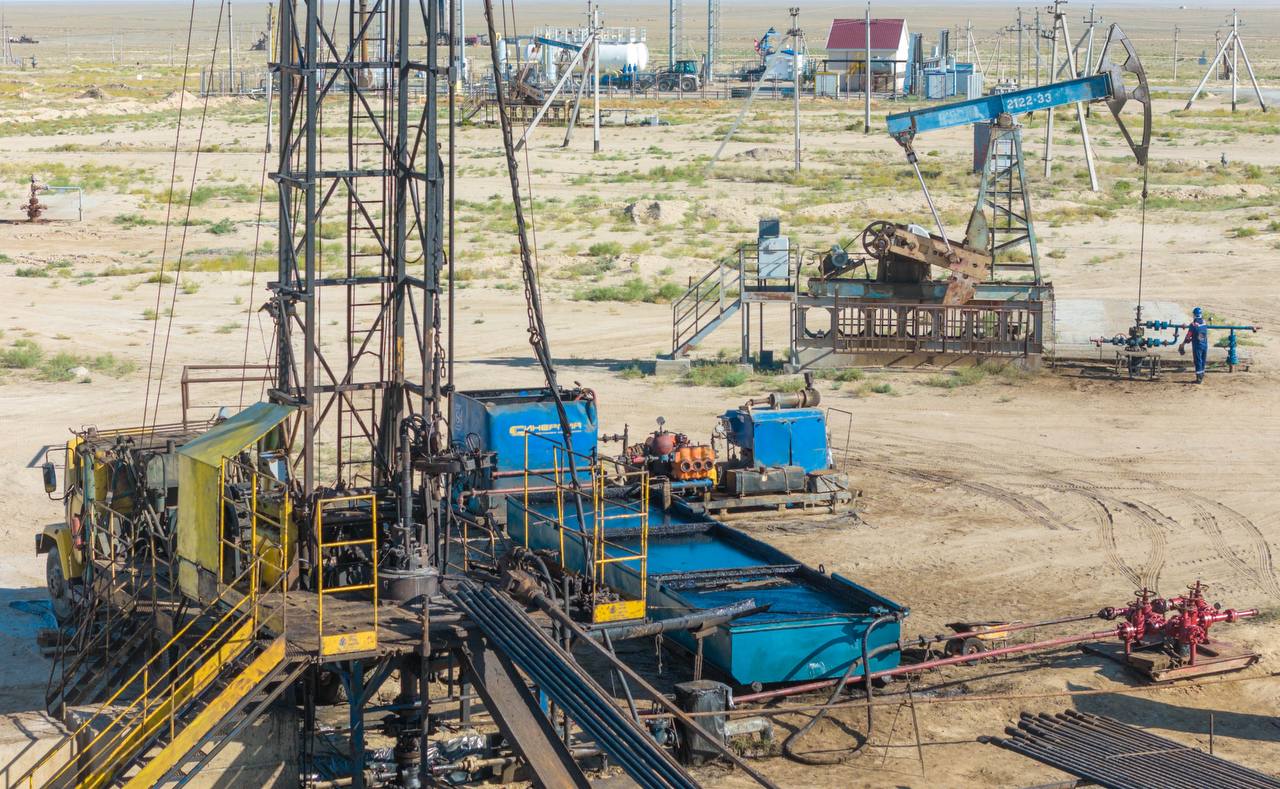

ASTANA, Kazakhstan, October 3. A new Concept for the Development of the Oil Refining Industry until 2040 was presented during Kazakhstan Energy Week - 2025 in Astana, Trend reports via the Ministry of Energy.
The document, approved by government resolution, was introduced by Talgat Makuov, Deputy Director of the Department of Oil Transportation and Refining.
The strategic concept was developed with the participation of multiple government agencies and companies, highlighting its practical focus and feasibility. It outlines priorities for expanding and constructing oil refineries in fuel and petrochemical configurations over the next 15 years, while strengthening energy security and economic resilience.
"In Kazakhstan, petrochemicals develop along two main directions. First, oil chemistry, currently represented by benzene and paraxylene production at the Atyrau Refinery, holds significant potential through petrochemical synthesis of higher-order products, such as alkylarenes, surfactants, ketones, aldehydes, and polyatomic alcohols. Second, gas chemistry, exemplified by the Kazakhstan Petrochemical Industries (KPI) project producing polypropylene, with ongoing polyethylene and butadiene projects," Makuov said.
He added that expanding existing refineries and building integrated, high-tech oil refining and petrochemical complexes with flexible product lines will create long-term, attractive assets, enhance the capitalization of management companies, and appeal to potential investors.
The framework is congruent with Kazakhstan’s strategic
blueprints, encompassing Strategy-2050, the National Development
Plan through 2029, and the carbon neutrality roadmap extending to
2060, alongside projections from premier global energy
institutions.
Makuov indicated that the projected capital influx into the sector
is anticipated to attain a range of $15–19 billion, with the
objective of amplifying refining throughput from 18 to 39 million
tons annually, thereby markedly enhancing processing efficacy.
A primary objective is to enhance the crude oil processing ratio
from 5:1 to 2.5:1, aligning with OECD benchmarks, via the
development of advanced oil refining and petrochemical facilities.
The paradigm underscores adherence to ecological regulations and
the mitigation of deleterious emissions, thereby facilitating
decarbonization initiatives and advancing sustainable growth
objectives. Initiatives are currently being implemented to propel
translational research and institute a dedicated scientific entity
focused on the domains of oil refining and petrochemical
sciences.
“The operationalization of this paradigm will facilitate the
sustainable evolution of the industry by harmonizing economic,
social, and ecological dimensions. The initiative aims to bolster
the domestic sector with premium-grade petroleum derivatives,
amplify export capabilities to rapidly expanding Asian economies,
generate employment opportunities, and augment Kazakhstan’s appeal
as an investment destination,” Makuov articulated.



